Best overall roof fascia repair material for B.C. weather: aluminum-clad fascia, which wraps the wood core in coil stock so coastal rain never reaches bare wood again. Best for high-humidity coastal properties: cellular PVC fascia, which contains zero organic material and physically cannot rot. Best budget option for a full fascia replacement: engineered wood fascia, a pre-primed composite board that installs cheaper than PVC while still holding paint the way homeowners expect.
- Aluminum-clad roof fascia is the overall pick for B.C. roofs — it seals the wood core against coastal rain.
- Cellular PVC fascia is the right call for humid coastal properties because it can't rot at all.
- Engineered wood fascia is the budget option when a full fascia replacement is on the table.
- Solid cedar fascia still wins on heritage homes where the trim profile has to match exactly.
- Fiber cement fascia carries a fire rating that matters in Interior wildfire-interface zones.
Why this matters
Fascia boards take the worst of what a B.C. roof sheds: runoff, ice dams on the Interior, wind-driven rain on the coast, and every gutter hanger screwed straight into them. When fascia fails, the gutter system it supports fails with it — a soft board can't hold a hanger, and a hanger that pulls loose dumps water down the wall instead of into the downspout.
Material choice decides whether a fascia repair lasts five years or twenty-five. Wood is still the cheapest board to source, but it's also the material most likely to need this same repair again before 2031. A full breakdown of fascia pricing by material sits in the roof fascia boards ranked by material and price guide if you want the cost side worked out separately from durability.
What makes the best roof fascia repair material for BC weather
- Rot resistance under sustained coastal rain — Vancouver Island and the Lower Mainland stay wet for months at a stretch, so any material with organic content needs a real moisture barrier.
- UV and paint-hold performance through wet-dry cycling — B.C. swings from soaked winters to dry, sun-heavy summers, and paint film has to survive both.
- Compatibility with existing gutter hangers and soffit returns — a fascia repair that doesn't match board thickness forces a rework of the whole gutter line.
- Maintenance interval — how often the board needs inspection, caulking, or repainting to keep water out.
- Fire-code standing — Interior wildfire-interface zones increasingly ask for non-combustible exterior materials, fascia included.
- Ease of matching the existing trim profile — heritage and character homes lose value when a repair looks visibly different from the original board.
At a glance: roof fascia repair materials for B.C.
| Material | Best for | Standout feature | Key limitation |
|---|---|---|---|
| Aluminum-clad fascia | Overall B.C. exterior protection | Seals the wood core against coastal rain completely | Wrap can hide rot underneath until the board fails from the inside |
| Cellular PVC fascia | High-humidity coastal properties | Zero organic material, can't rot | Expands and contracts more than wood across temperature swings |
| Primed cedar / solid wood fascia | Heritage and character-home trim matching | Matches original profiles exactly, easy to shape on site | Most rot-prone material in this lineup, needs repainting on a short cycle |
| Fiber cement fascia | Interior wildfire-interface zones | Non-combustible core carries a fire rating | Heavy — needs two installers and pre-drilled fastener holes |
| Engineered wood fascia | Budget-conscious full fascia replacement | Pre-primed and paintable at a lower install cost than PVC | Swells at cut ends if they aren't resealed before install |
1. Aluminum-clad fascia: best roof fascia repair material overall
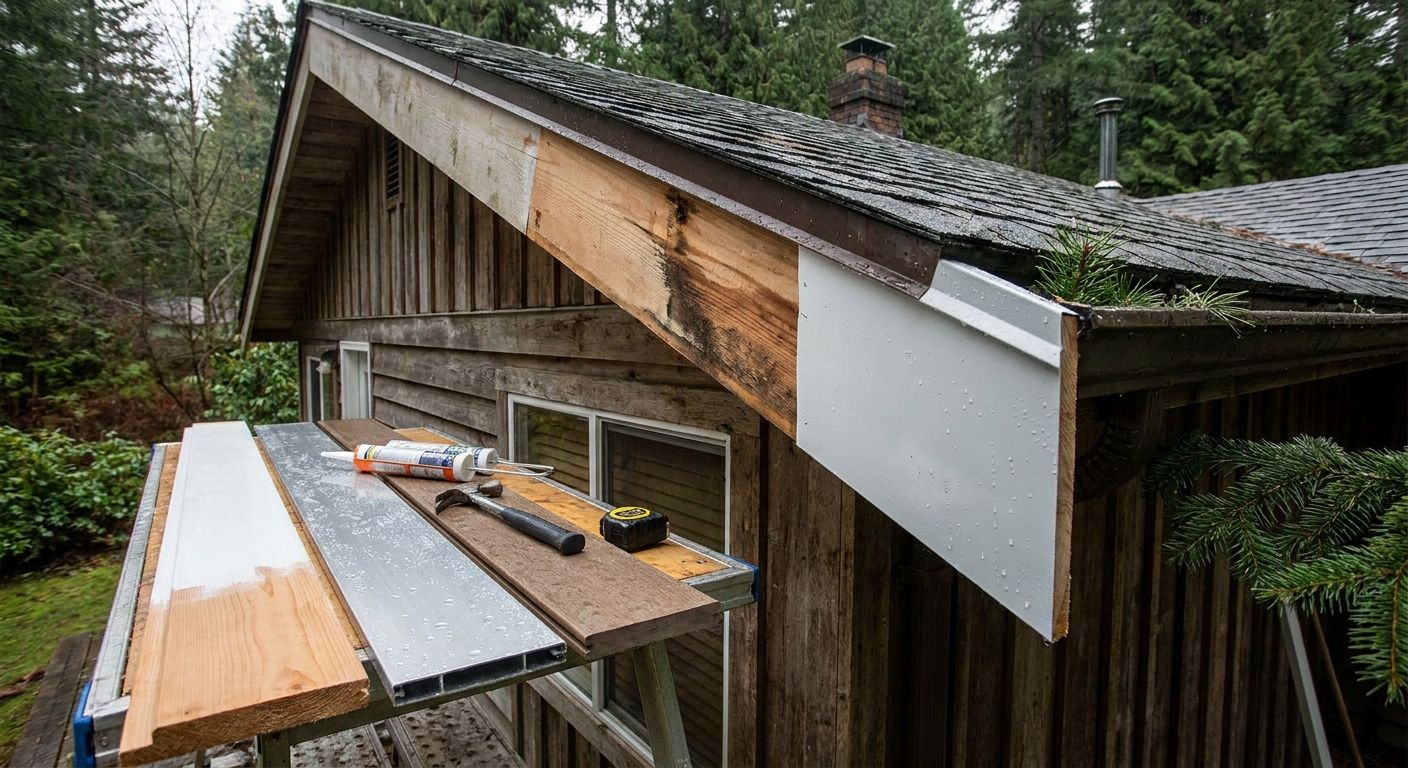
Aluminum-clad fascia is a wood core wrapped in coil-formed aluminum, usually installed over an existing board or a new one during a full fascia and gutter job. The metal skin takes the weather; the wood underneath supplies the structure the fascia needs to hold gutter hangers.
Aluminum-clad fascia pros:
- Coastal rain never touches bare wood once the wrap is on
- Holds its factory finish for years without repainting
- Matches most standard fascia board profiles used across B.C.
- Pairs directly with aluminum seamless gutter systems for a uniform line
Aluminum-clad fascia cons:
- A dent from a ladder or hail can crease the metal permanently
- The wrap conceals what's happening to the wood core, so rot can advance unseen
- Requires the wood underneath to be sound at install time — it doesn't fix existing rot, it protects against future rot
Best for: homeowners who want a low-maintenance fascia finish without switching to an all-synthetic board. Verdict: Buy.
2. Cellular PVC fascia: best roof fascia repair material for coastal humidity
Cellular PVC fascia is a solid, cell-structured vinyl board with no wood content at all. It's cut, nailed, and painted the same way a wood board is, but there's nothing inside it for moisture to break down.
Cellular PVC fascia pros:
- Immune to rot, insect damage, and moisture absorption
- Holds paint well when primed correctly at install
- No hidden core to inspect later — what you see is the whole material
Cellular PVC fascia cons:
- Expands and contracts more than wood across B.C.'s wet-dry seasonal swings, which can telegraph through paint lines at joints
- Can read as visibly synthetic against original trim on older homes
- Heavier boards need tighter fastener spacing than wood to avoid sagging between rafter tails
Best for: coastal properties on Vancouver Island or the North Shore where fascia takes near-constant moisture exposure. Verdict: Buy.
3. Primed cedar / solid wood fascia: best for heritage trim matching
Solid wood — usually primed cedar or fir — is still the material that matches original trim profiles most exactly, which is why it stays in use on heritage and character homes across B.C. where the fascia line is visible and part of the house's character. Full detail on rot resistance by wood species is in the wood fascia rot resistance breakdown.
Solid wood fascia pros:
- Easiest material to shape, scribe, and match on site
- Lowest material cost among the options here
- Accepts any paint or stain finish
Solid wood fascia cons:
- Most rot-prone material in this lineup once the paint film breaks
- Needs repainting and caulk inspection on a shorter cycle than any other option
- End grain at cuts is the first place rot starts if it isn't sealed at install
Best for: heritage homes where matching the original trim profile matters more than long-term maintenance-free performance. Verdict: Hold — fine for character-home matching, but budget for repainting inside a few years.
4. Fiber cement fascia: best for Interior wildfire-interface zones
Fiber cement fascia is a cement-and-cellulose composite board, non-combustible by composition, increasingly specified in Interior B.C. communities inside wildfire-interface zones. It installs like wood but behaves like masonry once it's up.
Fiber cement fascia pros:
- Non-combustible core carries a fire rating wood and PVC don't
- Doesn't rot, swell, or attract insects
- Holds paint for long stretches without peeling
Fiber cement fascia cons:
- Heavy — installers need two people and pre-drilled holes to avoid cracking at fasteners
- Costs more labor time per linear foot than wood or engineered wood
- Overkill for coastal properties with no wildfire exposure concern
Best for: Interior B.C. properties where local fire-interface rules or insurance requirements push toward non-combustible exterior materials. Verdict: Buy if fire rating is a factor; Skip for coastal-only humidity concerns where PVC does the job cheaper.
5. Engineered wood fascia: best budget roof fascia repair material
Engineered wood fascia is a resin-treated wood composite board, pre-primed at the factory, built to install and paint like solid wood at a lower material cost than PVC. It's the option most contractors reach for when the whole fascia run needs replacing rather than patching.
Engineered wood fascia pros:
- Pre-primed and paintable straight out of the box
- Cheaper to install than PVC for a full-length fascia replacement
- Consistent thickness and profile, no warping like natural wood
Engineered wood fascia cons:
- Cut ends swell if they aren't resealed with primer or edge sealant before install
- Shorter real-world track record in sustained wet climates than aluminum-clad or PVC
- Not the right call for heritage matching where a natural wood profile is expected
Best for: full fascia replacements on a budget where PVC's higher material cost doesn't pencil out. Verdict: Buy for budget replacements; Wait on it for coastal properties with heavy year-round rain exposure until it has more field history in that climate.
“If the fascia board flexes when you press a thumb into it, it's past repair — replace the board, don't patch it.”
How we ranked these materials
Each material is scored against the six criteria above: rot resistance under coastal rain, UV and paint-hold through B.C.'s wet-dry cycling, compatibility with existing gutter hangers, maintenance interval, fire-code standing, and how well it matches an existing trim profile. No material wins on all six — that's why the list is organized by use case instead of a single leaderboard, and why the client's own most-recommended material, aluminum-clad fascia, only takes the overall spot rather than every category.
Which roof fascia repair material should you choose?
For most B.C. roofs outside a wildfire-interface zone, aluminum-clad fascia is the default pick — it protects the wood core without changing how the board looks or how gutters attach to it. If the property sits in a high-humidity coastal pocket and repaint cycles are the real pain point, move to cellular PVC. If the job is a full fascia tear-off on a budget, engineered wood closes the gap without the PVC price premium. Heritage homes still call for solid wood, and Interior properties inside a fire-interface zone should default to fiber cement regardless of cost.
Get a fascia repair quote
Gutters Canada assesses fascia and gutter damage together across B.C.
FAQ
What is the best material for roof fascia repair in BC?
Aluminum-clad fascia is the best overall roof fascia repair material for B.C. weather because it seals the wood core against coastal rain without changing gutter attachment points. Cellular PVC and fiber cement are better fits for specific conditions like extreme coastal humidity or wildfire-interface zones.
Is aluminum fascia better than wood in the Lower Mainland?
Aluminum-clad fascia outlasts solid wood fascia in the Lower Mainland because the metal wrap keeps rain off the wood core entirely. Solid wood still wins when the goal is matching an original trim profile on a heritage home.
How long does PVC fascia last on the coast?
Cellular PVC fascia doesn't rot because it has no organic content, so its lifespan is governed by fastener and joint integrity rather than moisture damage. It's a strong fit for Vancouver Island and North Shore properties with near-constant rain exposure.
Can you repair fascia without replacing the whole board?
Small sections of fascia can be spliced in when rot is localized, but the repair should still match the original board's material and thickness so gutter hangers sit correctly. A fascia board that flexes under pressure has usually gone past a spot repair and needs a full section replaced.
Does fascia material affect gutter attachment?
Yes — gutter hangers screw directly into the fascia board, so a soft or rotted board can't hold a hanger securely regardless of the gutter material. Matching fascia thickness to the existing gutter system matters more than most homeowners expect.
Is cedar fascia worth it for older homes?
Solid cedar fascia is worth it on heritage and character homes where the trim profile needs to match the original exactly. It comes with a shorter maintenance cycle than aluminum-clad or PVC, so budget for repainting sooner.
How much does fascia repair cost in BC in 2026?
Cost depends on the material chosen, board length, and whether gutters are removed and reinstalled during the job, so get a property-specific quote rather than relying on a general figure. Material choice alone can shift the total more than labor does.
What causes fascia rot in BC?
Fascia rot in B.C. usually starts where paint film has failed and rain sits against end grain or a fastener hole, which is why sustained coastal moisture is harder on solid wood than on aluminum-clad or PVC boards. Clogged or undersized gutters make it worse by backing water up against the fascia instead of draining it away.
One last thing
The fascia board and the gutter system fail together more often than either fails alone — a hanger pulled loose from soft fascia is usually the first sign something's wrong, not the cause. Before deciding on a fascia material for 2026, check whether the gutter system attached to it needs the same conversation; the gutter and drainage combo guide covers how the two decisions interact.