Best overall: Western Red Cedar. Best for low-maintenance budgets: engineered wood fascia. Best budget solid wood: finger-joint primed pine. Best for structural spans: kiln-dried Douglas Fir. Skip raw SPF dimensional lumber in coastal BC unless it's fully primed on all six sides before install.
- Western Red Cedar is the best wood fascia board for BC rot resistance in 2026 - buy it.
- Finger-joint primed pine is a solid budget wood fascia board if repainted every 3-5 years.
- Skip raw SPF lumber for fascia boards on the coast - it rots fastest without heavy priming.
- Engineered wood fascia cuts maintenance time but isn't solid wood - pick it when upkeep matters more than tradition.
- Douglas Fir handles long spans and holds gutter hangers well but needs a coat of primer before it ever sees rain.
Why this matters
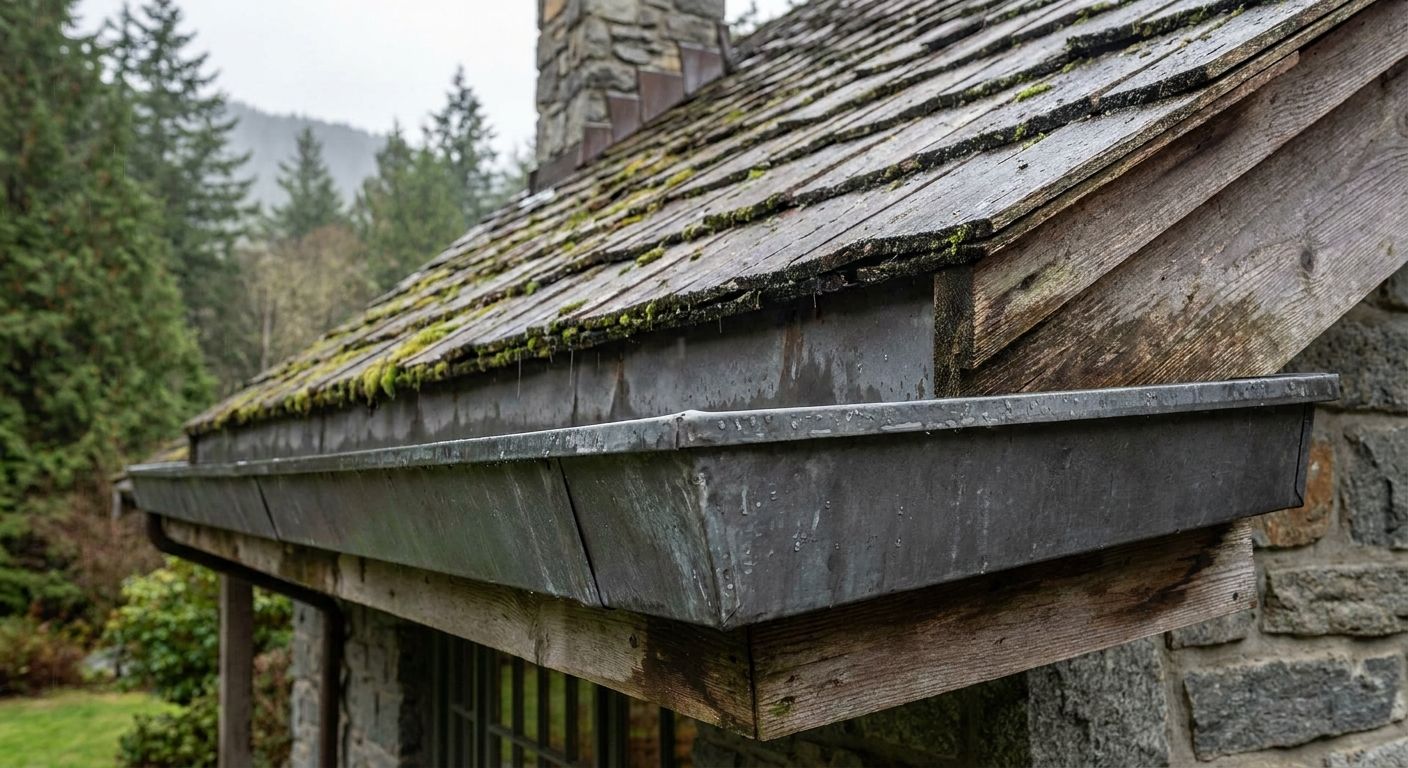
Coastal BC gets more rain days per year than almost anywhere else in Canada, and fascia boards sit right where that water runs off the roof edge before it hits the gutter. A wood fascia board that can't shed moisture rots from the back side first - the side you can't see until the paint bubbles and the gutter hangers start pulling loose.
The wrong species or the wrong prep work turns a 15-20 year fascia board into a 4-year replacement job. Picking the right wood fascia board up front saves a full re-trim later, and it changes how the gutter system behind it performs, since gutter guards and hangers both fasten straight into that board.
The team at Gutters Canada sees the same failure pattern on Lower Mainland and Vancouver Island homes: bare pine or SPF fascia installed without back-priming, painted once, then left alone for a decade. This guide ranks the wood fascia board options by rot resistance so you know which one actually belongs on a BC roofline in 2026.
What makes the best wood fascia board
- Natural decay resistance - heartwood species like cedar resist fungal decay without chemical treatment
- Moisture absorption rate - how fast the board takes on water and how fast it releases it
- Dimensional stability - resistance to cupping, twisting, and checking through wet-dry cycles
- Paint and primer compatibility - how well the surface holds a coating over multiple seasons
- Fastener holding power - strength to keep gutter hangers and drip edge screwed in tight
- Availability of straight, kiln-dried stock - what BC lumber yards actually stock in usable lengths
Wood fascia boards ranked at a glance
| Board type | Best for | Standout feature | Key limitation |
|---|---|---|---|
| Western Red Cedar | Coastal BC exposure | Natural decay resistance in the heartwood | Costs more per board foot than dimensional lumber |
| Engineered wood fascia | Low-maintenance homeowners | Resists swelling at the cut edges | Not solid wood - some products need edge sealing |
| Finger-joint primed pine | Budget renovations | Pre-primed on all sides at the mill | Needs repainting on a shorter cycle than cedar |
| Douglas Fir | Long spans, new builds | High strength-to-weight for holding hangers | Sapwood portion is rot-prone if left unprimed |
| SPF dimensional lumber | Short-term or interior applications | Lowest material cost | Poor decay resistance without full-coverage treatment |
1. Western Red Cedar: best wood fascia board for coastal BC exposure
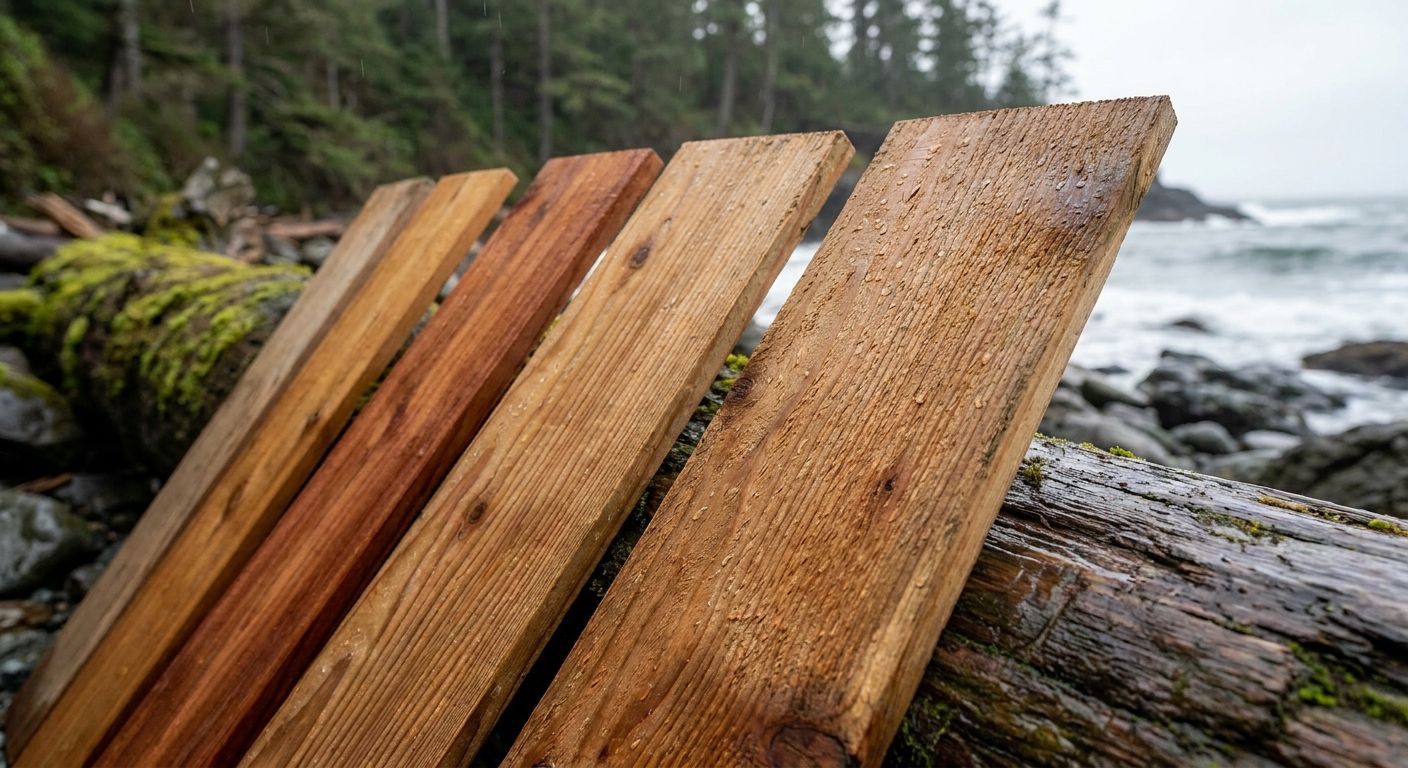
Western Red Cedar heartwood contains natural oils that resist fungal decay, which is why it's the standard trim wood on the BC coast long before vinyl or engineered products existed. It takes stain or paint cleanly and doesn't need a chemical treatment to hold up through a wet winter.
Western Red Cedar pros:
- Naturally resists rot without pressure treatment
- Holds paint and stain for longer cycles than pine or fir
- Straight, stable grain that resists cupping
- Widely available in BC lumber yards
Western Red Cedar cons:
- Higher material cost than SPF or pine
- Sapwood sections (lighter colored) don't carry the same resistance as heartwood
- Softer surface dents more easily during install
Western Red Cedar verdict: Buy. It's the benchmark for wood fascia board rot resistance in a coastal BC climate.
2. Engineered wood fascia: best for low-maintenance upkeep
Engineered wood fascia is manufactured from wood strands and resin under pressure, which closes off the grain path that lets moisture travel into solid lumber. It's not a traditional wood fascia board, but it fills the same role for homeowners who don't want a repaint every few years.
Engineered wood fascia pros:
- Consistent thickness and straight lengths, no natural warping
- Resists swelling better than raw pine at cut ends
- Factory-primed finish on most products
Engineered wood fascia cons:
- Cut edges need field sealing or they wick moisture
- Not a true solid-wood look if that matters for a heritage home
- Repair patches are harder to blend than solid wood
Engineered wood fascia verdict: Buy if minimizing maintenance matters more than matching a solid-wood profile.
3. Finger-joint primed pine: best budget solid wood option
Finger-joint pine is made from short pine sections joined end to end, then primed on all faces at the mill. It costs less than cedar and holds a straight line well, which makes it a common choice on rental properties and cost-driven renovations across BC.
Finger-joint primed pine pros:
- Lower material cost than cedar
- Mill-primed on all sides, reducing site prep
- Straight and stable for long fascia runs
Finger-joint primed pine cons:
- Pine lacks the natural decay resistance cedar has
- Needs a shorter repaint cycle to stay protected
- Finger joints can telegraph through paint over time
Finger-joint primed pine verdict: Hold. A reasonable budget pick if you commit to repainting on schedule.
“If a fascia board is already flaking paint within two years, the wood underneath is already losing to rot.”
4. Douglas Fir: best for long spans and new construction
Douglas Fir is dense and strong for its weight, which is why builders spec it for fascia on longer rooflines where the board has to hold gutter hangers across a wide span without sagging. The heartwood resists decay reasonably well; the sapwood does not.
Douglas Fir pros:
- High strength-to-weight ratio for holding fasteners
- Tight, straight grain on quality-graded stock
- Common in new-construction packages, easy to source
Douglas Fir cons:
- Sapwood sections need full priming before install, not after
- More prone to checking (surface cracks) than cedar
- Costs more than pine, less than cedar
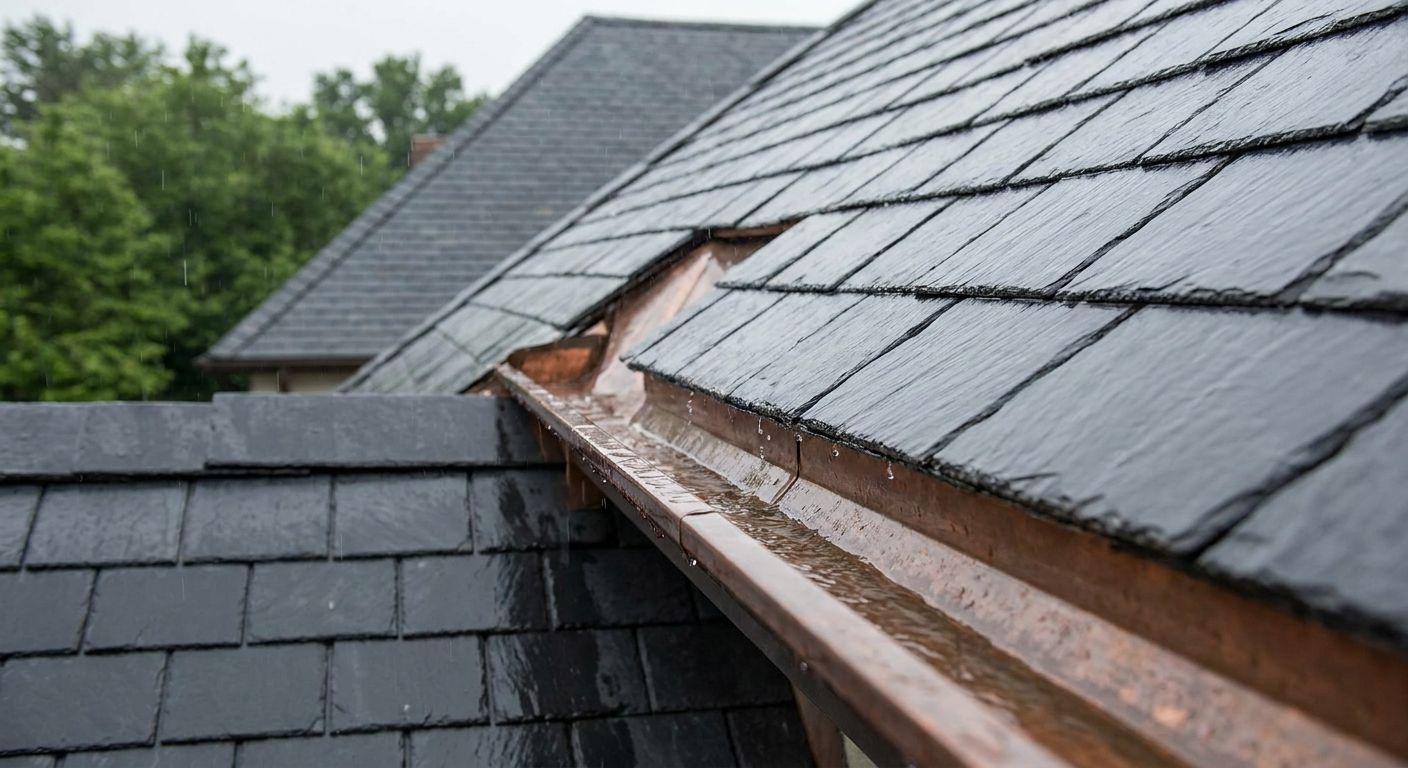
Douglas Fir verdict: Hold. Fine for structural runs on new builds if it's primed before it ever gets rained on, comparable to how box gutters need coating before they see a wet season.
5. SPF dimensional lumber: skip for exterior fascia in BC
Spruce-Pine-Fir dimensional lumber is the cheapest board on this list and the least decay-resistant. It's built for interior framing, not exterior exposure, and it shows up as fascia mainly because it's already on the truck for the framing package.
SPF lumber pros:
- Lowest material cost of any option here
- Easy to source at any lumber yard
SPF lumber cons:
- Poor natural decay resistance
- Absorbs moisture quickly at cut ends and knots
- Short service life as exterior fascia without heavy treatment
SPF lumber verdict: Skip. It belongs in the wall cavity, not on the roofline in a coastal BC climate.
How this ranking was built
The order above tracks the criteria listed earlier: natural decay resistance first, moisture behavior second, then cost and fastener holding power as tie-breakers. Cedar wins because it needs the least intervention to last; SPF loses because it needs the most.
Get your fascia checked before winter
A quick assessment tells you what's rotting and what's not.
Which wood fascia board should you choose?
Go with Western Red Cedar if the fascia is staying exposed to coastal rain for the next 15+ years and budget allows the higher board cost. Choose engineered wood fascia if you want to stop repainting every few seasons and don't need a solid-wood look. Pick finger-joint primed pine only if you're committing to a repaint cycle every 3-5 years, and reserve Douglas Fir for spans that need the extra strength. In 2026, the one board to avoid on an exposed BC roofline is raw SPF - it's the cheapest up front and the most expensive over a 10-year window once you count the re-trim.
FAQ
What is the most rot-resistant wood fascia board for BC?
Western Red Cedar is the most rot-resistant wood fascia board for BC conditions in 2026 because its heartwood contains natural decay-resistant oils. It outperforms pine, fir, and SPF without chemical treatment.
Is engineered wood fascia better than solid wood in BC?
Engineered wood fascia resists moisture at the surface better than solid pine or fir because the manufacturing process closes off the open grain path. It's not a true wood fascia board, but it needs less repainting over time.
How long does a cedar fascia board last in coastal BC?
A properly installed and maintained Western Red Cedar fascia board typically outlasts pine or SPF options by a wide margin, since the natural oils in the heartwood slow fungal decay. Repainting on schedule extends that lifespan further.
Can I use SPF lumber for exterior fascia boards?
SPF lumber can technically be installed as fascia, but it has poor natural decay resistance and absorbs moisture quickly at cut ends. It's built for interior framing, not exterior exposure in a wet BC climate.
Does fascia board wood affect gutter performance?
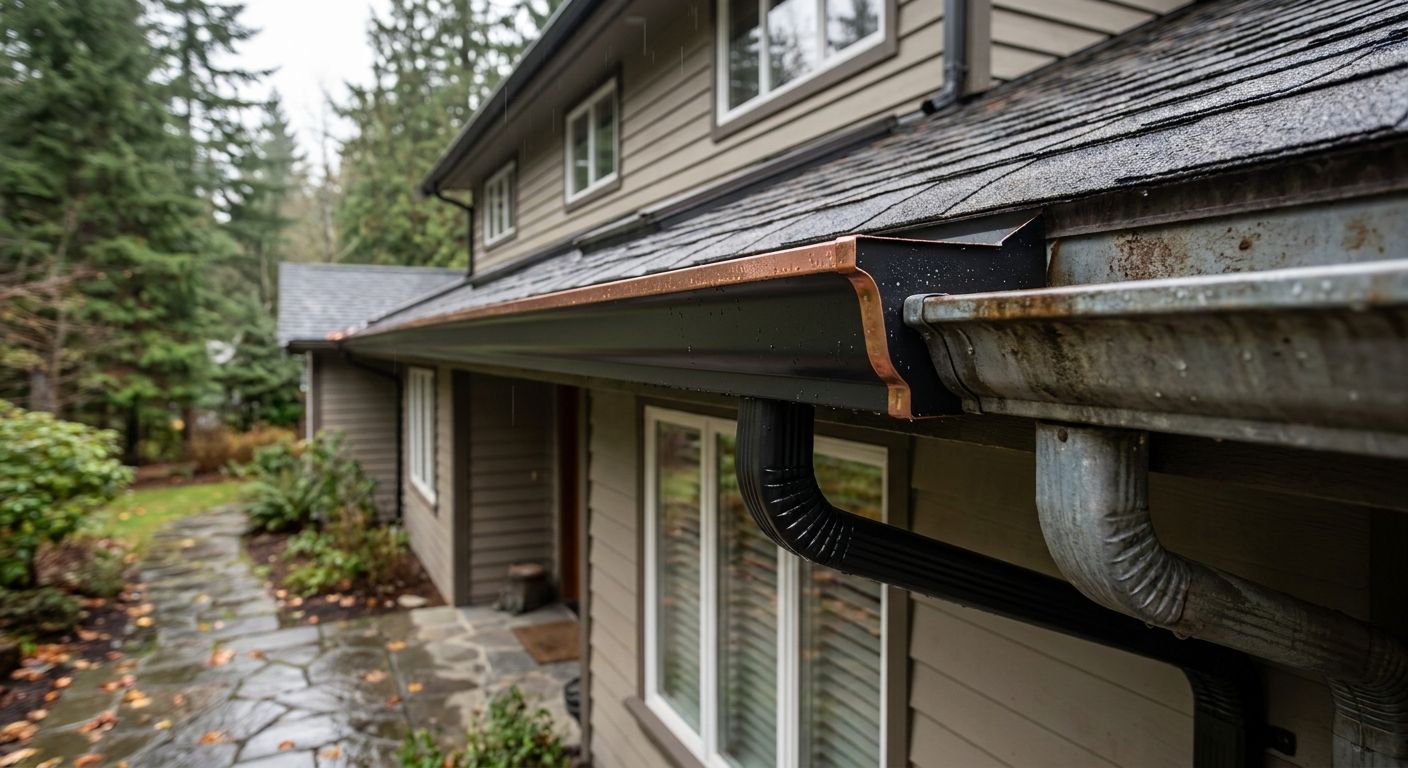
Yes, because gutter hangers and drip edge fasten directly into the fascia board. A rotting board loses its grip on those fasteners, which can pull the whole gutter run loose regardless of how good the gutter itself is.
Is finger-joint pine a good budget fascia option?
Finger-joint primed pine is a reasonable budget wood fascia board choice if you commit to a repaint cycle every 3-5 years. It lacks cedar's natural rot resistance but costs less per board foot.
Should Douglas Fir fascia be primed before installation?
Yes, Douglas Fir fascia should be primed on all sides before installation, especially the sapwood sections, since priming after install leaves the back of the board exposed to moisture from day one.
How often should wood fascia boards be repainted in BC?
Most wood fascia boards in BC need repainting every 3-7 years depending on species and sun exposure, with cedar on the longer end of that range and untreated pine or SPF on the shorter end.
One last thing
The fascia board almost never fails from the front - it fails from the back, where the board meets the roof sheathing and never gets a coat of paint or primer. Ask whoever installs your next wood fascia board whether they're back-priming before it goes up, not just face-painting it after. That single step matters more than which species you pick.