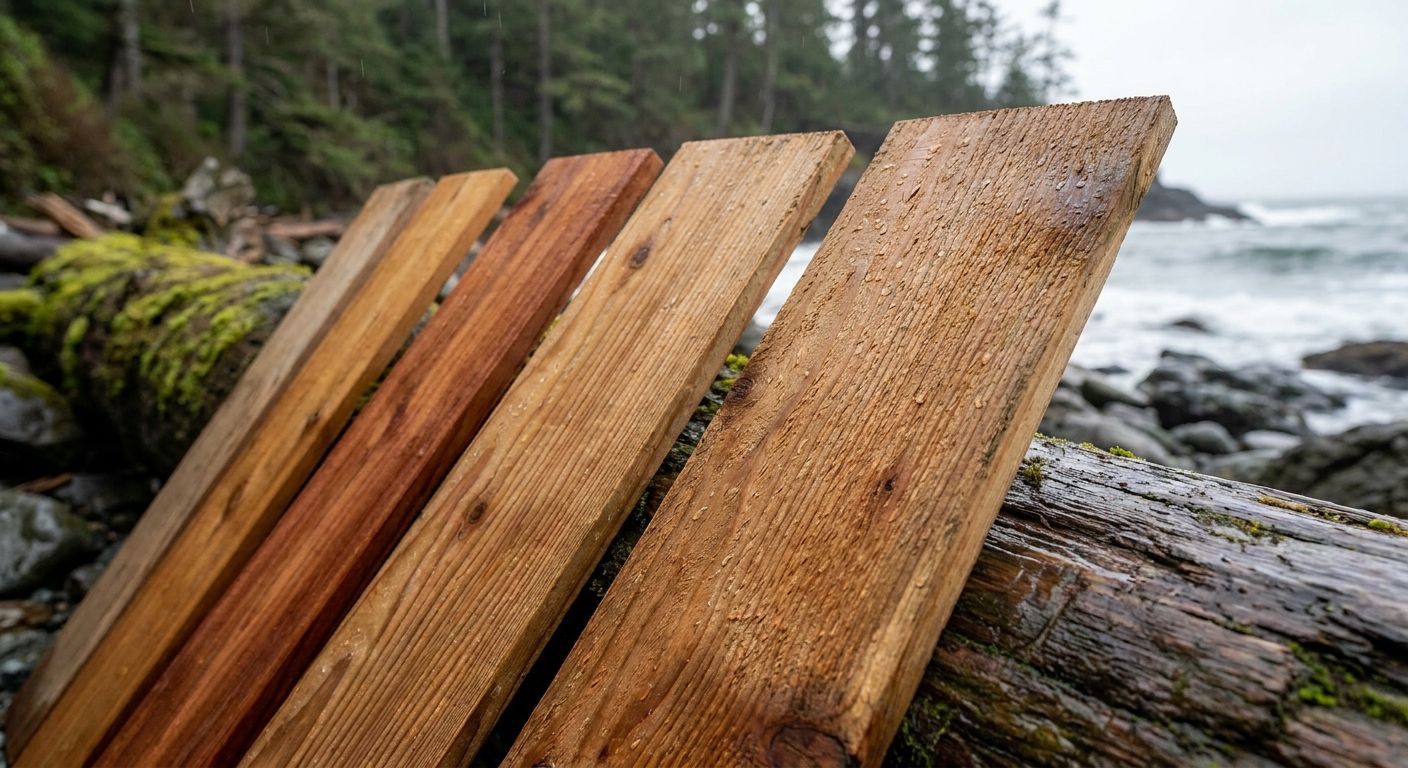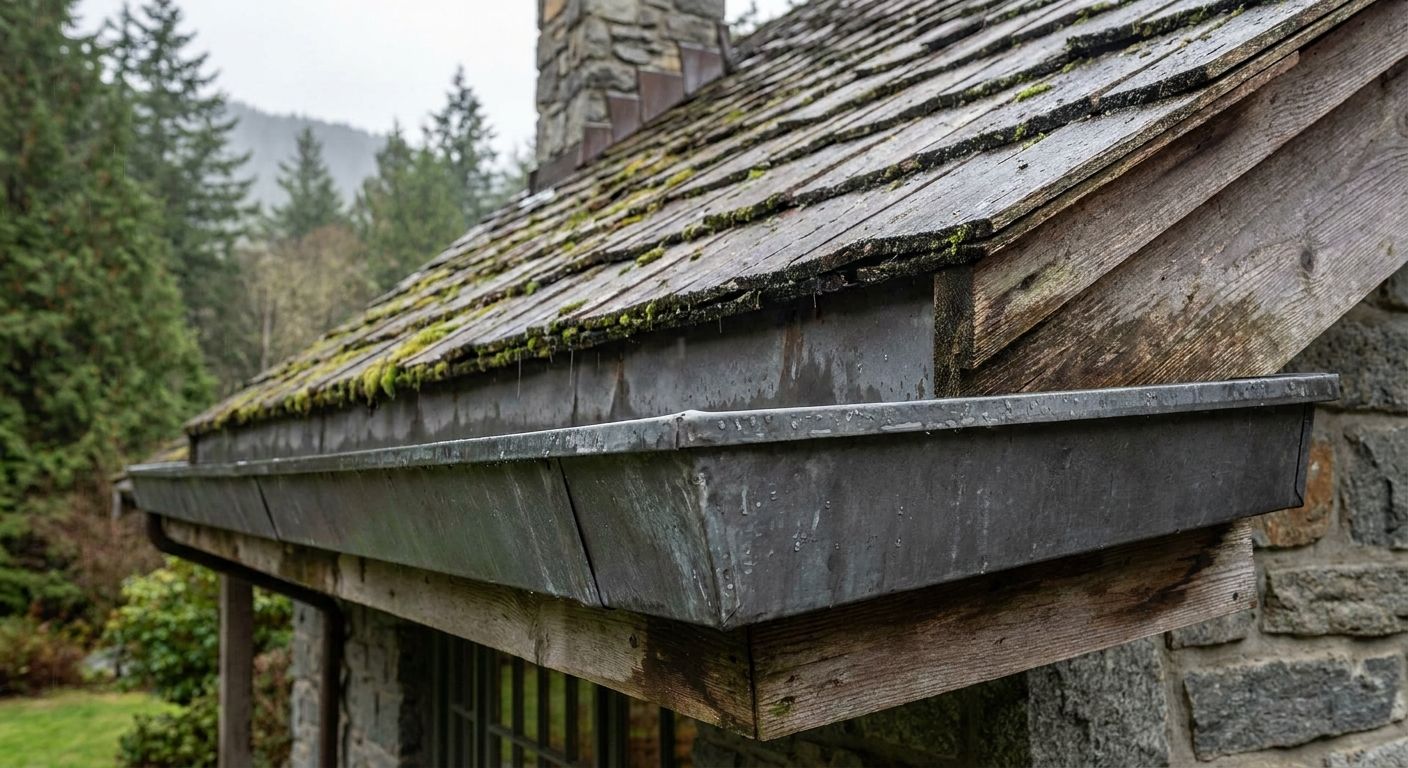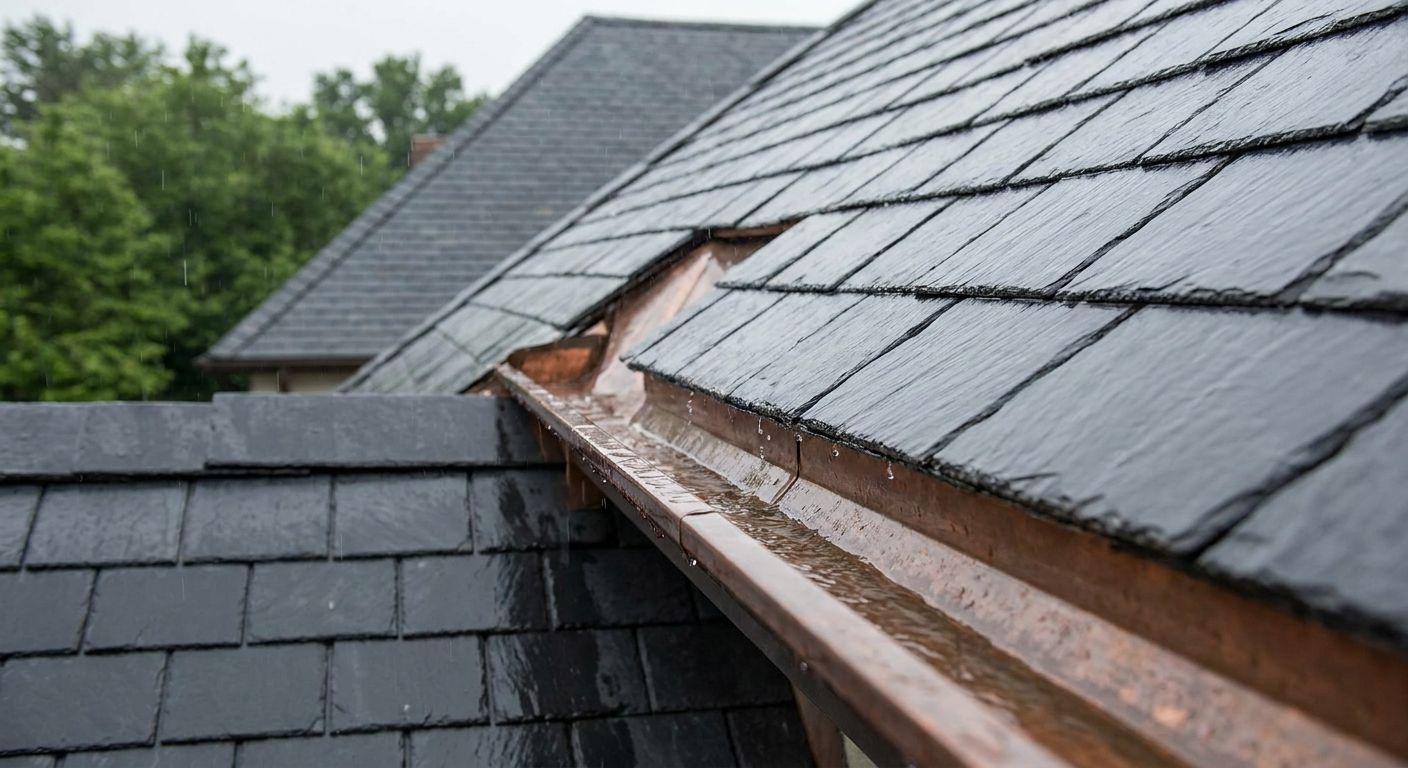
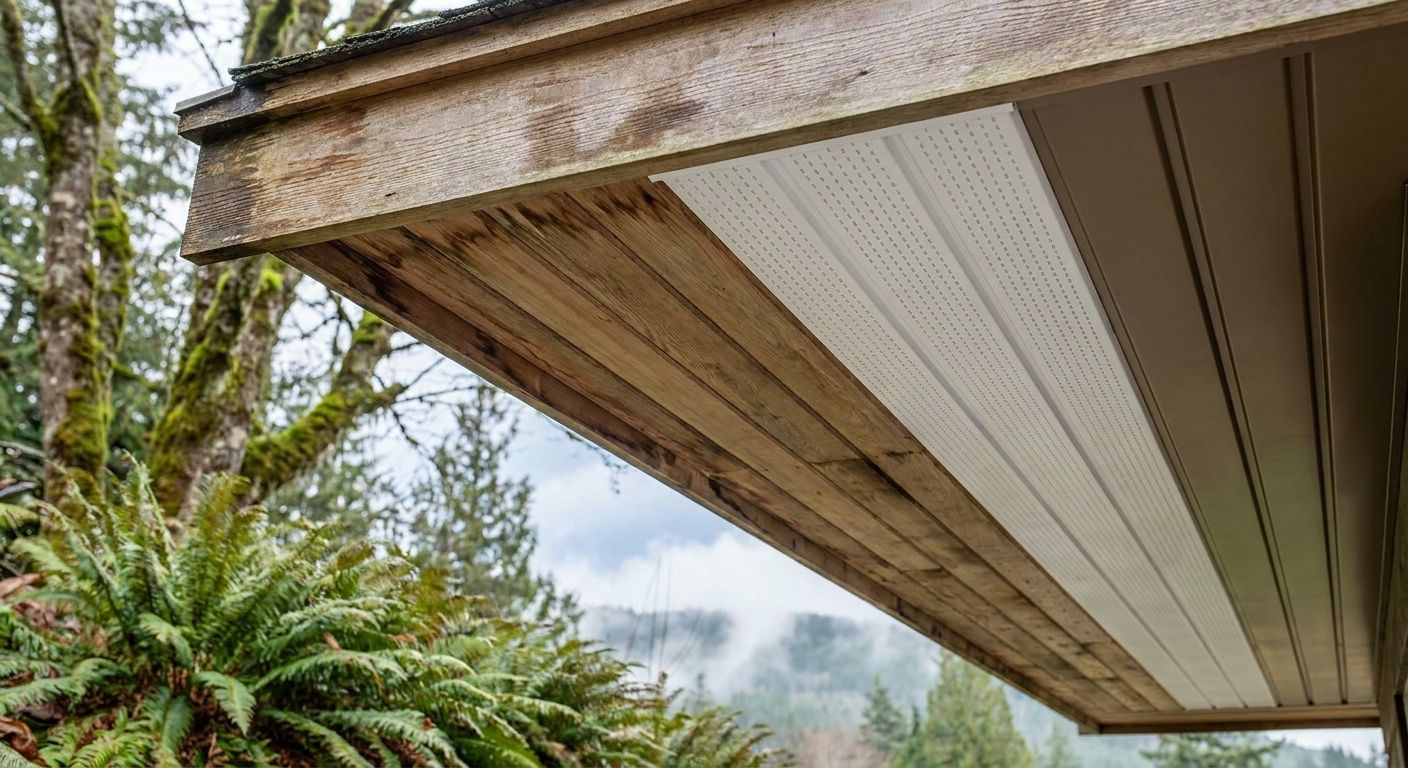
British Columbia's coast runs close to 1,200 mm of rain a year, and that moisture load decides which soffit material survives and which one rots, warps, or corrodes within a decade. Aluminum wins for coastal and high-humidity properties, vinyl wins on budget, and wooden soffits win only on heritage and character homes where the look matters more than maintenance-free performance.
- Aluminum soffits win for BC humidity overall — corrosion-resistant, low upkeep, best for coastal and Lower Mainland homes.
- Vinyl soffits win on budget — lightweight, no repainting, but can crack in hard winter cold snaps.
- Wooden soffits win only for heritage-style homes willing to repaint and inspect for rot every year.
- Ventilation gaps matter more than the material itself — a poorly vented soffit traps moisture regardless of what it's made from.
Why this matters
Soffit failure in BC almost never starts with the material — it starts with trapped moisture that the material can't shed fast enough. Once water sits against fascia board or soffit panel for weeks at a time, rot spreads into the roof deck and the repair bill stops being a soffit job and becomes a roofline job.
Gutters Canada sees the same failure pattern across the Lower Mainland, Vancouver Island, and the Interior: homeowners pick a soffit material based on price or looks, skip the ventilation math, and end up replacing the same section again in 8 to 12 years. Getting the material right for your specific exposure — direct rain, salt air, or shaded north-facing eaves — is the difference between a 20-year soffit and a 2026 repair call.
What makes the best soffit material for BC humidity
- Moisture resistance — how the material handles direct rain contact and condensation without swelling or corroding
- Rot and insect resistance — whether the surface itself can host mold, carpenter ants, or fungal decay
- Maintenance load — repainting, sealing, or fastener checks required to keep the warranty valid
- Ventilation compatibility — how easily the panel accepts perforated venting without weakening the structure
- Coastal salt-air durability — corrosion resistance for properties within a few kilometres of saltwater
- Lifespan under freeze-thaw cycling — how the material handles the Interior's harder winter swings
Soffit materials at a glance
| Material | Best for | Standout feature | Key limitation |
|---|---|---|---|
| Aluminum soffits | Coastal and high-humidity properties | Corrosion-resistant, no repainting | Can dent from hail or ladder contact |
| Vinyl soffits | Budget-conscious replacements | Lightweight, never needs paint | Cracks in hard cold snaps below freezing |
| Wooden soffits | Heritage and character-home exteriors | Matches original trim profiles | Needs annual repainting and rot checks |
1. Aluminum soffits: best for coastal and high-humidity BC properties
Aluminum soffit panels are formed from coated sheet metal and installed in vented or solid runs along the eave. The coating resists corrosion even with direct salt-spray exposure, which makes it the standard pick for Vancouver Island, the Sunshine Coast, and anywhere within a few kilometres of the water.
Aluminum soffits pros:
- Holds up against salt air without pitting or corroding
- Never needs repainting — the factory finish lasts the life of the panel
- Handles condensation and direct rain without swelling or warping
- Accepts perforated venting without losing structural rigidity
Aluminum soffits cons:
- Dents from hail, falling branches, or careless ladder placement
- Costs more upfront than vinyl in most BC markets
Aluminum soffits pricing: varies by run length and coating grade — get a site-specific quote rather than assuming a flat rate.
Best for: homeowners on the coast or anywhere humidity and salt air are the main threat.
Verdict: Buy.
2. Vinyl soffits: best for budget-conscious replacements
Vinyl soffit panels snap into a track system and never need paint, which keeps both material and labor costs down. In the Fraser Valley and Interior BC, where humidity is lower than the coast but still seasonal, vinyl holds up well for 15 to 20 years with basic upkeep.
Vinyl soffits pros:
- No repainting or sealing required over the panel's life
- Lightweight — faster install, lower labor cost
- Resists rot and insect damage completely, since there's no organic material to attack
Vinyl soffits cons:
- Cracks in hard freezes, particularly in Interior BC winters
- Can fade or chalk under years of direct UV exposure
- Not repairable in sections — a cracked panel gets replaced, not patched
Vinyl soffits pricing: the lowest material cost of the three options in most BC markets — confirm current numbers with a local installer.
Best for: homeowners prioritizing upfront cost over decades-long lifespan.
Verdict: Buy, with a caveat for colder Interior zones — ask about cold-rated vinyl grades.
3. Wooden soffits: best for heritage and character-home exteriors
Wooden soffits are solid or plywood panels finished to match original trim on older homes — Craftsman bungalows, character Vancouver homes, and heritage-designated properties where a metal or vinyl profile would look out of place. Wood soffits deliver a finish nothing else replicates, but they carry the highest maintenance load of the three materials in a wet climate.
Wooden soffits pros:
- Matches original architectural detailing on older and heritage homes
- Can be custom-milled to match unusual trim profiles
- Repairable in sections rather than full-panel replacement
Wooden soffits cons:
- Rots when ventilation is inadequate or paint fails — the top failure point BC installers see
- Requires repainting or resealing on a regular cycle to keep water out
- Attracts carpenter ants and fungal decay faster than aluminum or vinyl in humid conditions
Wooden soffits pricing: typically the most labor-intensive of the three, since custom milling and finishing add time — confirm scope with an installer before budgeting.
Best for: heritage-designated or character homes where the look outweighs the maintenance commitment.
Verdict: Wait — only if you're prepared for annual inspection and repainting. Skip for coastal or high-humidity lots where aluminum solves the same problem with zero upkeep.
How we ranked
The ranking weighs moisture resistance and maintenance load heaviest, since those two factors decide whether a BC soffit lasts 10 years or 25. Coastal salt-air durability and freeze-thaw performance break the tie between aluminum and vinyl, and heritage compatibility is the only category where wooden soffits win outright.
Not sure which soffit fits your home
Get a site-specific fascia and soffit assessment from Gutters Canada.
Which soffit material should you choose?
If you're on the coast or anywhere salt air and direct rain are constant, aluminum soffits are the default choice for 2026 — no repainting, no rot risk, and a finish built for the climate. If cost is the deciding factor and you're inland, vinyl soffits deliver 15-20 years of low-maintenance performance for less upfront. Wooden soffits stay the right call only when the home's architecture demands it and you're committed to yearly upkeep — otherwise the humidity load in most of BC works against wood faster than most homeowners expect.
A properly ventilated soffit system also protects what's above it — clogged or poorly matched gutters push water back toward the fascia line regardless of the soffit material, so the two systems need to be assessed together, not separately.
FAQ
Are wooden soffits a good choice for BC humidity?
Wooden soffits work in BC only with consistent maintenance — annual repainting and rot inspections. In coastal or high-humidity zones, aluminum or vinyl soffits last longer with far less upkeep.
What is the best soffit material for coastal BC homes?
Aluminum soffits are the best choice for coastal BC homes in 2026 because the coating resists salt-air corrosion and the panels never need repainting.
Do vinyl soffits crack in cold BC winters?
Vinyl soffits can crack during hard freezes, which makes them a bigger risk in Interior BC than on the milder coast. Ask about cold-rated vinyl grades before installing in freeze-prone areas.
How often do wooden soffits need repainting?
Wooden soffits typically need repainting or resealing on a regular annual or biennial cycle in BC's wet climate to prevent water intrusion and rot.
Is aluminum or vinyl better for soffits?
Aluminum outperforms vinyl in coastal and high-humidity conditions due to corrosion resistance, while vinyl wins on upfront cost for inland properties with milder humidity exposure.
Do soffit materials affect gutter performance?
Yes — a poorly ventilated or rotting soffit lets moisture build up behind the fascia, which affects how gutters drain and can accelerate fascia board damage.
Can wooden soffits be repaired instead of replaced?
Wooden soffits can be repaired in sections, unlike vinyl panels which usually require full replacement once cracked or damaged.
What ventilation do soffits need in BC's climate?
Soffits need perforated venting sized to the attic's airflow requirements — inadequate ventilation is the leading cause of soffit rot in BC regardless of material.
One last thing
The material choice gets most of the attention, but the ventilation gap behind the soffit panel decides more of the outcome than the panel itself — a well-ventilated wooden soffit in a dry, covered eave can outlast a poorly vented aluminum run in a trapped, humid corner. Before locking in a material, have someone check the airflow path first.