Best overall: aluminum soffit. Best budget option: vinyl soffit. Best for heritage and character homes: wood soffit, sealed and inspected annually. Best for fire-rated commercial jobs: fiber cement soffit. Coastal moisture in British Columbia punishes any soffit board that traps water behind it, and in 2026 the material you pick still decides whether that soffit lasts 10 years or 40.
- Aluminum soffit is the top pick for BC coastal moisture in 2026 because it won't rot, corrode, or need repainting.
- Vinyl soffit wins on budget but gets brittle after repeated freeze-thaw cycles in colder valley winters.
- Wood soffit board only makes sense on heritage homes that get sealed and checked every year.
- Fiber cement soffit is the right call for commercial buildings needing a fire-rated soffit assembly.
- Ventilation matters as much as material — a soffit board picked well but vented poorly still rots.
Why this matters
The Lower Mainland and Vancouver Island see well over 1,200 mm of rain a year, and that water finds its way into every gap around a soffit board before it ever reaches the ground. A soffit sits at the transition between the roofline and the wall, closing off the attic space while still needing to breathe — get the material wrong and you're either trapping moisture behind a solid panel or watching a porous one rot from the inside.
Most callouts Gutters Canada handles for sagging or stained soffit in 2026 trace back to one of two mistakes: the wrong board for the exposure, or a board installed without enough ventilated area to move humid attic air out. This guide ranks the four materials actually used on BC homes and commercial buildings by how they hold up against sustained coastal moisture, not by which one looks best in a showroom.
What makes the best soffit board for BC coastal moisture
- Moisture resistance — does the board absorb water at cut edges and fastener holes, or shed it entirely
- Ventilation compatibility — can it be specified in a perforated, vented profile without weakening the panel
- Rot and corrosion resistance — how it performs after repeated wet-dry cycles over years, not just one wet season
- Maintenance demand — repainting, resealing, or replacement cycle required to keep it functional
- Fire rating — relevant for multi-family and commercial soffit assemblies under BC Building Code fire-separation rules
- Compatibility with existing fascia and gutter systems — matching profiles and fastening methods already on the building
Soffit board materials at a glance
| Material | Best for | Standout feature | Key limitation |
|---|---|---|---|
| Aluminum soffit | Coastal homes with year-round rain exposure | Never rots, corrodes, or needs repainting | Dents from ladders and debris; cheap gauges can oil-can |
| Vinyl soffit | Budget re-siding projects | Fully moisture-proof, wide factory color range | Gets brittle with age and cold-weather impact |
| Wood soffit board | Heritage and character homes | Matches original trim profiles exactly | Most vulnerable of the four if flashing details fail |
| Fiber cement soffit | Commercial and multi-family fire-rated builds | Non-combustible, holds paint longer than wood | Heavier, needs tighter fastener spacing |
1. Aluminum soffit: best soffit board for coastal moisture overall
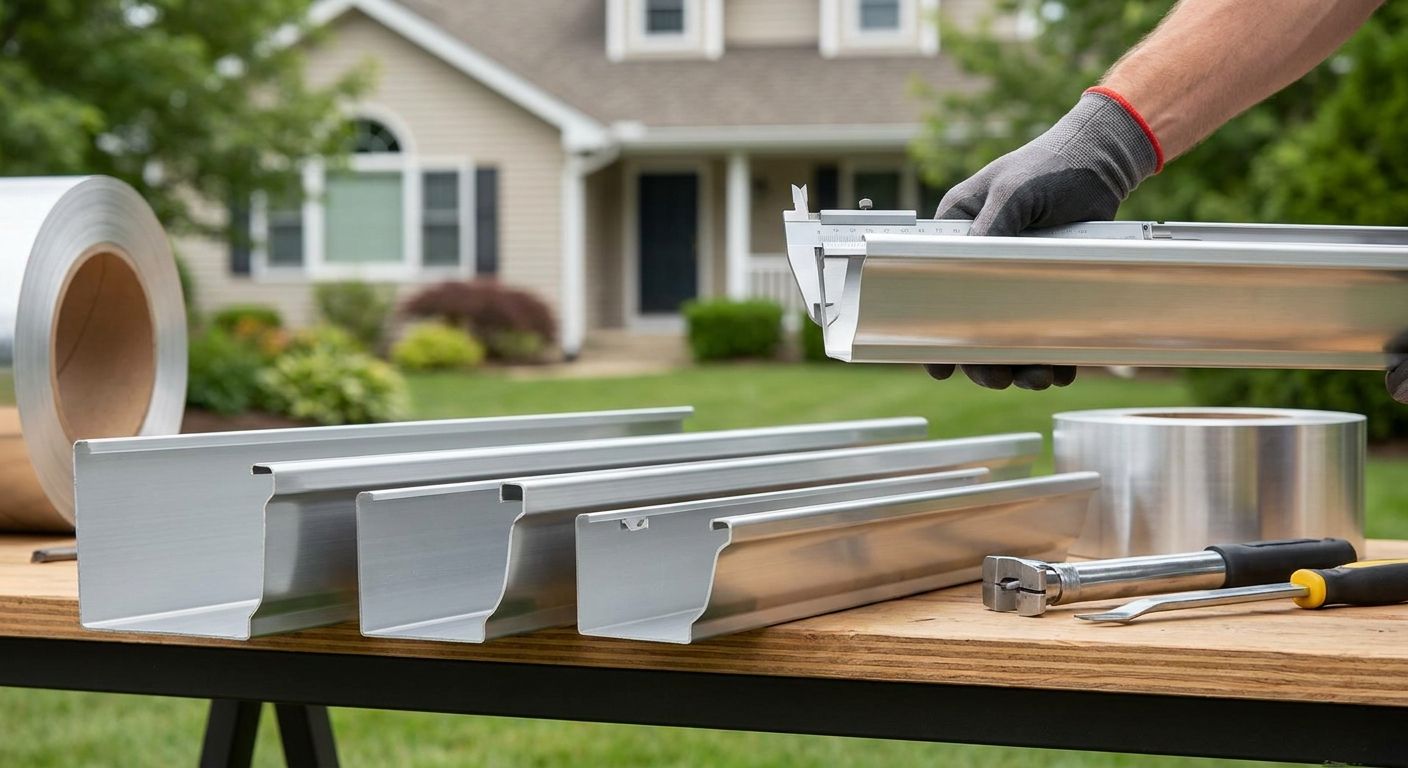
Aluminum soffit comes pre-finished, ventilated or solid, and snaps into F-channel the same way aluminum fascia and gutter trim does. It doesn't absorb water, so there's no rot cycle to manage — the panel either sheds moisture or it doesn't need to shed anything because nothing gets in.
Aluminum soffit pros:
- Won't rot, delaminate, or corrode in a wet coastal climate
- Factory finish holds for decades with zero repainting
- Works with continuous ventilation strips for even attic airflow
- Matches most existing aluminum fascia and gutter systems already on BC homes
Aluminum soffit cons:
- Dents from ladder contact or falling branches, and dents don't pop back out
- Thinner, cheaper gauges can oil-can — a visible waviness in direct light
- Inside corner seams still need caulking to stay fully sealed
Best for: homes and buildings directly exposed to sustained coastal rain and salt-laden air. Verdict: Buy.
2. Vinyl soffit: best budget soffit board option
Vinyl soffit panels are lightweight PVC, typically perforated for attic ventilation, and install with a J-channel system similar to aluminum. It's the lowest-maintenance material to source and install when the exposure isn't extreme.
Vinyl soffit pros:
- Fully moisture-proof — no rust, no corrosion, no rot
- Generally the lowest material cost of the four options ranked here
- Factory-baked color goes all the way through the panel, so scratches don't show white
- Fast to install over existing soffit framing
Vinyl soffit cons:
- Gets brittle with age and UV exposure, especially after repeated freeze-thaw cycles in colder BC valleys
- Cracks under impact more easily than aluminum once it's past its first decade
- Sags visibly between fasteners if the installer spaces them too wide
Best for: budget-conscious re-siding projects where impact risk from branches or ladders is low. Verdict: Buy for budget jobs, with the brittleness trade-off understood upfront.
3. Wood soffit board: best for heritage and character homes
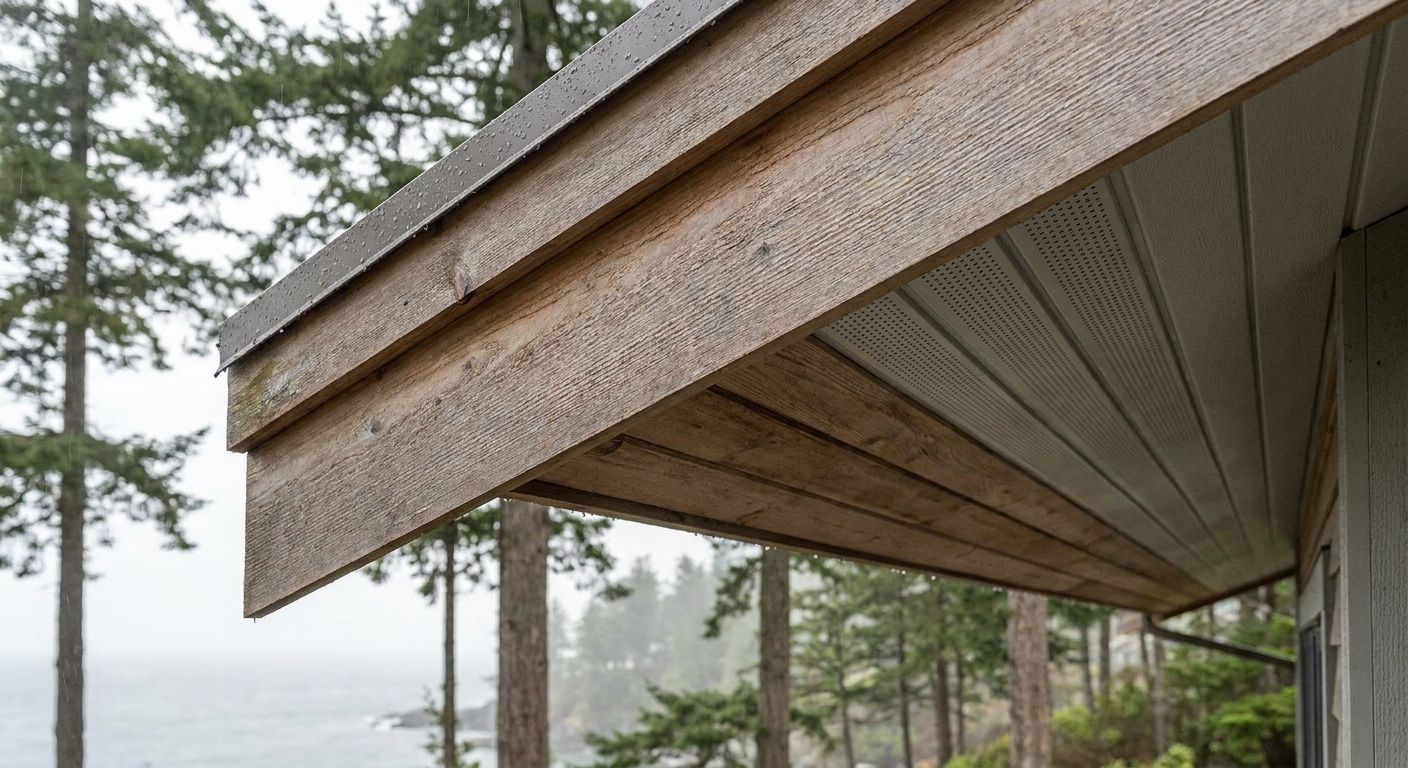
Tongue-and-groove cedar or plywood soffit boards show up on older character homes across BC where matching the original trim profile matters more than low maintenance. It's the only material on this list that can be repaired board-by-board instead of replaced as a full section.
For the fascia side of the same wall assembly, the wood fascia board rot-resistance rankings cover which species and grades hold up best paired with a wood soffit.
Wood soffit board pros:
- Matches heritage and character-home trim profiles that vinyl and aluminum can't replicate
- Repairable one board at a time instead of a full panel tear-out
- Accepts individual round vents where continuous ventilation isn't wanted visually
Wood soffit board cons:
- Absorbs moisture fastest of the four at cut ends and fastener holes
- Needs repainting or resealing on a recurring cycle to stay functional
- Most vulnerable material here if flashing or drip-edge details fail even slightly
Best for: heritage and character properties where the visual match to original trim outweighs the maintenance cost. Verdict: Hold — only with annual inspection and a sealed, maintained finish.
4. Fiber cement soffit: best for fire-rated commercial jobs
Fiber cement soffit panels are a cement-and-cellulose composite, factory-primed, and specified mostly on commercial and multi-family buildings where a fire-rated soffit assembly is required under BC Building Code fire-separation provisions.
Fiber cement soffit pros:
- Non-combustible, meeting fire-rated soffit assembly requirements
- Doesn't absorb water the way wood does
- Holds paint longer than wood soffit board before it needs a recoat
Fiber cement soffit cons:
- Heavier than the other three, requiring tighter fastener spacing and solid blocking
- Edges chip during on-site cuts if the installer isn't using the right blade
- Fewer vented-panel options on the market compared to aluminum or vinyl
Best for: commercial buildings and multi-family projects with fire-separation code requirements. Verdict: Buy for commercial fire-rated applications.
How we ranked these
The ranking weighs moisture resistance and rot/corrosion resistance heaviest, since that's the failure mode that actually shows up on BC coastal properties in 2026 — not cosmetic wear. Ventilation compatibility and maintenance demand break the tie between materials that otherwise resist water equally well, which is why aluminum edges out vinyl for exposed sites even though vinyl is also fully moisture-proof.
Get a soffit material recommendation
Tell a gutter professional your exposure and roofline, get the right board for it.
Which soffit board should you choose?
For most BC coastal properties in 2026, aluminum soffit is the default pick — it needs the least intervention over the life of the building and matches the aluminum fascia and gutter systems already installed on most homes. Choose vinyl soffit when budget is the deciding factor and the site has low impact risk. Stick with wood soffit board only on heritage homes where trim matching is non-negotiable, and only if you're committed to annual maintenance. Fiber cement soffit is the right call the moment fire-separation code applies, full stop.
For the full material comparison including aluminum, vinyl, and wood side by side, see the wood vs. vinyl vs. aluminum soffit breakdown.
FAQ
What's the best soffit board material for BC coastal moisture in 2026?
Aluminum soffit is the best overall choice for BC coastal moisture in 2026 because it doesn't rot, corrode, or need repainting over decades of exposure. Vinyl comes close on moisture resistance but is more prone to brittleness with age.
Is vinyl soffit better than aluminum in wet climates?
Vinyl soffit resists moisture just as well as aluminum, but it gets brittle and can crack under impact after years of freeze-thaw cycles. Aluminum holds up better long-term on directly exposed coastal walls.
How long does wood soffit last on the BC coast?
Wood soffit board can last for decades on the BC coast, but only with a sealed finish and annual inspection of the flashing and drip edges. Without that maintenance, it's the fastest of the four materials to show rot.
Do soffits need ventilation in coastal British Columbia?
Yes — soffit ventilation moves humid attic air out year-round, and coastal BC's rain and humidity make that airflow more critical than in drier climates. Undersized vents trap moisture behind any soffit material, including aluminum.
Can fiber cement soffit be used on residential homes?
Fiber cement soffit can be used residentially, but it's specified most often on commercial and multi-family buildings that need a fire-rated soffit assembly. It's heavier than aluminum or vinyl and needs tighter fastener spacing.
What causes soffit rot in Vancouver and the Lower Mainland?
Soffit rot in the Lower Mainland usually comes from water getting behind the board through failed flashing, undersized ventilation, or a porous material like wood absorbing moisture at cut ends. Over 1,200 mm of annual rainfall makes any gap in the system a long-term liability.
Should soffit and fascia be the same material?
Matching soffit and fascia materials simplifies maintenance and keeps the finish consistent, though it isn't required structurally. Aluminum soffit paired with aluminum fascia is the most common low-maintenance combination on BC homes.
How much does BC coastal rain affect soffit board choice?
Sustained coastal rain is the main reason moisture-resistant materials like aluminum and vinyl outperform wood soffit board over time. The volume of rain matters less than how consistently the board sheds it without absorbing water at seams and fasteners.
One last thing
Material choice gets most of the attention, but net free ventilation area matters just as much — a soffit board picked correctly and installed with too few perforations still traps humid attic air behind it, and that trapped air causes hidden sheathing rot long before the soffit itself shows any damage. Check the vented area against the attic square footage before assuming the material alone solved the moisture problem.