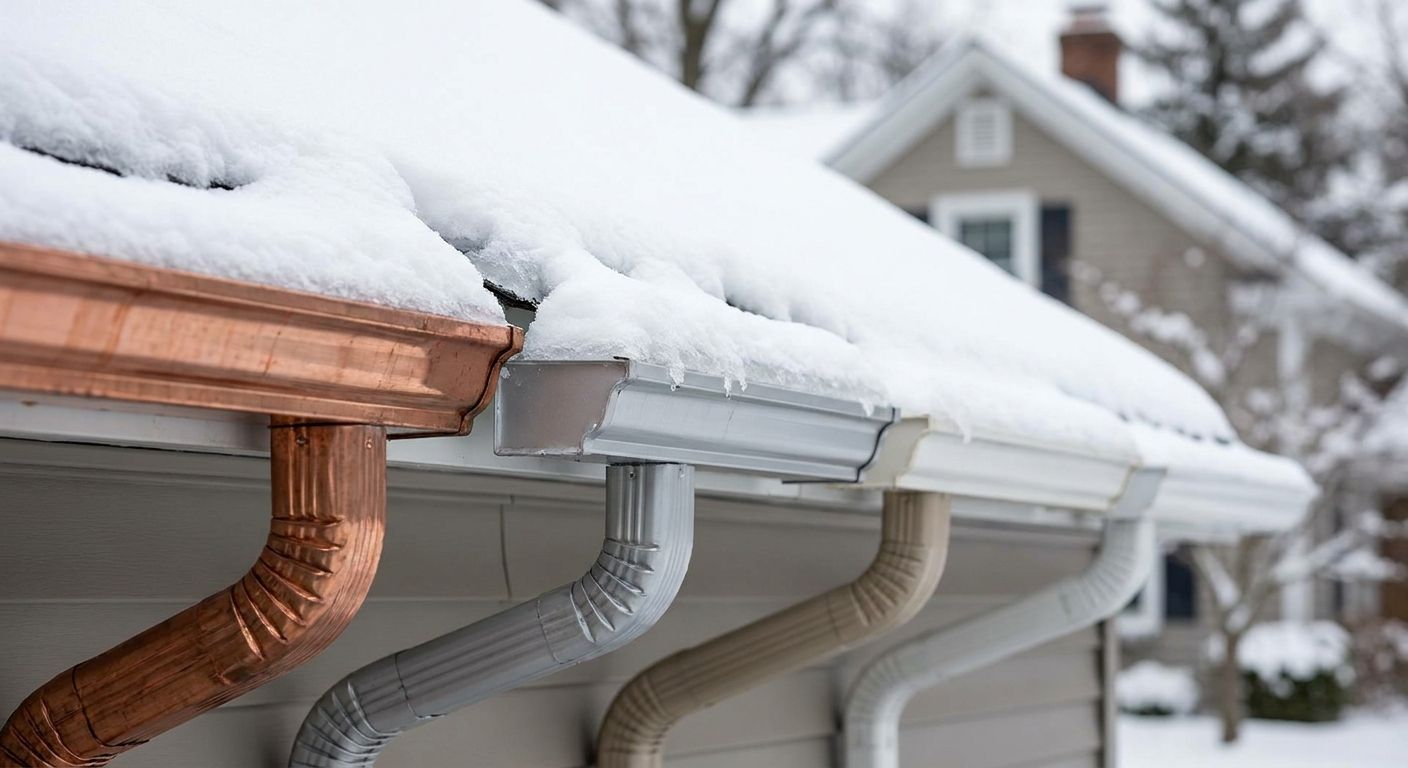
Standard eavestroughs alone don't keep up with Metro Vancouver's roughly 1,200 mm of annual rainfall, and coastal mountain zones see 2,000 mm or more in a normal year. The gutter and drainage combo you choose decides whether that water reaches a storm line or pools against your foundation. This guide ranks five setups against BC's rain volume, roof complexity, and tree cover so you can match the right system to the property in 2026.
- Seamless K-Style gutters with underground downspout extensions are the best gutter and drainage combo for most BC homes in 2026.
- Box gutters paired with interior drainage suit older BC homes with built-in rooflines.
- Add a leaf guard system to seamless gutters on lots with heavy tree cover; skip it on low-debris roofs.
- Valley gutter systems need oversized downspouts on multi-valley roofs common in BC's steep terrain.
- Coastal humidity makes soffit and fascia material choice as important as the gutter and drainage combo itself.
Why this matters
A gutter that's sized for a dry prairie roof fails on a coastal BC one. Seamless K-Style gutters remain the baseline most contractors install (see how seamless gutters rank on cost and durability), but the gutter is only half the system. The drainage side — downspout sizing, discharge points, French drain tie-ins — decides whether the water actually leaves your property.
Get the pairing wrong and you get one of two failures: overflow during a winter atmospheric river event, or a full gutter dumping water two feet from your foundation wall. Both cost more to fix after the fact than they would have to spec correctly at install. The right combo depends on your roof shape, your tree cover, and how old the house is — not on whichever product is cheapest per foot.
What makes the best gutter and drainage combo
- Discharge capacity — gutter profile and downspout cross-section relative to roof square footage
- Discharge point — daylighting away from the foundation, dry well, or municipal storm connection
- Roof compatibility — pitch, number of valleys, and whether the roofline is original or built-in
- Debris load — proximity to cedar, fir, and bigleaf maple canopy
- Material durability — resistance to moss growth, UV cracking, and coastal salt air
- Maintenance access — how easy the combo is to inspect and clear without specialty tools
At a glance
| Combo | Best for | Standout feature | Key limitation |
|---|---|---|---|
| Seamless K-Style + underground downspout extensions | Standard BC homes | Fewer seams, fewer leak points | Still needs cleaning without a guard |
| Box gutters + interior drainage tie-ins | Older BC homes with built-in rooflines | Matches original roof design | Harder to inspect once boxed in |
| Seamless gutters + leaf guard system | Heavy tree cover | Cuts clog frequency on debris-heavy lots | Guards don't stop all needle debris |
| Valley gutter systems + oversized downspouts | Complex, multi-valley roofs | Handles concentrated water flow at valleys | Requires precise install to avoid ice damming |
| Gutters + moisture-resistant soffit/fascia upgrade | High-humidity coastal climates | Protects the structure gutters can't reach | Adds a second trade to the job |
1. Seamless K-Style gutters + underground downspout extensions: best gutter and drainage combo for standard BC homes
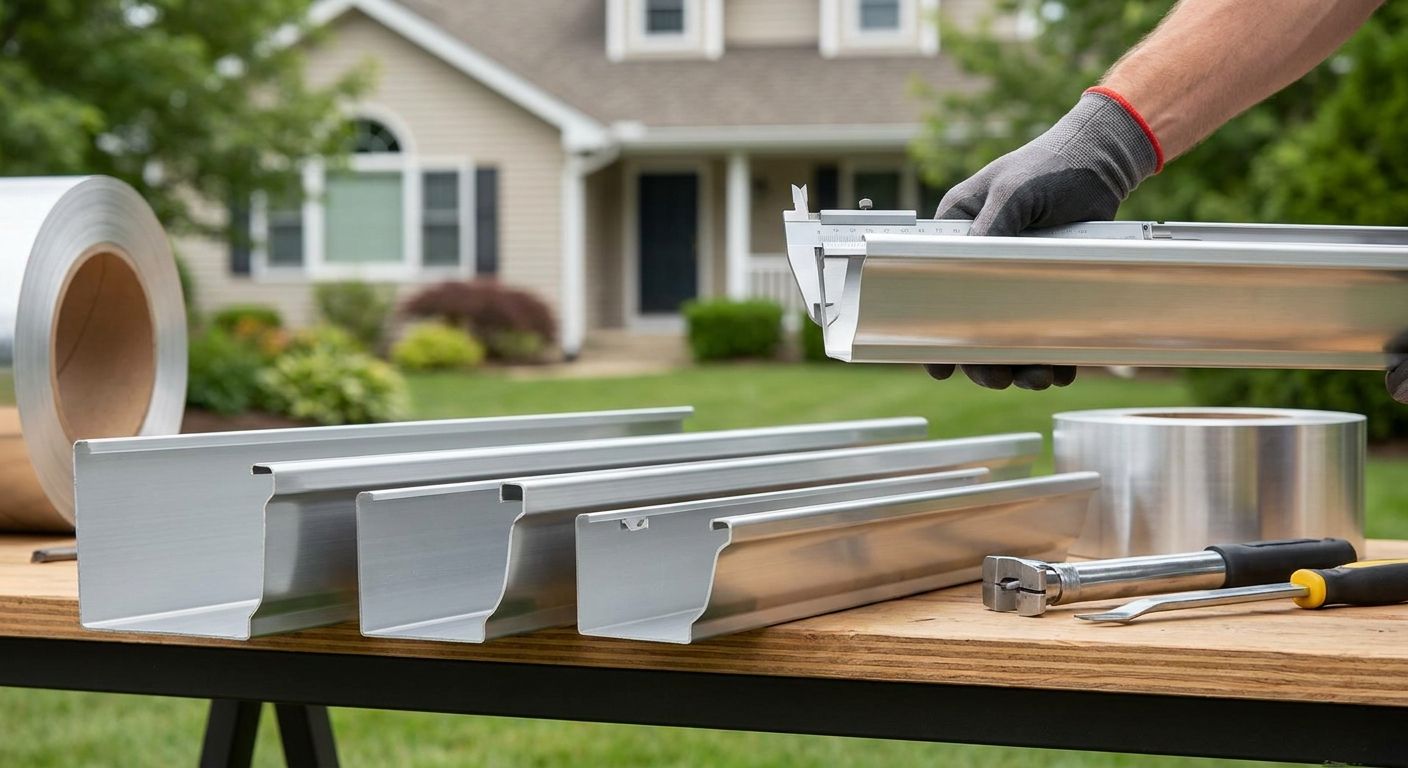
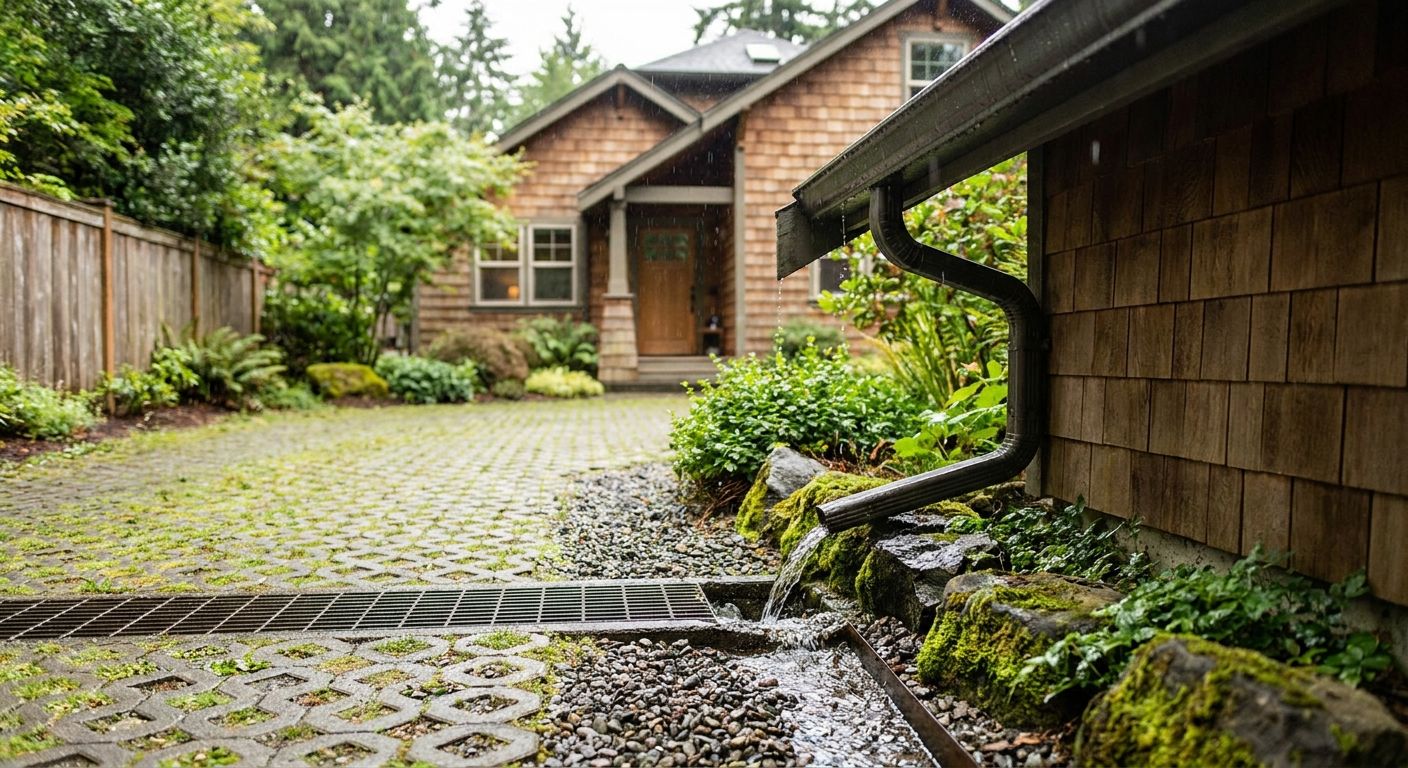
This is the default pairing for most single-family BC homes, and for good reason. Seamless K-Style gutters are formed on-site in continuous runs, so there are no horizontal seams for water to work loose over a wet winter. Paired with downspout extensions run underground to a daylight point or dry well, the water clears the foundation instead of pooling at the drip line.
Seamless K-Style + underground extensions pros:
- No horizontal seams means fewer leak points over 2026 and beyond
- Underground extensions keep discharge away from crawlspaces and basements
- Fits standard roof pitches without custom fabrication
Seamless K-Style + underground extensions cons:
- Still needs periodic cleaning unless paired with a guard
- Underground lines can clog with silt if not sloped correctly
- Doesn't solve valley concentration on complex rooflines
Verdict: Buy. For a straightforward gable or hip roof in most BC municipalities, this is the combo to default to in 2026.
2. Box gutters + interior drainage tie-ins: best gutter and drainage combo for older BC homes with built-in rooflines
Older BC homes, particularly pre-1970s builds, were often designed with box gutters built into the roofline rather than hung eavestroughs. Replacing the roof design to fit hung gutters is disruptive and expensive; the smarter move on these properties is repairing or replacing the box gutter system and tying the interior drains into the existing plumbing. Full detail on longevity by material is in the box gutter durability ranking for older BC homes.
Box gutters + interior drainage pros:
- Preserves original roofline and architectural detail
- Interior drains are less exposed to freeze-thaw cycling than exterior downspouts
- Avoids costly roof modifications on heritage-style homes
Box gutters + interior drainage cons:
- Harder to inspect visually once sealed under roofing material
- Leaks can go undetected longer, causing hidden fascia and sheathing damage
- Repair costs run higher than hung-gutter equivalents when access is limited
Verdict: Buy if your home already has box gutters and the roofline was built around them. Skip trying to retrofit hung gutters onto a house designed for box gutters — it rarely fits cleanly.
Get your BC roofline assessed
Find out which gutter and drainage combo fits your home before rain season peaks.
3. Seamless gutters + leaf guard system: best gutter and drainage combo for heavy tree cover
Properties surrounded by cedar, fir, or bigleaf maple canopy clog fast without added protection. Adding a leaf guard system on top of seamless K-Style gutters cuts the frequency of hand-clearing, though it doesn't eliminate maintenance entirely — fine needle debris and moss spores still get through most guard designs. Whether the added cost makes sense for your lot is broken down in the gutter guard guide for BC homeowners.
Seamless gutters + leaf guard pros:
- Cuts clog frequency significantly on debris-heavy lots
- Reduces the number of times you're on a ladder each year
- Extends the interval between professional cleanings
Seamless gutters + leaf guard cons:
- Doesn't stop all needle and seed debris
- Adds upfront cost over gutters alone
- Some guard styles trap moisture against the gutter lip if installed poorly
Verdict: Buy on lots with dense canopy overhanging the roofline. Wait on properties with minimal tree cover — the added cost won't pay off.
4. Valley gutter systems + oversized downspouts: best gutter and drainage combo for complex, multi-valley roofs
Roofs with multiple valleys concentrate water flow at each junction point, and a standard gutter run can't keep up during a heavy Pacific storm. Valley gutter systems built with proper slope and paired with oversized downspouts handle that concentrated flow without backing up onto the roof deck. Leak resistance by material and design is ranked in the valley gutter systems leak-resistance guide.
Valley gutter systems + oversized downspouts pros:
- Manages concentrated flow at roof valleys without overflow
- Reduces ice damming risk in colder BC interior regions
- Pairs well with steep-pitch roofs common in mountain and interior properties
Valley gutter systems + oversized downspouts cons:
- Installation precision matters more than on flat runs — a poor slope defeats the design
- Costs more than a standard hung-gutter setup
- Requires periodic inspection at each valley junction
Verdict: Buy for any roof with two or more valleys draining into a shared low point. Hold off if your roofline is simple — you don't need the added complexity.
5. Gutters + moisture-resistant soffit and fascia upgrade: best gutter and drainage combo for high-humidity coastal climates
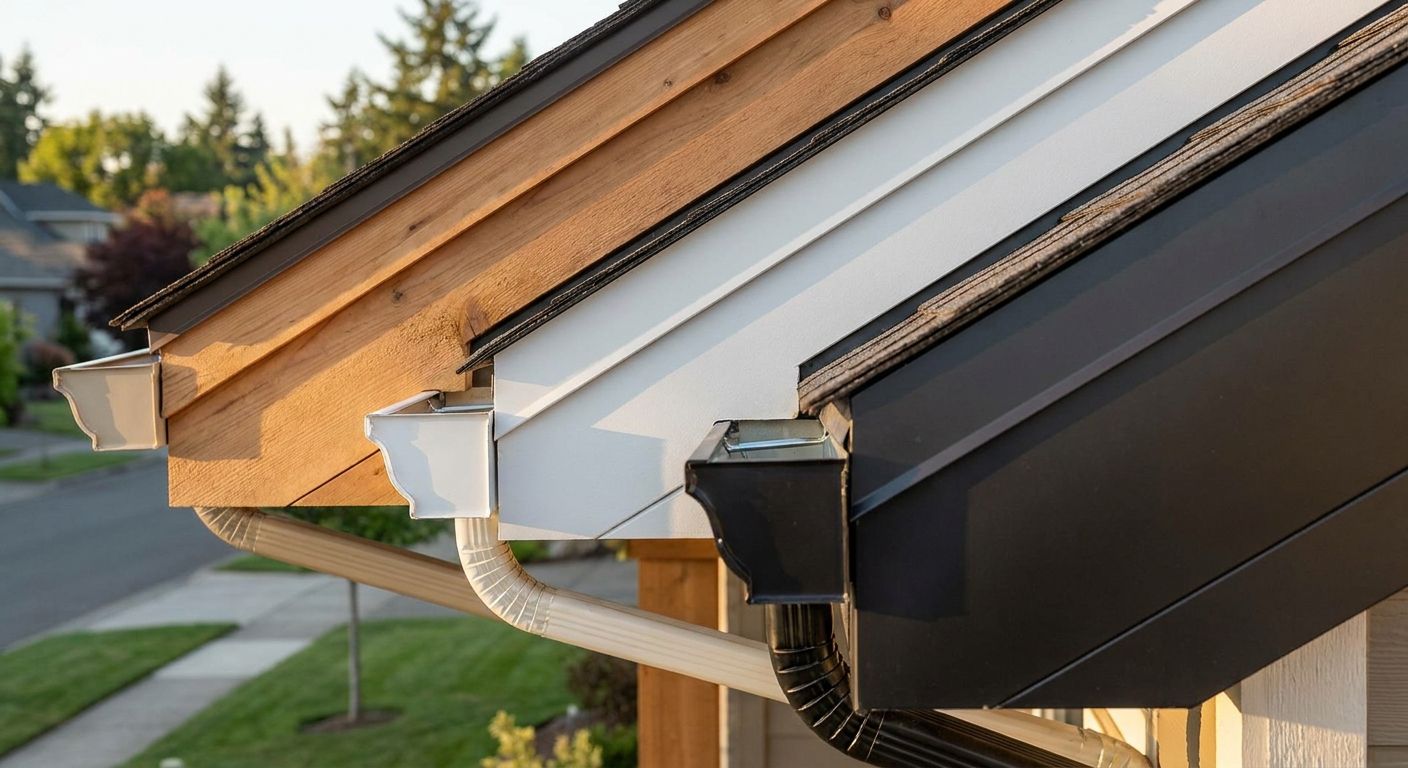
On the BC coast, the gutter itself is rarely the failure point — the fascia and soffit behind it are. Constant humidity and driving rain rot wood fascia and soffit faster than interior climates, and once that structure fails, no gutter mounted to it holds properly. Pairing a gutter replacement with a moisture-resistant soffit and fascia upgrade addresses both problems at once. Material comparisons by humidity performance are in the soffit material ranking for BC humidity.
Gutters + soffit/fascia upgrade pros:
- Protects the structural backing the gutter is mounted to, not just the water flow
- Vinyl and aluminum options resist rot that wood soffit can't in coastal climates
- Addresses the root cause of gutter sag on older homes
Gutters + soffit/fascia upgrade cons:
- Adds a second trade scope and cost to the project
- Not necessary on homes with already-sound fascia and soffit
- Longer project timeline than a gutter-only job
Verdict: Buy if fascia or soffit inspection shows soft spots or visible rot. Skip the added scope if the existing fascia is sound — spend the budget on the gutter and drainage side instead.
How we ranked
Each combo is scored against the six criteria above: discharge capacity, discharge point, roof compatibility, debris load, material durability, and maintenance access. None of the five wins on every axis — that's the point. A homeowner with a simple gable roof and no trees doesn't need the same combo as a heritage home with box gutters or a mountain property with four roof valleys.
Which gutter and drainage combo should you choose?
If you're unsure where your property lands, start with the roof shape and tree cover, then work down the list. Most BC homeowners land on seamless K-Style gutters with underground downspout extensions — it's the combo that handles standard rainfall volumes without over-engineering the system. Add a leaf guard if canopy cover is heavy, upgrade to valley gutters if your roofline has multiple valleys, and don't ignore fascia and soffit condition just because the gutter looks fine from the ground. Gutters Canada crews assess all of these factors during a site visit rather than quoting off a photo, because the wrong combo on paper looks identical to the right one until the first heavy rain of 2026 hits.
FAQ
What's the best gutter and drainage combo for BC's heavy rainfall?
For most standard BC homes, seamless K-Style gutters paired with underground downspout extensions handle typical rainfall volumes without overflow. Homes with complex rooflines, heavy tree cover, or heritage box gutters need a different pairing, covered above.
Do I need a leaf guard system with seamless gutters in BC?
Only if your roofline sits under heavy cedar, fir, or maple canopy. On low-debris lots, a leaf guard adds cost without meaningfully reducing your cleaning schedule.
Are box gutters still worth repairing on older BC homes?
Yes, when the roofline was originally built around them. Retrofitting hung gutters onto a house designed for box gutters usually creates more problems than it solves.
How much rain does BC actually get compared to other regions?
Metro Vancouver averages roughly 1,200 mm of rainfall annually, while coastal mountain zones see 2,000 mm or more, well above what standard eavestrough sizing in drier regions accounts for.
What downspout size handles BC rainfall best?
Larger cross-section downspouts move more water per minute, which matters most on roofs over 1,500 square feet or with multiple valleys concentrating flow into fewer outlets.
Is valley gutter installation different from standard gutter installation?
Yes. Valley gutters require precise slope calculation at each junction point since they handle concentrated water flow from two roof planes meeting, not a straight run along one eave.
Does fascia condition affect gutter performance?
Directly. A gutter mounted to rotted fascia will sag and pull away from the roofline regardless of how well the gutter itself is installed.
Should I upgrade my drainage system when replacing gutters?
If your current downspouts discharge within a few feet of the foundation, yes. Extending discharge points underground or to a proper daylight point prevents the most common cause of BC basement moisture.
One last thing
The combo that fails most often in BC isn't a bad gutter — it's a good gutter with a downspout dumping water three feet from the foundation. Fix the discharge point before you upgrade the gutter profile; it's the cheaper problem and the one that causes the most damage when ignored through a wet 2026 winter.