Aluminum wins on overall value for most British Columbia homes, steel wins for high-snow-load and high-impact roof lines, and copper wins for heritage or high-end properties where a 50-plus year lifespan justifies the material cost. If you're choosing between aluminum vs steel vs copper gutters in 2026, the decision comes down to how much rain, snow, and debris your roof handles and how long you want the system to last before replacement.
- Aluminum gutters resist corrosion and stay lightweight — the default pick for most BC coastal homes in 2026.
- Steel gutters carry more snow load and impact resistance, but the coating has to hold up or rust starts.
- Copper gutters can last 50 to 100 years and never need paint, at a material cost far above aluminum or steel.
- Gutters Canada installs all three materials across BC and sizes the system to the roof, not just the material.
Why this matters
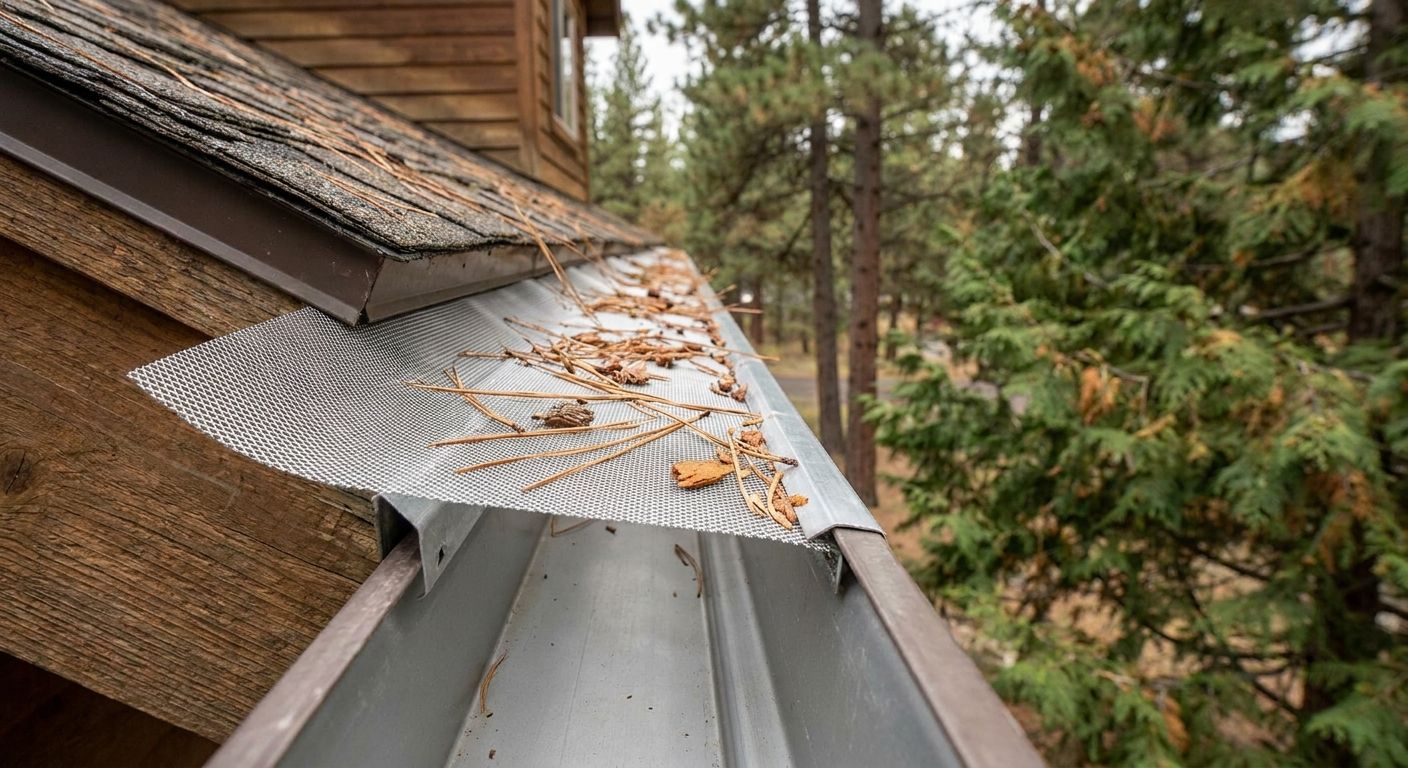
A gutter that fails in year 8 instead of year 25 isn't a minor inconvenience — it means repeated fascia repair, soffit rot, and foundation risk every time it happens. Coastal BC sees well over 1,000 mm of rain a year in most regions, and that volume punishes the wrong material fast. Picking aluminum, steel, or copper without weighing corrosion resistance, load capacity, and maintenance against your specific roof is how homeowners end up replacing a system twice in one decade.
Gutters Canada works with all three materials on residential and commercial jobs across British Columbia, and the material choice changes the whole maintenance conversation — not just the upfront look of the fascia line.
What makes the best gutter material
- Corrosion resistance — how the material holds up against constant coastal moisture and standing water
- Load capacity — how much weight from snow, ice, or debris the gutter can carry without sagging or pulling from the fascia
- Lifespan — the realistic number of years before the material needs replacement, not just touch-up repair
- Maintenance demand — painting, resealing, or coating upkeep required to hit that lifespan
- Weight per linear foot — how much load the fascia and hangers carry, which affects install method and long-term pull-away risk
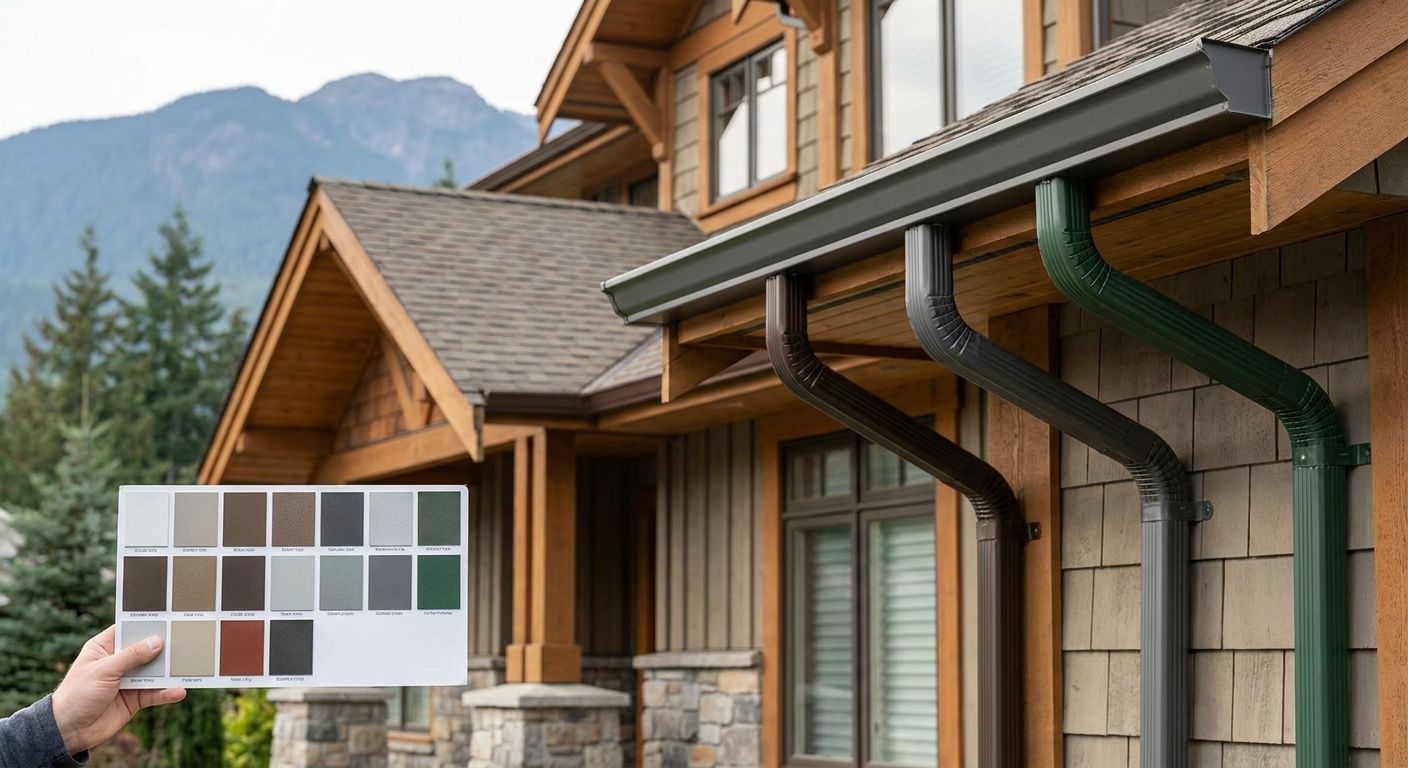
- Finish and profile options — available colors, gauges, and seamless vs sectional configurations
Aluminum vs steel vs copper gutters at a glance
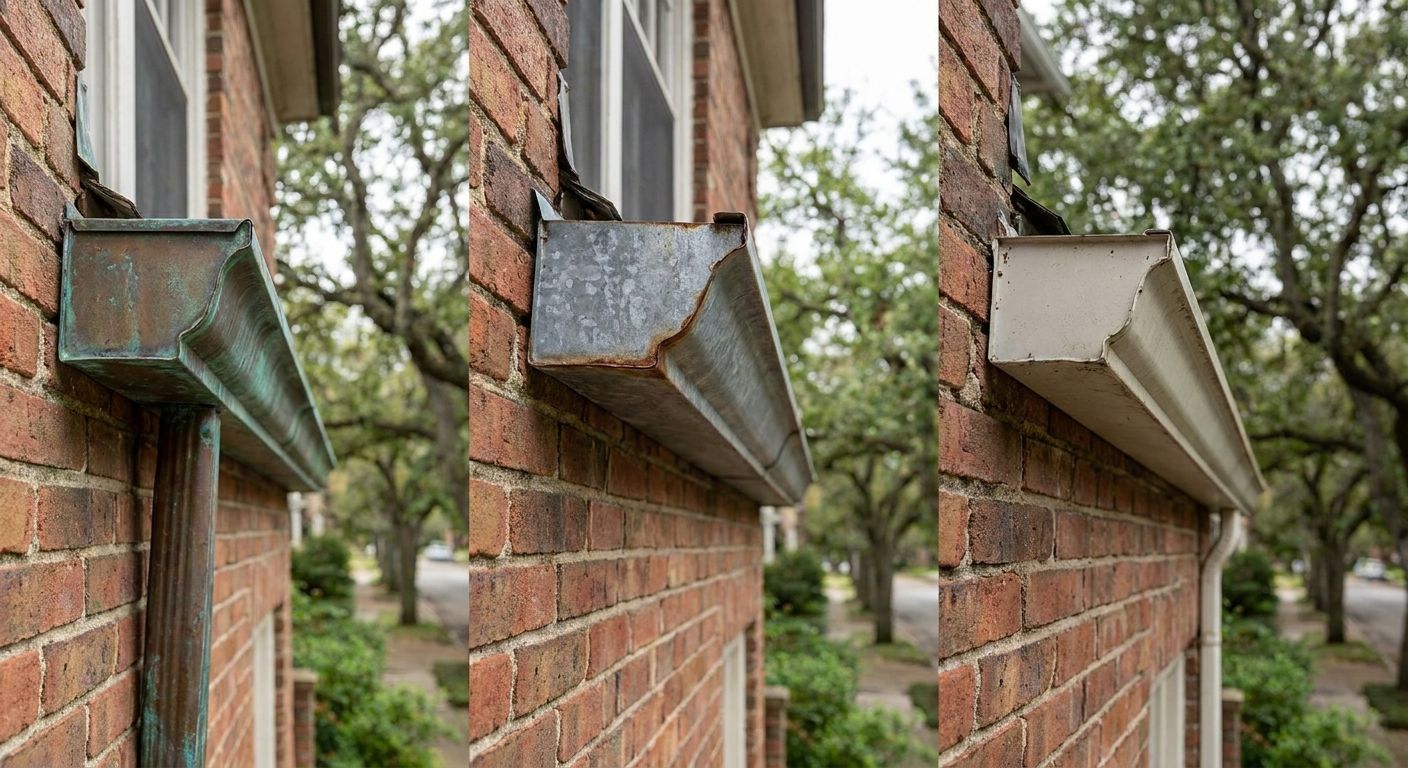
| Material | Best for | Standout feature | Key limitation |
|---|---|---|---|
| Aluminum | Most BC residential homes | Won't rust, lightweight, wide color range | Dents more easily under ladder or debris impact |
| Steel | High snow load and impact-prone roofs | Higher load capacity, resists denting | Rusts once the galvanized or galvalume coating breaks |
| Copper | Heritage and high-end properties | 50+ year lifespan, no paint ever needed | Material cost is far above aluminum or steel |
1. Aluminum: best gutter material for most BC homes
Aluminum is the material Gutters Canada installs most often across British Columbia, and it's the default recommendation for a reason: it doesn't rust, it's light enough for standard hangers, and it comes in enough powder-coat colors to match almost any fascia. Seamless aluminum systems are formed on-site from a coil, which eliminates the horizontal seams that leak on sectional gutters over time. Standard gauges run from .027 to .032 inch, with the heavier gauge holding up better under ladder contact and falling branches.
Aluminum pros:
- Never rusts, even in constant coastal rain
- Lightweight — easier on fascia boards and hangers over 20+ years
- Seamless install reduces leak points compared to sectional systems
- Wide range of factory finishes and colors
Aluminum cons:
- Dents more easily than steel under impact
- Lower load capacity than steel in heavy snow zones
- Thinner gauges (.027) can oil-can or flex in high wind
A properly sized aluminum seamless system in the heavier .032 gauge closes most of the gap with steel on durability while keeping the weight and corrosion advantage. Verdict: Buy — the right default for standard residential rooflines in 2026.
2. Steel: best gutter material for high snow load and impact zones
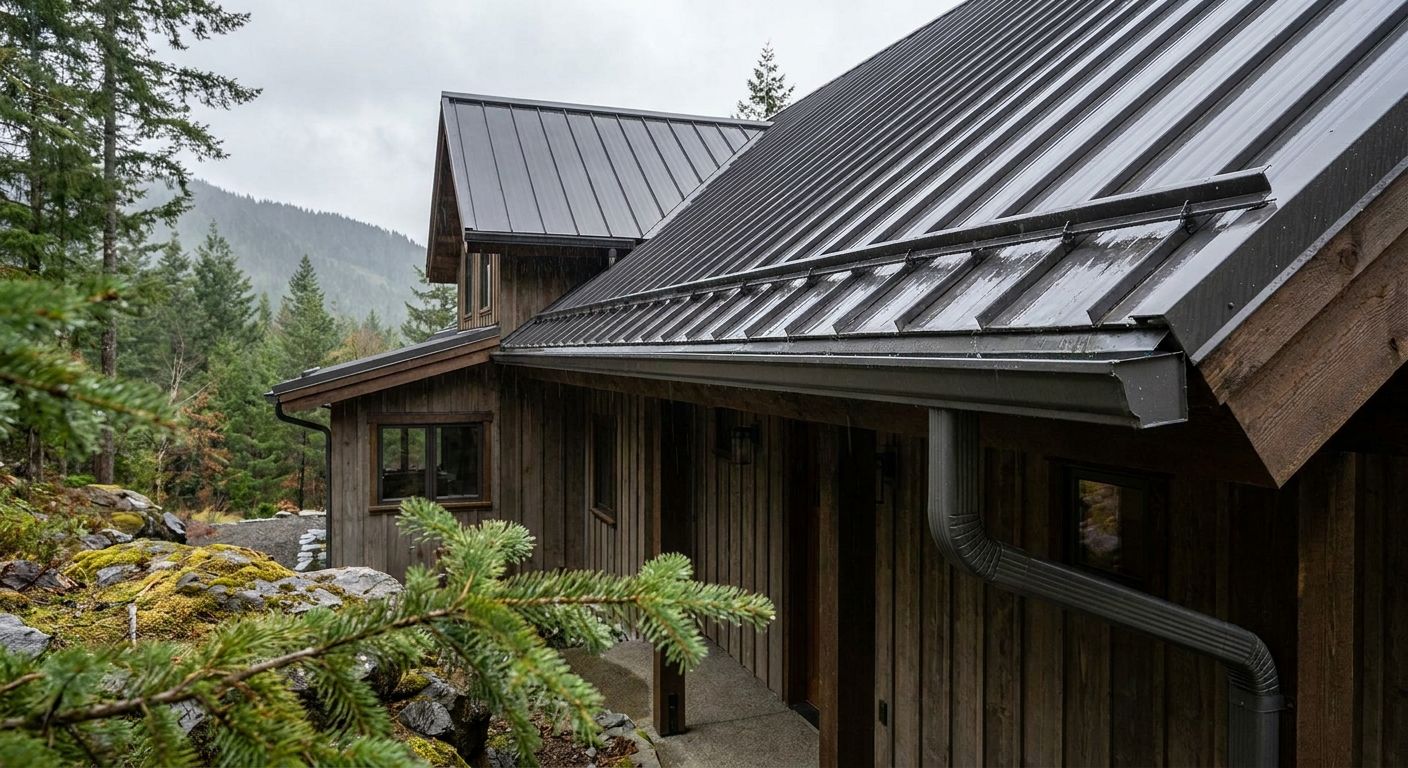
Steel gutters, whether galvanized or galvalume-coated, carry more structural load than aluminum and take impact from falling branches or ice without denting as easily. On steep-pitched roofs or properties in the BC interior with heavier snow accumulation, that extra strength matters more than the weight savings aluminum offers. Galvalume coatings (aluminum-zinc alloy over steel) hold up longer against corrosion than plain galvanized steel, which is worth confirming before installation.
Steel pros:
- Higher load capacity than aluminum under snow and ice
- More resistant to denting from debris or ladder contact
- Handles steep-roof runoff volume without deforming
Steel cons:
- Rusts once the protective coating is scratched or worn through
- Heavier — puts more long-term stress on fascia and hangers
- Fewer color and finish options than aluminum
Steel earns its place on roofs with real snow load capacity demands, but it needs the coating inspected periodically — a scratched galvanized gutter rusts from that point outward. Verdict: Buy for steep-pitched or high-snow properties, Skip for standard coastal residential runs where aluminum does the job with less maintenance risk.
3. Copper: best gutter material for heritage and high-end properties
Copper is the longest-lasting gutter material available, with documented service life running 50 to 100 years when installed and maintained correctly. It forms a protective patina over the first 10 to 15 years of exposure — the green-tinged surface that never needs painting and actually gets more corrosion-resistant with age. That longevity is why copper shows up on heritage restorations and high-end new builds where the owner is thinking in decades, not years.
Copper pros:
- Longest realistic lifespan of any common gutter material
- Never needs painting — the patina is the finish
- Ages in a way that suits period and high-end architecture
Copper cons:
- Material cost sits well above both aluminum and steel
- Patina takes years to develop and looks uneven at first
- Requires copper-compatible fasteners and flashing to avoid galvanic corrosion
Copper isn't the right call for a standard suburban rebuild, but on a heritage home or an architecturally significant property, the 50-plus year lifespan changes the math entirely. Verdict: Buy for heritage or premium builds, Wait on copper for a standard residential replacement where aluminum or steel covers the same water management need at a fraction of the material cost.
Get the right material for your roof
Gutters Canada sizes aluminum, steel, and copper systems to your actual roofline and snow load.
How we ranked
The ranking above weighs corrosion resistance and lifespan first, since a gutter that fails early costs more in fascia and soffit repair than it ever saved on the material. Load capacity and weight come second, because BC's mix of coastal rain and interior snow puts real stress on hangers and fasteners. Maintenance demand and finish options break the tie between materials that perform similarly on durability.
Which gutter material should you choose?
For most residential properties across British Columbia in 2026, aluminum is the right default — it resists the corrosion that coastal rain causes, it's light enough for standard fascia, and the color range covers nearly any exterior. Move to steel if your roof carries heavy snow load or sits under trees that drop branches regularly; the added strength earns its keep there. Reach for copper only when the property justifies a 50-plus year investment — heritage restorations and high-end new construction are the honest use case, not a standard rebuild.
A well-installed system in any of these three materials still depends on correct sizing and slope. Gutters Canada evaluates the roofline, not just the material preference, before recommending a spec.
FAQ
Which lasts longer, aluminum or steel gutters?
Aluminum typically lasts 20 to 30 years because it never rusts, while galvanized steel lasts roughly 20 to 25 years and depends on the protective coating staying intact. Galvalume-coated steel closes some of that gap but still trails aluminum on corrosion resistance in constant coastal rain.
Do aluminum gutters rust in BC's climate?
No, aluminum does not rust because it doesn't contain iron. It can oxidize on the surface in a light white film over time, but that's cosmetic and doesn't compromise the gutter's structure.
How long do copper gutters really last?
Copper gutters commonly run 50 to 100 years of service life when installed with copper-compatible fasteners and flashing. The patina that forms over the first 10 to 15 years actually improves corrosion resistance rather than weakening the material.
Is steel or aluminum better for heavy snow load?
Steel carries more structural load and resists denting under snow and ice better than aluminum. On steep-pitched roofs or properties with heavy interior BC snowfall, steel is the stronger choice, provided the protective coating is maintained.
What gauge of aluminum gutter should I install?
Standard residential aluminum gutters run from .027 to .032 inch. The heavier .032 gauge resists denting and oil-canning better and is worth the upgrade on homes near trees or high foot traffic areas like driveways.
Are copper gutters worth the material cost?
Copper is worth it on heritage properties or high-end builds where a 50-plus year lifespan and zero repainting justify the higher material investment. For a standard residential replacement, aluminum or steel covers the same water management job at a lower material cost.
Can you mix gutter materials with different fascia types?
Yes, but the fasteners and flashing need to match the gutter material to avoid galvanic corrosion, especially with copper. A properly matched fascia and gutter system avoids the corrosion that happens when incompatible metals touch in constant moisture.
One last thing
The material debate matters less than most homeowners assume once the gutter is undersized for the roof — a correctly sized aluminum system on a standard BC roof will outperform an oversized, poorly sloped steel or copper system every time. Get the sizing and slope right first, then pick the material that matches your roof's actual snow and debris load in 2026.