A steep-pitched roof in British Columbia throws water off the drip edge faster than a low-slope roof ever will, and that speed decides which gutter system holds up through a Pacific storm and which one overflows the first hard rain of the season. Best overall: 6-inch seamless aluminum K-style gutters. Best for heavy snow load: snow-load rated gutter systems. Best budget option: gutter and drainage combo systems. This guide ranks the systems that actually handle an 8:12 pitch or steeper across BC's coastal and interior climates in 2026.
- 6-inch seamless aluminum K-style gutters are the best overall gutter systems for steep roofs in BC because standard 5-inch runs overshoot under fast runoff.
- Snow-load rated gutter systems win for interior BC properties where sliding snow off a steep pitch tears standard hangers loose.
- Valley gutter systems handle multi-valley steep rooflines that dump concentrated water at one point.
- Gutter and drainage combo systems are the budget pick for typical suburban steep roofs without unusual water volume.
- Box gutters stay the right call for older BC homes where the gutter is built into the original roofline.
Why this matters
Water coming off an 8:12 or 10:12 pitch hits the gutter with far more velocity than water sliding off a 4:12 roof, and velocity is what causes splash-over, not just volume. A 5-inch K-style gutter sized for a gentle roof will overshoot on a steep one even in a moderate downpour. The smart move is sizing the system to the pitch, not just the wall length — that's the standard Gutters Canada applies on steep-roof installs across BC in 2026, and it's the difference between a gutter that lasts fifteen years and one that pulls off the fascia in its first winter.
Getting this wrong doesn't just mean overflow. Fast-moving water finds every weak seam, every undersized hanger, and every spot where the fascia has already started to soften.
What makes the best gutter system for a steep roof
- Water velocity capacity — can the trough hold water moving fast enough to splash past a standard 5-inch profile
- Hanger spacing and load rating — tighter, reinforced hangers matter where snow slides off a steep pitch
- Seam design — seamless runs remove the weak points that open under freeze-thaw cycles
- Material gauge — thicker aluminum resists denting and holds its shape under ladder contact and debris load
- Valley and concentration handling — multi-valley roofs dump water at single points that need custom capacity
- Fit with existing fascia and soffit condition — no gutter system fixes rot underneath it
Steep-roof gutter systems at a glance
| System | Best for | Standout feature | Key limitation |
|---|---|---|---|
| 6-inch Seamless Aluminum K-Style | Best overall | No seams along the run; higher capacity than 5-inch | Needs sound fascia to hang correctly |
| Snow-Load Rated Gutter Systems | Heavy-snow BC regions | Reinforced, tighter-spaced hangers | More labour hours to install |
| Valley Gutter Systems | Multi-valley steep roofs | Custom-formed for concentrated discharge | Requires on-site fabrication |
| Box Gutters | Older BC homes | Built into the original roofline | Hard to inspect once sealed |
| Leaf Guard Systems | Heavy tree cover | Blocks debris from packing into fast-moving water | Fine debris still needs clearing |
| Gutter and Drainage Combo | Budget option | Gutters and drainage routing in one project | Not built for extreme snow or valleys |
1. 6-inch Seamless Aluminum K-Style Gutters: best overall gutter system for steep roofs
These are formed on-site in one continuous run with no horizontal seams, and they're the standard choice for most BC residential re-hangs on pitched roofs in 2026. A 6-inch profile carries noticeably more water at the same slope than a 5-inch run, which matters the moment runoff speeds up.
6-inch seamless aluminum K-style pros:
- No seams along the length for water to find and open under freeze-thaw
- Standard .032-inch aluminum gauge resists denting from ladder contact and falling debris
- Matches most existing BC fascia profiles without custom trim work
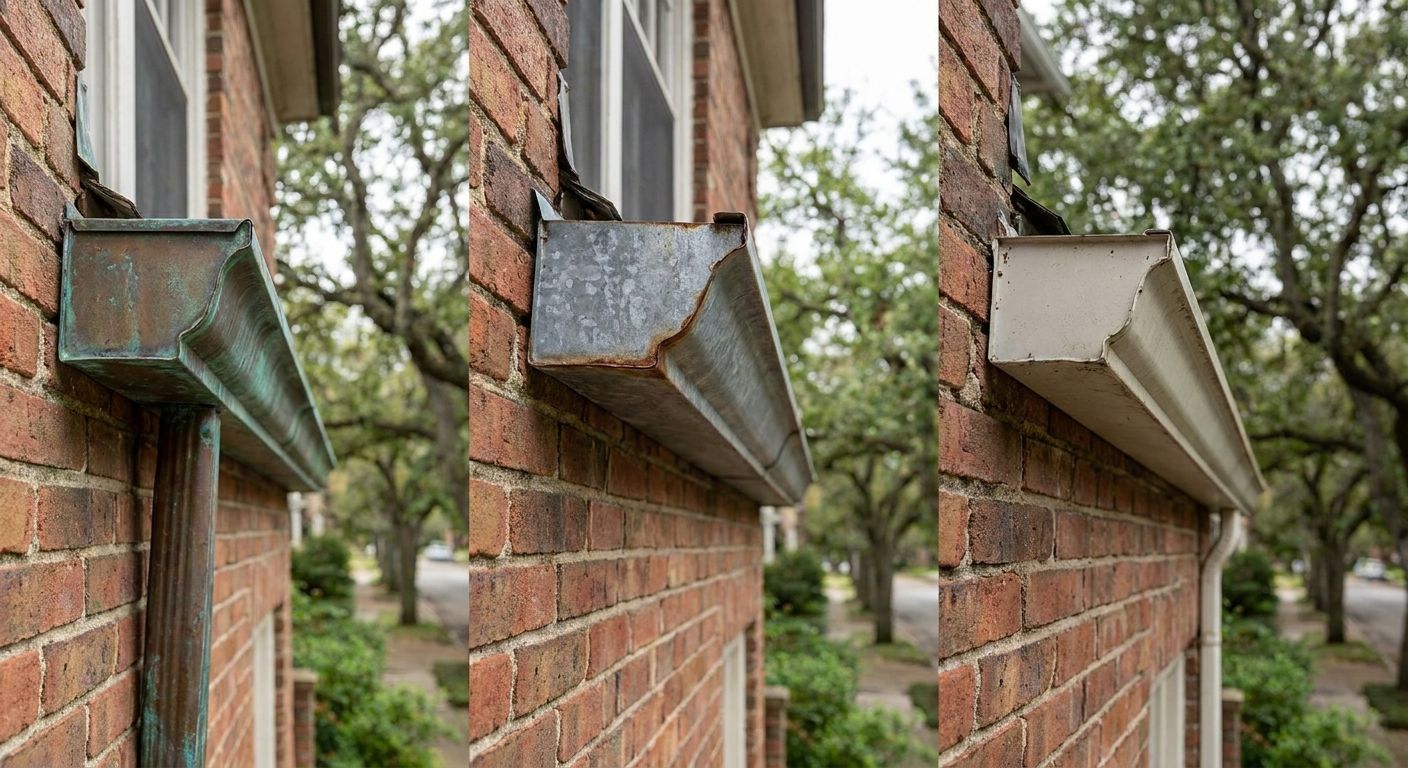
- Holds up against coastal humidity without the rust risk of steel
6-inch seamless aluminum K-style cons:
- Still needs correctly sized downspouts, or the extra capacity goes to waste
- Won't correct rot in the fascia it's hung on
- Costs more upfront than sectional vinyl
Best for: standard single or multi-family homes on 8:12-and-steeper pitches across the BC coast. See the full breakdown in seamless aluminum gutters ranked by gauge and price.
Verdict: Buy.
2. Snow-Load Rated Gutter Systems: best for heavy-snow BC regions
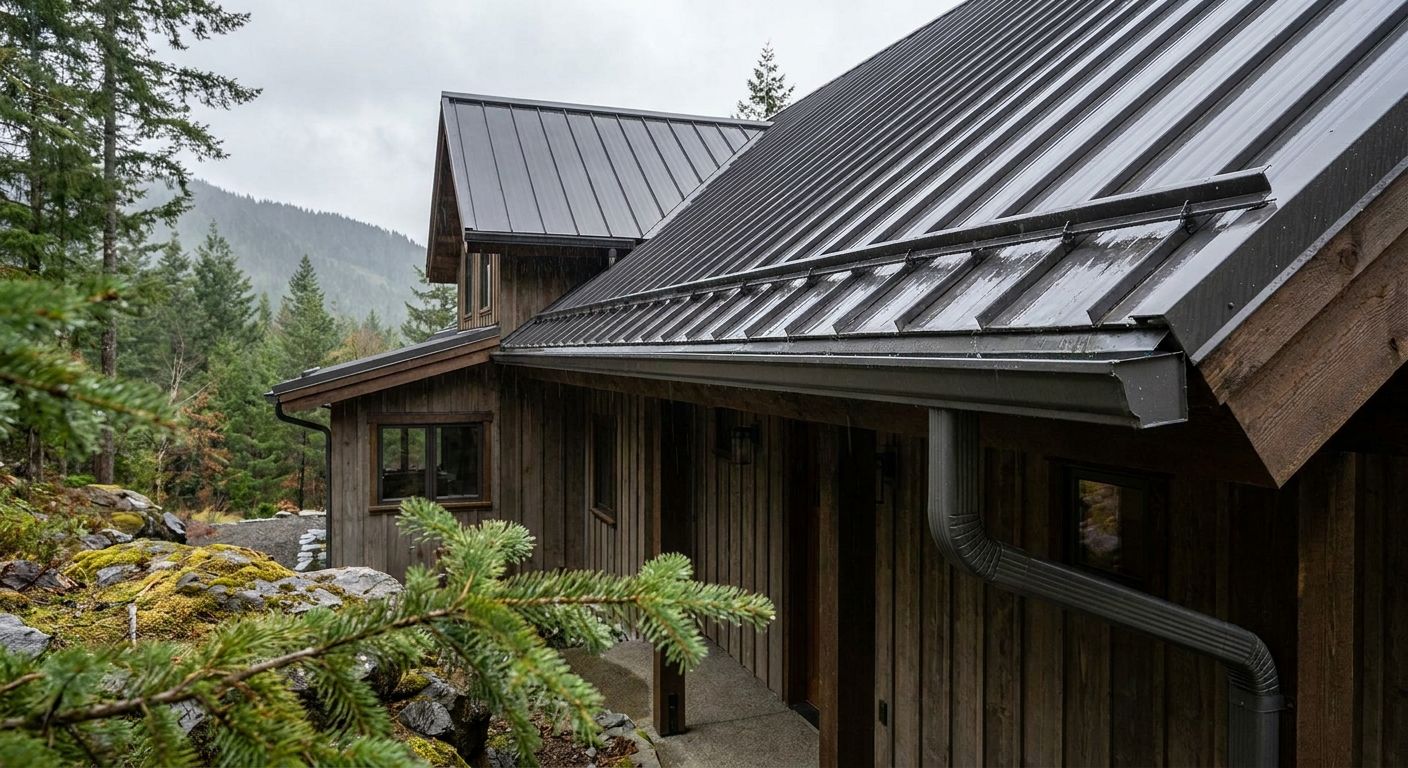
These systems use hidden hangers spaced closer together plus reinforced brackets built to carry sliding snow off a steep pitch without pulling away from the fascia. On a steep roof, snow doesn't melt evenly — it slides in sheets, and standard spike-and-ferrule hangers aren't rated for that load.
Snow-load rated gutter system pros:
- Tighter hanger spacing stops the run from sagging under sliding snow
- Reinforced brackets carry more load than standard hangers
- Pairs well with a 6-inch K-style profile for combined water and snow capacity
Snow-load rated gutter system cons:
- Extra hangers add labour hours to the install
- Overkill for Lower Mainland coastal roofs that rarely hold snowpack
Best for: interior BC and higher-elevation properties with steep pitches above 8:12. Compare load ratings in rain gutter systems ranked by snow load capacity.
Verdict: Buy for snow country, Skip for coastal Lower Mainland.
“On a steep roof, the gutter almost never fails first — the fascia underneath it does.”
3. Valley Gutter Systems: best for multi-valley steep roofs
Roof valleys concentrate two planes of runoff into a single channel, and on a steep pitch that discharge hits the gutter harder and faster than open eave runoff ever will. A standard K-style run sized for even flow can't always absorb a valley dump without splashing over at the corner.
Valley gutter system pros:
- Custom-formed to catch concentrated valley discharge before it overshoots
- Cuts down splash-over at inside corners on multi-gable steep roofs
Valley gutter system cons:
- Needs on-site fabrication, not a stock component
- Adds a transition point that has to be flashed correctly
Best for: steep roofs with three or more valleys or dormers feeding one gutter run. Full leak-resistance comparison in valley gutter systems ranked by leak resistance.
Verdict: Buy when valleys concentrate flow, Hold for simple gable roofs.
4. Box Gutters: best for older BC homes with steep original rooflines
Box gutters are built into the roof structure itself rather than hung off the fascia, and they're common on pre-1980s BC homes with steep original pitches. Switching one of these to hung aluminum usually means changing how the roofline looks, which is why so many owners maintain instead of replace.
Box gutter pros:
- Matches the original roofline on heritage and older character homes
- Built-in capacity that doesn't rely on a hanging bracket
Box gutter cons:
- Harder to inspect since the channel sits inside the roofline
- Repairs often mean partial roof disassembly, not a hanger swap
Best for: original box-gutter homes where a hung aluminum retrofit would change the roofline.
Verdict: Hold and maintain if sound; replace only on failure.
5. Leaf Guard Systems: best for steep roofs under heavy tree cover
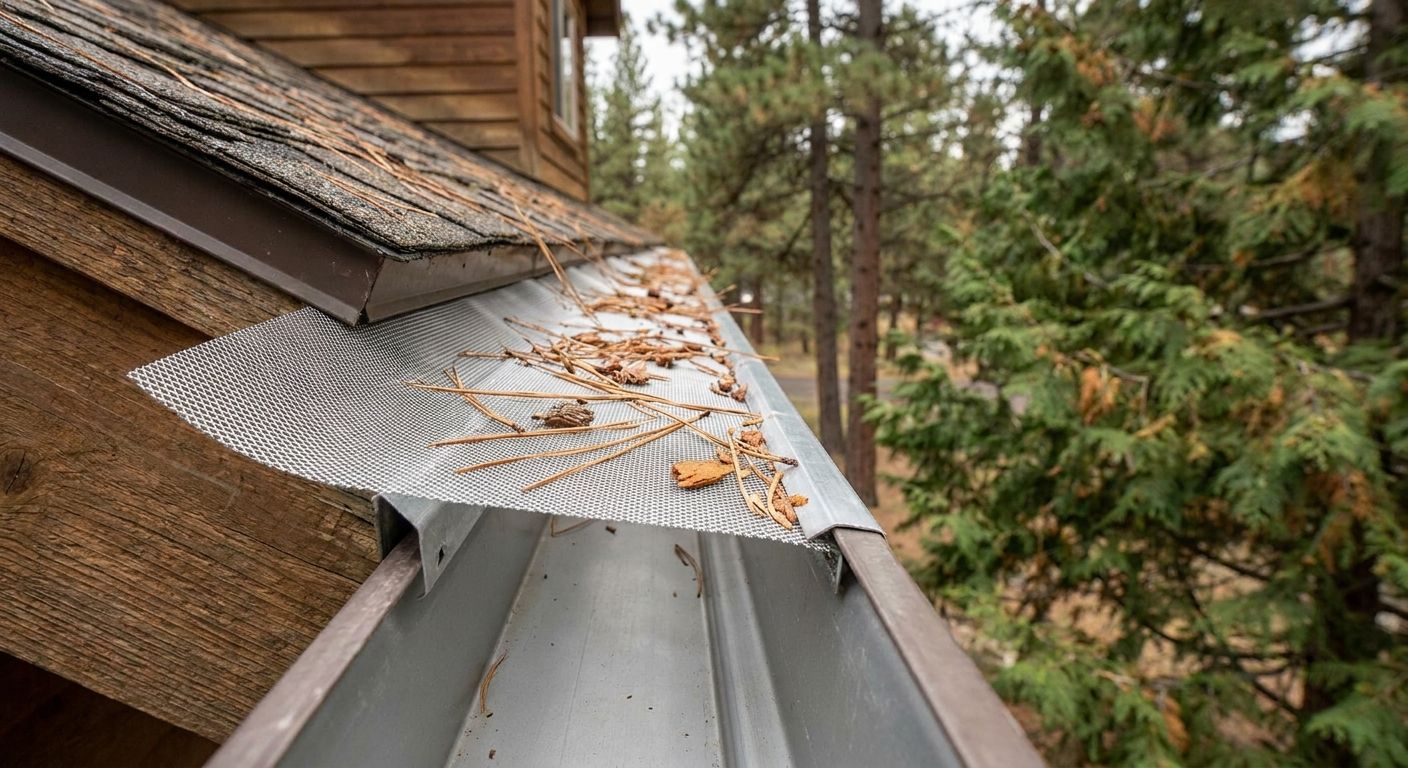
Mesh or surface-tension covers keep needles and leaves from packing into a fast-moving gutter, and on a steep roof debris arrives at speed rather than settling gently. Fir- and cedar-heavy neighbourhoods in BC see this problem every fall.
Leaf guard system pros:
- Cuts the clogging that causes overflow on steep runs
- Reduces cleaning frequency where mature conifers overhang the roof
Leaf guard system cons:
- Adds cost to a straightforward gutter install
- Fine debris like cedar fronds and samara seeds still needs occasional clearing
Best for: properties with mature fir or conifer cover feeding directly onto the roof.
Verdict: Buy for tree-heavy lots, Skip for open rooflines.
6. Gutter and Drainage Combo Systems: best budget option
These bundle standard gutters with extended downspout drainage into one project, sized for typical steep suburban roofs without unusual water volume or snow load. It's the right-sized option when a property doesn't need snow-load hangers or valley-specific fabrication.
Gutter and drainage combo pros:
- One project covers gutters and routes runoff away from the foundation
- Right-sized for standard steep pitches, 8:12 to 10:12, without paying for upgrades you don't need
Gutter and drainage combo cons:
- Not built for extreme snow load or multi-valley concentration
- Standard downspout sizing may need upsizing on longer steep runs
Best for: typical single-family steep roofs without heavy snow or complex valleys.
Verdict: Buy for standard budgets, Upgrade if snow load or valleys apply.
Get your steep roof assessed
A properly sized system depends on pitch, valleys, and fascia condition.
How the ranking was built
Each system above was weighed against the criteria listed earlier: water velocity capacity, hanger and snow-load rating, seam design, material gauge, valley handling, and fit with existing fascia. The top overall pick — 6-inch seamless aluminum K-style — wins because it clears the highest number of criteria for the widest range of BC steep roofs, not because it's the flashiest option on the list.
Which gutter system should you choose in 2026?
For most BC homes with a steep pitch and no unusual snow or valley concentration, 6-inch seamless aluminum K-style gutters are the default choice for 2026 installs. Add a snow-load rated hanger package if the property sits in interior BC or above roughly 600 metres elevation. Go valley-specific if three or more valleys feed one run, and treat leaf guards as a tree-cover decision, not a universal upgrade. Budget-conscious owners with a standard suburban roofline get most of the same protection from a gutter and drainage combo system.
FAQ
What's the best gutter system for a steep roof in BC?
6-inch seamless aluminum K-style gutters are the best overall choice for steep-pitched roofs in BC in 2026 because they handle more water volume than a 5-inch run without added seams to leak.
Do steep roofs need 6-inch gutters instead of 5-inch?
Yes, in most cases. A steep pitch moves water faster off the drip edge, and a 5-inch profile is more likely to overshoot during a heavy BC downpour than a 6-inch run.
Is a snow-load rated gutter system necessary in the Lower Mainland?
Usually not. Snow-load rated hangers matter most for interior BC and higher-elevation properties where sliding snow tears standard hangers loose; coastal Lower Mainland roofs rarely need the upgrade.
How often should gutters be cleaned on a steep roof with tree cover?
Steep roofs under mature conifers typically need clearing at least twice a year, once in fall and once after major storms, since debris arrives at speed rather than settling gradually.
Are leaf guards worth it on a steep roof?
They're worth it on properties with heavy tree cover, where they cut the clogging that causes overflow on fast-moving steep-roof runoff. On open rooflines with little debris, the added cost isn't justified.
What's the difference between valley gutters and standard K-style gutters?
Valley gutters are custom-formed to catch concentrated discharge where two roof planes meet, while standard K-style gutters run along a single eave handling more even flow.
Should older BC homes replace box gutters with hung aluminum?
Not usually while the box gutter is still sound. Replacing it with hung aluminum changes the original roofline, so most owners maintain the box gutter and replace only on failure.
How much more water does a steep roof shed compared to a low-slope roof?
A steep roof sheds water faster, not necessarily more in total volume, and that added velocity is what causes splash-over on undersized gutters rather than the total amount of rainfall.
One last thing
The gutter almost never fails first on a steep BC roof — the fascia does. Once fascia board starts to soften from years of splash-back, even a brand-new 6-inch seamless system will pull loose within a season or two, so any steep-roof gutter decision in 2026 should start with a fascia check, not a gutter catalog.