New construction gives you one shot at picking the right fascia board before it's buried behind soffit, trim, and a fresh coat of paint — get the material wrong and you're re-doing it in five years instead of twenty. This guide ranks the four fascia board types used most often on new builds across British Columbia and tells you which one fits your project.
Best overall for new construction: aluminum fascia board. Best for coastal moisture exposure: fiber cement fascia board. Best for matching wood siding and trim: cedar fascia board. Best budget option: primed pine fascia board.
- Aluminum fascia board wins for most new BC builds — it never rots and holds a paint-matched finish for decades.
- Fiber cement fascia board is the pick for coastal and high-rainfall lots where wood rot is the real risk.
- Cedar fascia board only makes sense when it needs to match cedar siding or exposed trim.
- Primed pine fascia board is the budget call, but it needs a repaint cycle to hit a normal lifespan.
Why this matters
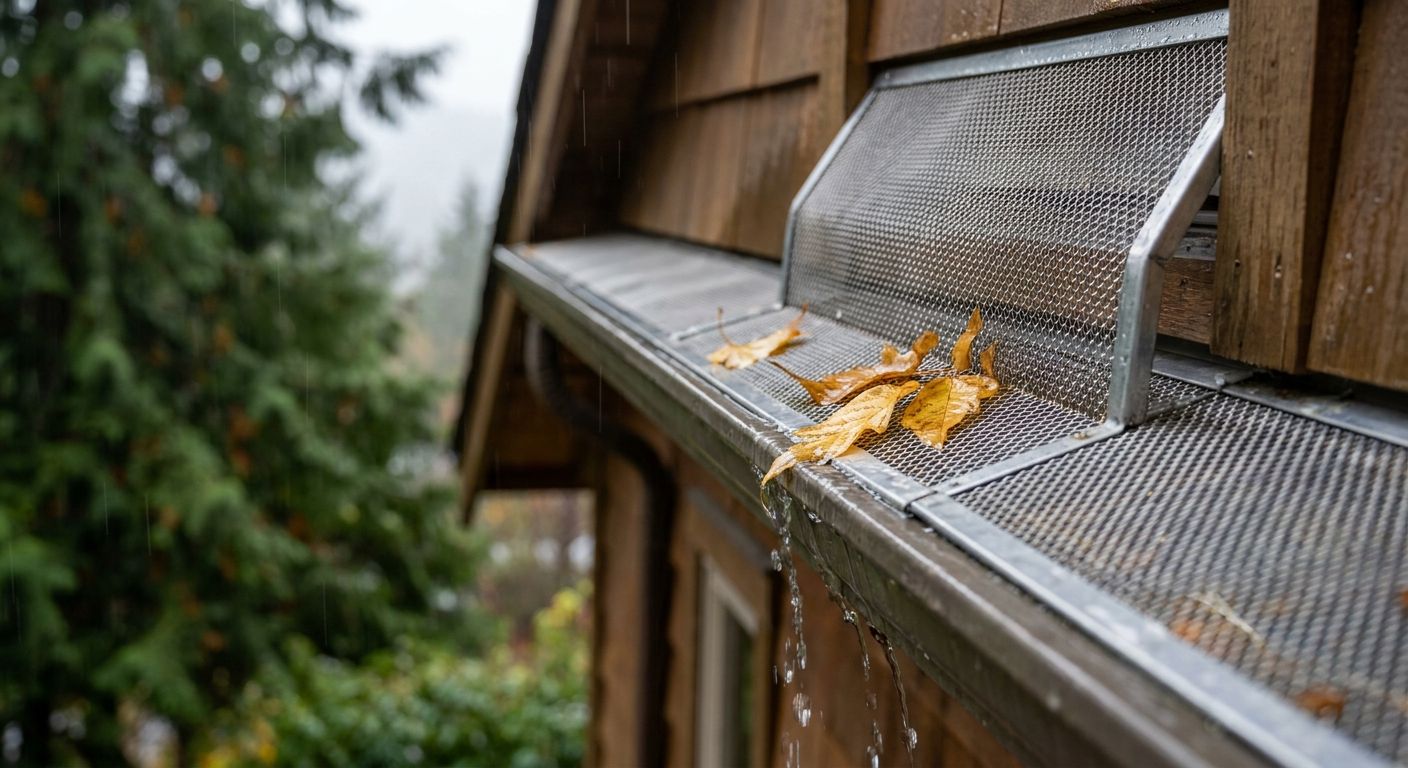
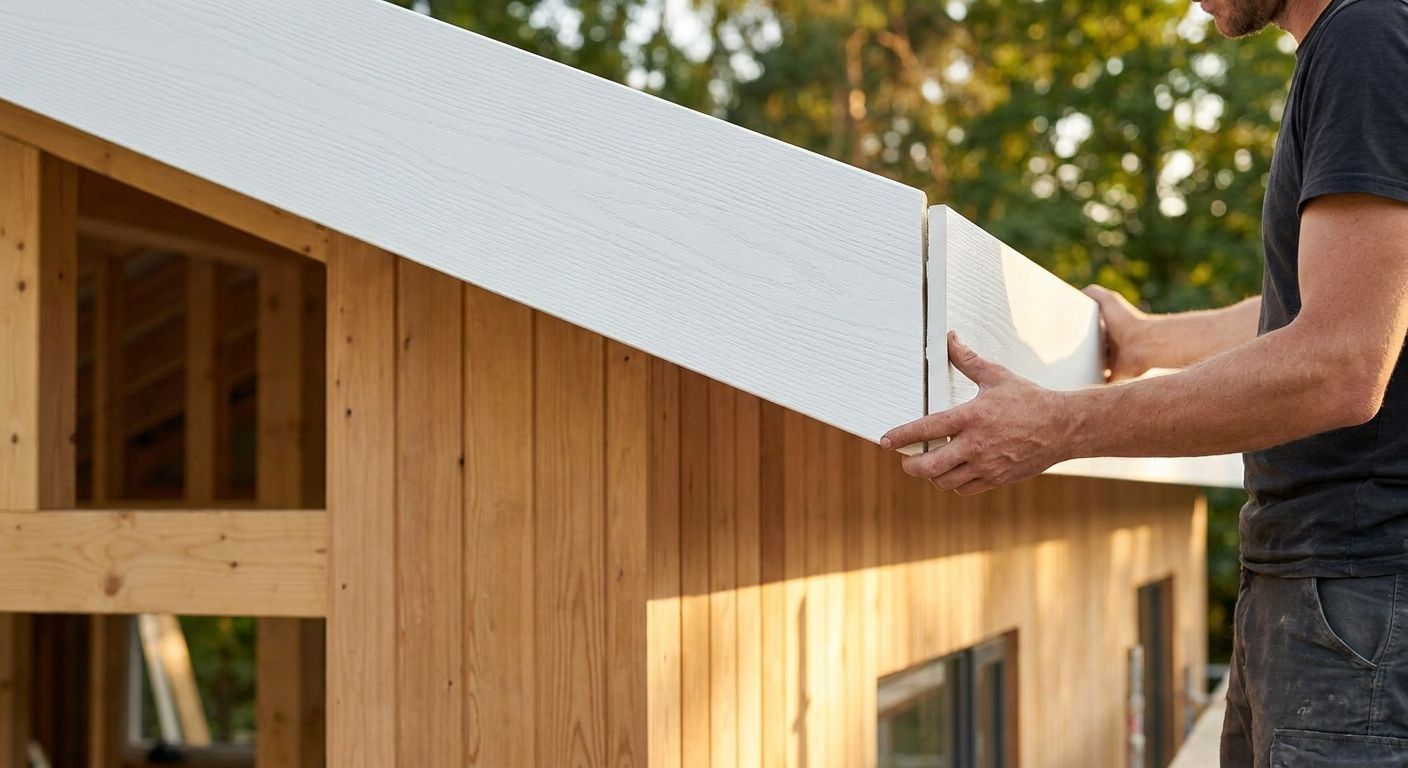
Fascia is the board that runs along the roof edge, carries the weight of your gutter hangers, and takes the brunt of runoff every time it rains. In BC's coastal climate, that's not a light job — a fascia board that cups, rots, or delaminates within a few winters means pulling gutters, trim, and sometimes soffit to fix it. On a new build, you're pouring the foundation for that exposure decision the day the fascia goes up, and gutter and fascia installation done right the first time saves a full re-trim later.
The fascia material also decides how your gutter hangers perform. A soft or waterlogged board won't hold screws under snow load, and that's a callback nobody wants in year three.
What makes the best fascia board for new construction
- Rot and moisture resistance — how the board holds up under BC's year-round rainfall and freeze-thaw cycles
- Dimensional stability — resistance to warping, cupping, or cracking as humidity swings
- Paint and finish compatibility — how well it holds a factory or field-applied finish long term
- Gutter hanger holding power — whether the substrate stays solid enough to carry screws under snow load
- Maintenance cycle — how often it needs recoating, caulking, or inspection
- Fit with the build — whether it needs to visually match siding, trim, or an existing roofline
Fascia board types at a glance
| Fascia board type | Best for | Standout feature | Key limitation |
|---|---|---|---|
| Aluminum fascia | New construction overall | Never rots, holds a paint-matched finish for decades | Can dent from ladder contact or hail |
| Fiber cement fascia | Coastal moisture exposure | Resists rot and pest damage in constant rain | Heavier board, needs proper fastening and rated blades to cut |
| Cedar fascia | Matching wood siding and trim | Takes stain to match cedar siding | Needs a repaint or reseal cycle to last |
| Primed pine fascia | Budget-conscious builds | Lowest material cost, easy to cut on site | Shortest lifespan without diligent repainting |
1. Aluminum fascia board: best fascia board for new construction overall
Aluminum fascia is factory-coated coil stock bent to fit the roofline, most often wrapped over an existing 1x6 or 1x8 wood sub-fascia rather than standing alone structurally. It's the standard choice on new BC builds because it pairs directly with aluminum seamless gutters and never needs repainting.
Aluminum fascia pros:
- Never rots, warps, or cups under moisture exposure
- Factory finish holds color for decades without repainting
- Pairs cleanly with aluminum seamless gutters for a matched system
- Low labor cost to install on new framing versus retrofitting an older roofline
Aluminum fascia cons:
- Can dent from a ladder, falling branch, or hailstorm
- Limited color range compared to a custom paint job on wood or fiber cement
Best for: new construction homes where the sub-fascia is fresh and the goal is zero maintenance for the life of the roof.
Verdict: Buy — this is the default pick for a new build in 2026 unless you have a specific reason to go another direction.
2. Fiber cement fascia board: best fascia board for coastal moisture exposure
Fiber cement fascia is a cement-and-cellulose composite board that mimics painted wood but doesn't absorb water the way solid lumber does. On coastal lots and anywhere rainfall sits against the roofline for months at a time, this is the material that holds up.
Fiber cement fascia pros:
- Resists rot, insect damage, and moisture swelling far better than solid wood
- Holds paint longer than wood fascia between recoats
- Fire-resistant compared to wood-based fascia boards
- Works well paired with soffit board materials rated for BC coastal moisture
Fiber cement fascia cons:
- Heavier board — needs proper blocking and fasteners rated for the weight
- Requires carbide-tipped blades to cut without excessive dust
- Still needs eventual repainting, just on a longer cycle than wood
Best for: waterfront and high-rainfall lots on the coast where wood rot is the real risk over the life of the home.
Verdict: Buy — the right call anywhere the roofline sees near-constant rain exposure.
3. Cedar fascia board: best fascia board for matching wood siding
Cedar fascia earns its spot when the build already has cedar siding, cedar soffit, or exposed timber trim and the fascia needs to match rather than contrast. Cedar has natural rot resistance for a softwood, but it's not immune to BC's wet winters without upkeep.
Cedar fascia pros:
- Natural grain and tone match cedar siding and trim without a paint mismatch
- Better natural rot resistance than pine or spruce
- Accepts stain or clear sealer for a natural-wood look
Cedar fascia cons:
- Needs a repaint or reseal cycle to hold its resistance and appearance
- Costs more in material than pine, less durable long term than aluminum or fiber cement
- Can still rot at cut ends and fastener points if not sealed
Best for: homes where the fascia has to visually match wood fascia boards ranked by rot resistance in BC — cedar or timber-frame exteriors where a metal or composite fascia would look out of place.
Verdict: Hold — good only when the architecture calls for it, not a default choice for a standard build.
4. Primed pine fascia board: best fascia board for budget-conscious builds
Primed pine is the entry-level fascia option — standard dimensional lumber (1x6, 1x8) with a factory primer coat, ready for field paint. It's still common on production builds where the framing package is already accounted for.
Primed pine fascia pros:
- Lowest material cost of the four options
- Easy to cut, nail, and finish on site with standard tools
- Familiar to most framing crews, no special install process
Primed pine fascia cons:
- Shortest realistic lifespan without a disciplined repaint schedule
- Prone to swelling and cupping at cut ends and fastener holes if paint fails
- Needs the most frequent inspection of the four materials
Best for: budget-driven new builds where the fascia will get repainted on a normal maintenance cycle anyway.
Verdict: Wait — fine if the budget demands it and someone owns the repaint schedule, otherwise the upfront savings gets eaten by maintenance within a decade.
How this ranking was built
Each fascia board type was scored against the same six criteria: rot resistance, dimensional stability, finish compatibility, gutter hanger holding power, maintenance cycle, and fit with the rest of the build. Aluminum and fiber cement score highest on the moisture-resistance criteria that matter most in BC; cedar and pine trade some of that resistance for cost or appearance. No material wins on every criterion — that's the point of ranking by use case instead of by a single winner.
Get your fascia board matched to the build
Talk through gutter and fascia material options before framing closes in.
Which fascia board should you choose in 2026?
For most new construction homes across British Columbia, aluminum fascia board is the right default — it never rots, it pairs directly with a seamless aluminum gutter system, and it needs zero repainting for the life of the roof. Move to fiber cement if the lot sits directly exposed to coastal rain and moisture is the dominant risk. Reserve cedar for builds where the fascia has to visually match cedar siding or trim, and treat primed pine as a budget decision only if the repaint schedule is actually going to happen.
FAQ
What's the best fascia board for new construction in BC?
Aluminum fascia board is the best fit for most new construction homes in British Columbia in 2026 because it never rots and pairs directly with aluminum seamless gutters. Fiber cement is the better call on coastal lots with heavy year-round rainfall.
Is fiber cement fascia better than wood fascia?
Fiber cement fascia resists rot and moisture swelling far better than solid wood fascia, which makes it the stronger long-term choice on wet coastal lots. Wood still wins on cost and on matching an existing cedar or timber-frame exterior.
Does aluminum fascia board rot?
No — aluminum fascia board does not rot, warp, or absorb moisture the way wood does, which is why it's the low-maintenance default for new builds. It can dent from impact, which is its main practical weak point.
How often does cedar fascia need to be repainted?
Cedar fascia needs a repaint or reseal cycle to keep its natural rot resistance intact, unlike aluminum or fiber cement which hold their finish far longer. Skipping that cycle lets moisture into cut ends and fastener holes first.
Can you install gutters directly on primed pine fascia?
Yes, gutter hangers attach to primed pine fascia the same way they attach to any solid wood fascia, as long as the board hasn't already swelled or softened from moisture. A soft board won't hold screws under snow load, which is the real risk with pine over time.
What size fascia board is standard on new homes?
Most new construction uses 1x6 or 1x8 dimensional fascia boards, with 1x8 more common where a deeper roof overhang needs covering. The sub-fascia size stays the same whether the finish material is wood, aluminum, or fiber cement.
Does fascia board material affect gutter installation?
Yes — the fascia substrate has to be solid enough to hold gutter hanger screws under load, which is why a rotted or waterlogged board causes gutter failures even when the gutter itself is fine. This is a bigger factor on wood and pine fascia than on aluminum or fiber cement.
One last thing
The fascia decision on a new build gets made once, buried behind trim, and forgotten — but it's the board carrying every gutter hanger screw for the next few decades, so the material call matters more than the paint color on top of it.