Aluminum seamless gutters aren't a single product. The gauge of the aluminum coil determines whether the system holds up through a BC winter or dents the first time a ladder leans against it, and that single spec matters more than the brand stamped on the hanger. This ranks the four gauge tiers Gutters Canada installs across British Columbia, from light-gauge economy runs to heavy-gauge commercial spans, so you know which one fits your roofline before a crew shows up.
- 0.032 in. heavy-gauge aluminum seamless gutters win for interior BC snow-load zones in 2026 -- buy for a permanent home in Kamloops, Kelowna, or Prince George.
- 0.027 in. standard-gauge is the right call for most Lower Mainland and Vancouver Island homes -- it balances rigidity against weight and cost.
- Light-gauge 0.019-0.024 in. aluminum dents under ladders and oil-cans through temperature swings -- fine for a rental you'll sell in a few years, wrong for a forever home.
- 6 in. oversized 0.032 in. gutters handle roof spans over 40 feet without overflow, which is why commercial and large residential jobs default to that size.
Why this matters
A gutter system that's too thin for the job doesn't fail on day one. It fails after two or three winters, once ice buildup, ladder contact, or a falling branch finds the weak point in the metal. Homeowners who shop by price alone end up replacing aluminum seamless gutters twice in a decade instead of once in twenty years.
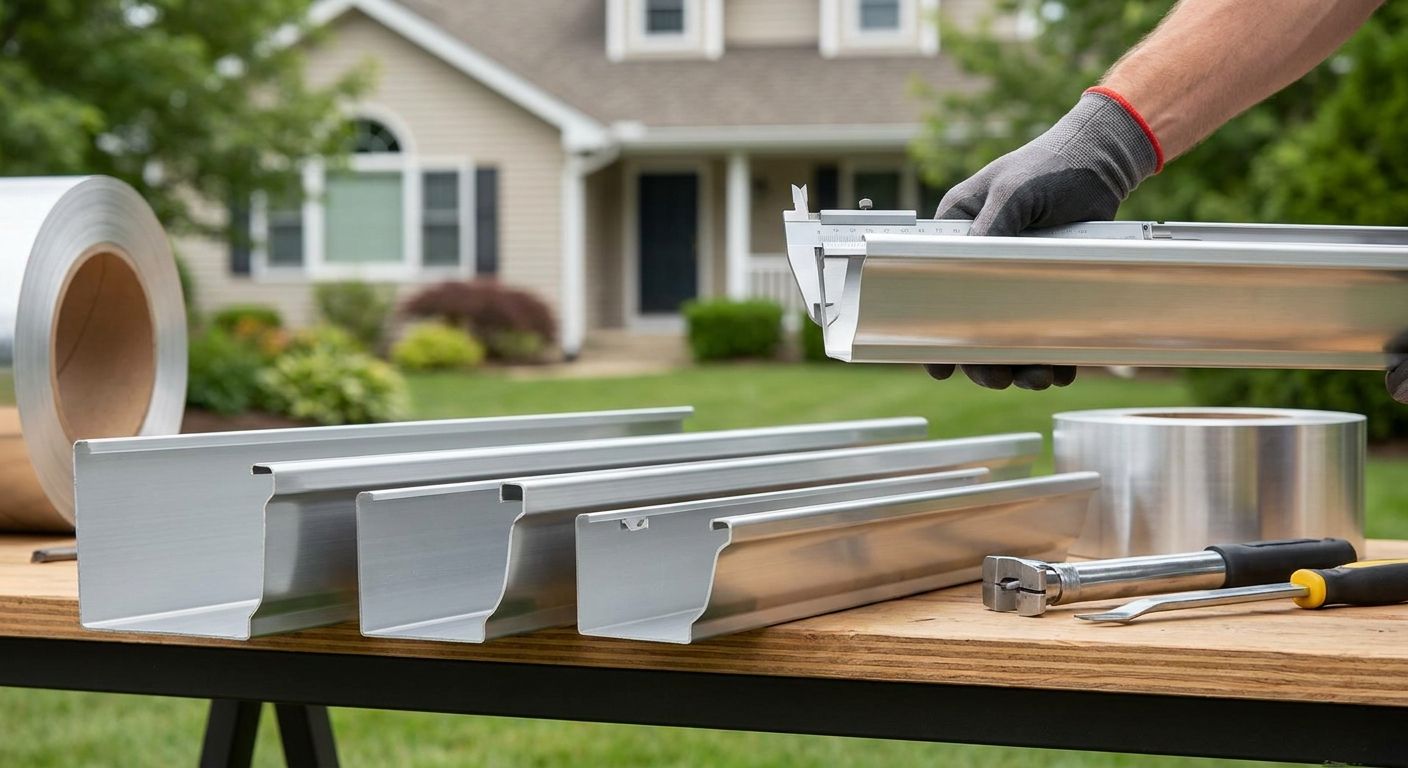
Gauge thickness is measured in thousandths of an inch, and the difference between 0.019 in. and 0.032 in. aluminum is roughly the difference between a pop can and a cookie sheet. Both are aluminum. Only one survives a BC ice storm without denting. Seamless gutters ranked by cost and durability in BC covers the material comparison in more depth if you're weighing aluminum against steel or copper first.
Best overall: 0.027-inch standard-gauge aluminum seamless gutters. Best for interior BC snow zones: 0.032-inch heavy-gauge. Best for large roof spans: 6-inch oversized 0.032-inch. Best budget option for short-hold rentals: 0.019-0.024-inch light-gauge.
What makes the best aluminum seamless gutters
- Gauge thickness -- thicker aluminum resists dents from ice, branches, and ladder contact.
- Seam count -- seamless K-style runs eliminate the leak points that form at every joint on sectional gutters.
- Hanger spacing and load rating -- heavier gauge needs fewer, stronger hangers per linear foot.
- Coil coating -- baked-on enamel finishes resist chalking and fading under coastal UV exposure.
- Fascia compatibility -- gauge and profile need to match the fascia board condition, not just the roofline.
- Climate exposure -- interior BC (freeze-thaw, heavy snow load) demands a different tier than coastal Lower Mainland rain volume.
Aluminum seamless gutters at a glance
| Gauge tier | Best for | Standout feature | Key limitation |
|---|---|---|---|
| 0.032 in. heavy-gauge | Interior BC snow-load zones | Resists denting from ice buildup and debris impact | Heavier profile needs closer hanger spacing |
| 0.027 in. standard-gauge | Typical Lower Mainland and Island homes | Balances rigidity and weight for standard roof spans | Can dent under a leaned ladder or falling branch |
| 0.019-0.024 in. light-gauge | Budget rentals or short-hold properties | Lowest material weight, fastest install time | Oil-cans and dents through seasonal temperature swings |
| 6 in. oversized 0.032 in. | Large roof spans and commercial buildings | Moves higher water volume without overflow | Requires wider fascia board and larger downspouts |
1. 0.027-inch standard-gauge: best aluminum seamless gutters for typical BC homes
This is the gauge most residential installs across the Lower Mainland and Vancouver Island land on, and for good reason. It's thick enough to shrug off normal debris impact and light ladder contact, but not so heavy that it overloads standard fascia boards or drives up hanger count.
Gutters Canada runs 0.027 in. K-style aluminum seamless gutters as the default recommendation on most residential quotes in coastal BC, where snow load is lighter than the Interior but rainfall volume is heavy for most of the year.
0.027-inch standard-gauge pros:
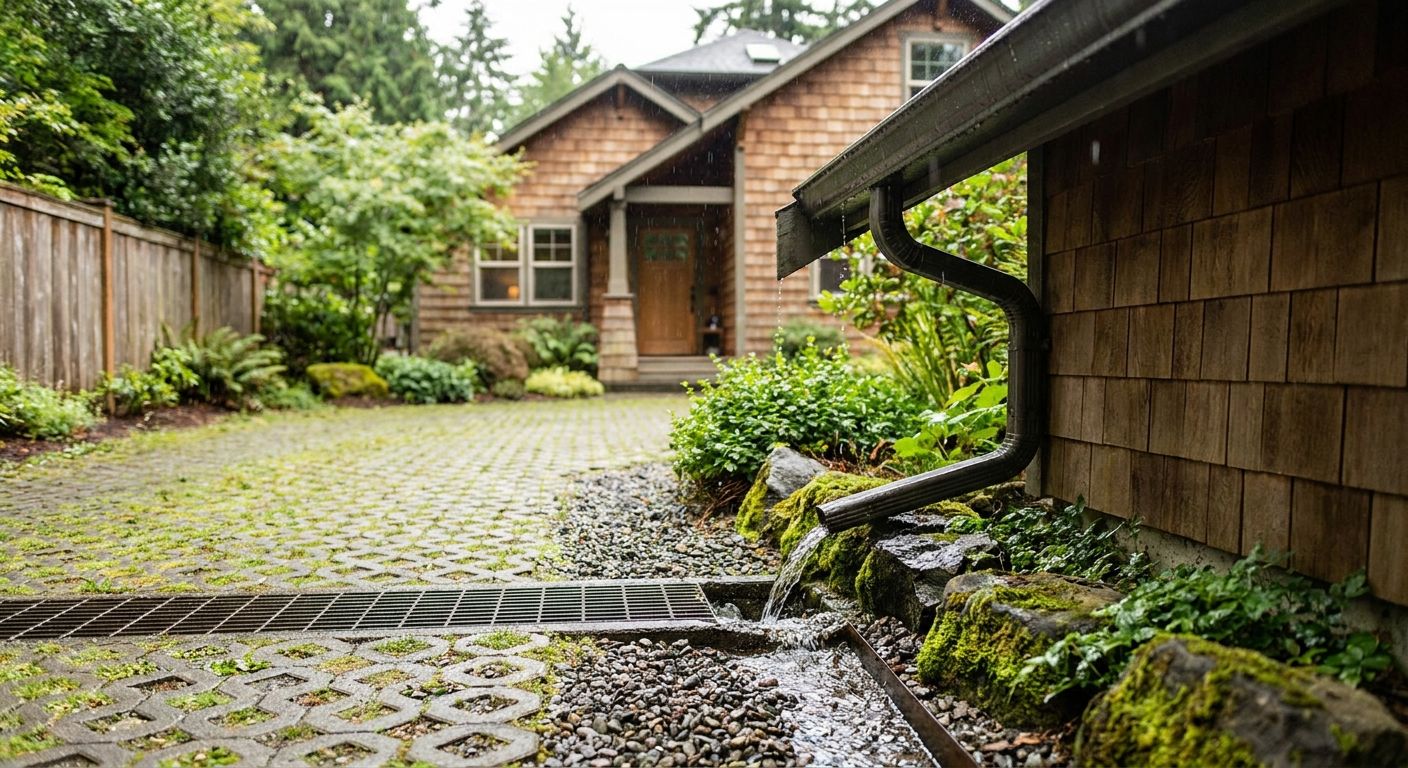
- Handles coastal BC rainfall volume without oversizing the run
- Resists everyday dents from branches and debris
- Works with standard 2x6 and 2x8 fascia without reinforcement
0.027-inch standard-gauge cons:
- Not rated for the ice-load stress interior BC winters put on gutters
- Still dents under a leaned extension ladder
- Slightly heavier than economy-gauge runs, so hanger spacing matters more
Best for: homeowners in Vancouver, Victoria, or the Fraser Valley replacing an aging sectional system. Verdict: Buy.
2. 0.032-inch heavy-gauge: best aluminum seamless gutters for interior BC snow zones
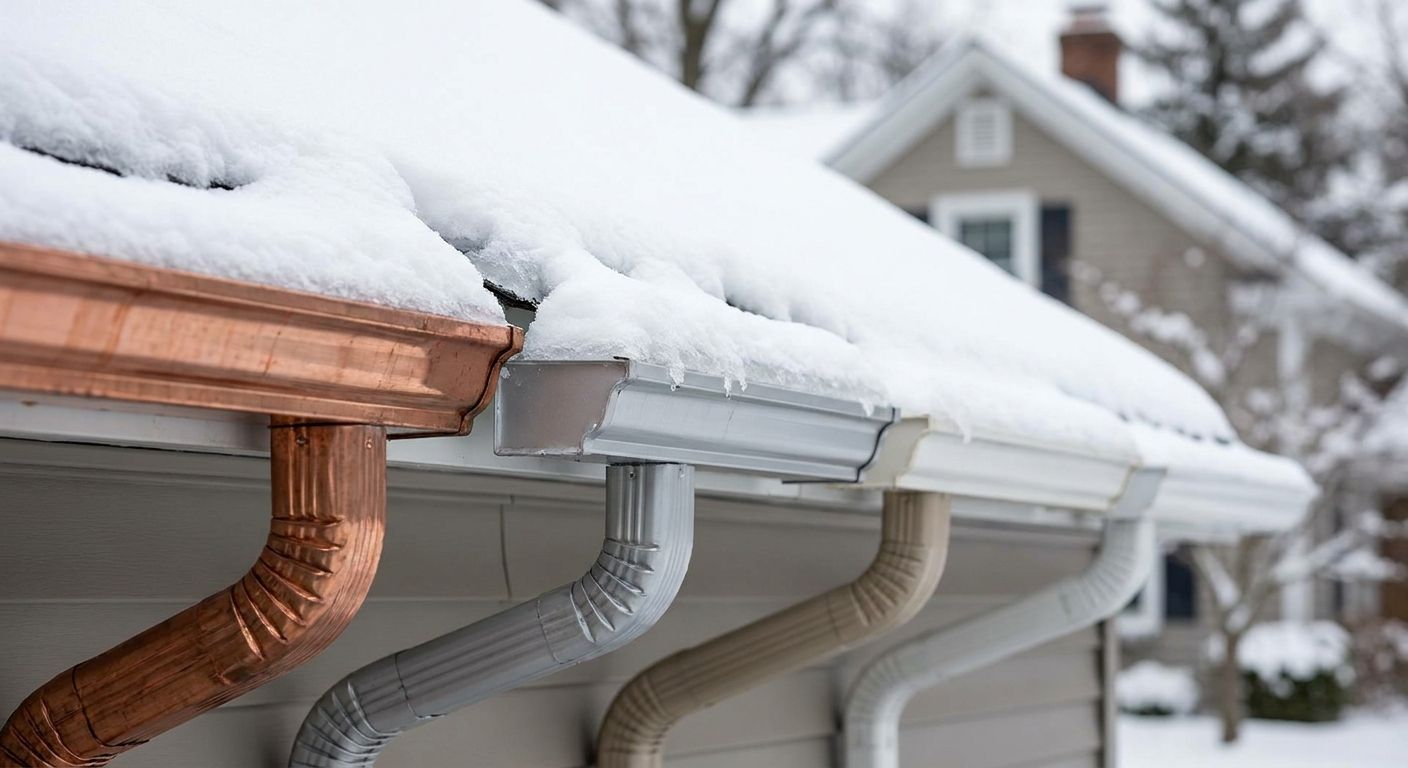
Interior BC towns like Kamloops, Kelowna, and Prince George see freeze-thaw cycles and snow load that thinner aluminum simply isn't built for. The 0.032 in. tier is the heavy-gauge option, roughly 20% thicker than standard, and it's the difference between a gutter that holds an ice dam and one that pulls off the fascia mid-winter.
This gauge costs more to run per linear foot because it needs tighter hanger spacing and a stronger fastening pattern, but it's the tier that stops repeat callbacks after the first hard winter.
0.032-inch heavy-gauge pros:
- Resists denting from ice buildup and heavy snow load
- Holds its shape better on long unsupported spans
- Fewer warranty callbacks in freeze-thaw climates
0.032-inch heavy-gauge cons:
- Overkill for mild coastal climates with light snow load
- Heavier install adds labor time and hanger count
- Not necessary if the roofline is short and well-protected
Best for: permanent homes in interior BC with real winter snow load. Verdict: Buy.
3. 6-inch oversized 0.032-inch: best aluminum seamless gutters for large roof spans and commercial buildings
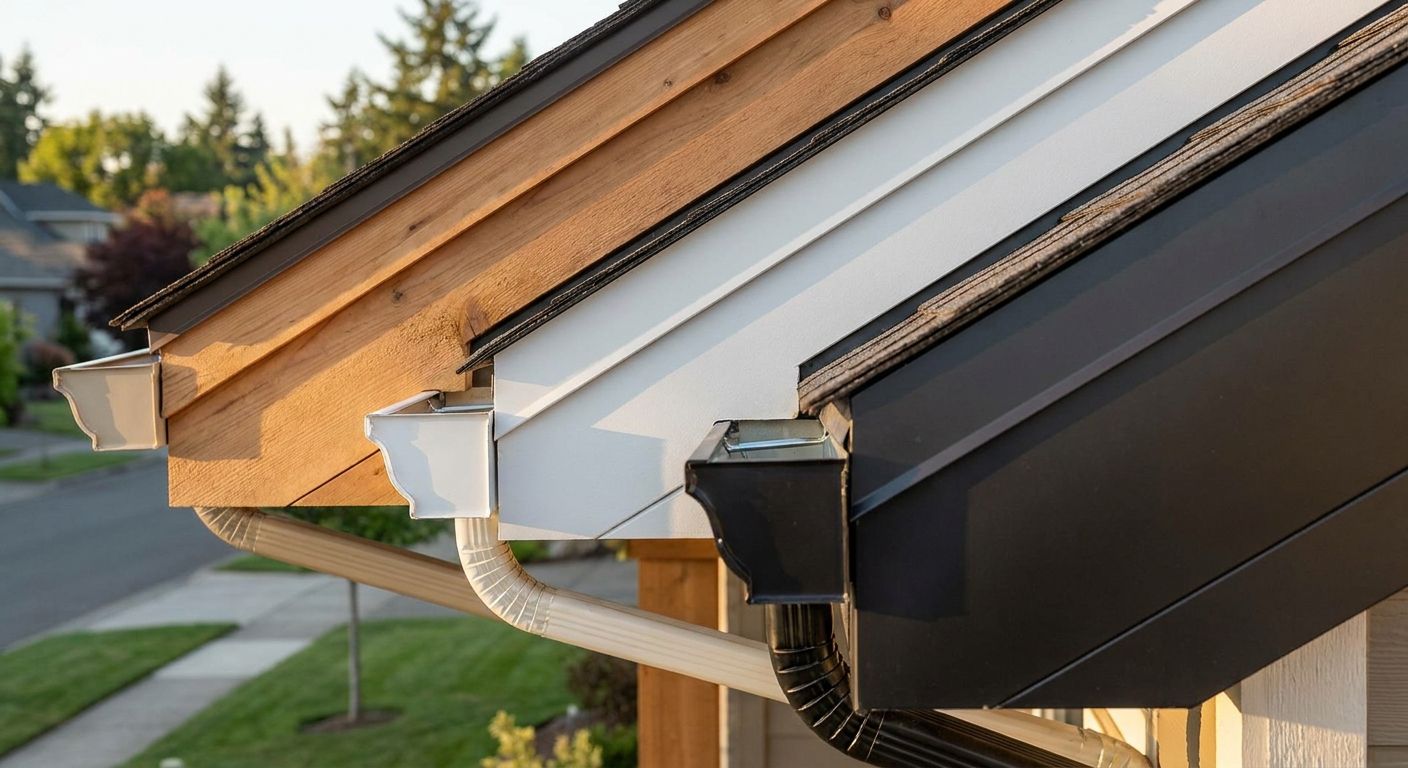
When a roof span runs past 40 feet, or the building is a warehouse, church, or large commercial structure, standard 5-inch gutters overflow before the downspouts can keep up. The fix isn't a thicker version of the same 5-inch profile -- it's stepping up to 6-inch oversized K-style in the same 0.032 in. heavy gauge.
The wider trough moves significantly more water per linear foot, which matters most during BC's fall rain events when volume spikes over a few hours.
6-inch oversized 0.032-inch pros:
- Moves higher water volume without overflow on long spans
- Pairs with 3x4 or larger downspouts for commercial roof loads
- Same heavy-gauge durability as the interior BC tier
6-inch oversized 0.032-inch cons:
- Needs wider fascia board, which older buildings may not have
- Not necessary on a standard residential roofline under 40 feet
- Larger downspouts change the exterior look of the building
Best for: warehouses, commercial buildings, and homes with roof spans over 40 feet. Verdict: Buy for large spans, Skip on a standard residential roofline.
4. 0.019-0.024-inch light-gauge: best aluminum seamless gutters for short-hold rentals
Light-gauge aluminum is the thinnest common tier on the market, and it's built for one scenario: a property you plan to hold for a few years, not decades. It installs fast and keeps material cost down, which makes sense on a rental where the horizon for ownership is short.
The tradeoff shows up fast in BC's climate. Temperature swings cause the metal to oil-can, or flex audibly, and a stepladder resting against it will leave a permanent dent that a thicker gauge would have shrugged off.
0.019-0.024-inch light-gauge pros:
- Lowest material weight, fastest crew install time
- Adequate for short ownership horizons
- Still seamless, so no joint leaks despite the thin metal
0.019-0.024-inch light-gauge cons:
- Dents easily from ladders, debris, and impact
- Oil-cans visibly through BC's seasonal temperature swings
- Not the tier to choose on a home you plan to keep
Best for: landlords and short-hold property owners prioritizing install speed over 20-year durability. Verdict: Skip for a permanent home, Buy only for a short-hold rental.
“If a gutter dents under a ladder resting against it, the gauge was too thin for the job.”
How we ranked
The order above follows the criteria in the section above it: gauge thickness first, since it drives every failure mode in BC's climate, followed by climate match, span length, and fascia compatibility. A tier that wins on install speed but fails on gauge thickness still ranks below a slower, heavier option built for BC winters.
Get the right gauge for your roof
Gutters Canada matches gauge to your climate zone and roof span before quoting.
Which aluminum seamless gutter should you choose?
For most Lower Mainland and Island homeowners in 2026, 0.027-inch standard-gauge aluminum seamless gutters remain the default pick -- thick enough to handle coastal rainfall and everyday debris without the added cost of heavy-gauge material. If the property sits in interior BC with real snow load, step up to 0.032-inch heavy-gauge without hesitation. Large roof spans or commercial buildings need the 6-inch oversized profile regardless of climate zone, and light-gauge aluminum should stay reserved for short-hold rentals where a decade of durability isn't the goal.
If leaf debris is a bigger concern than gauge on your property, Are gutter guards worth it in BC walks through when a guard system pays for itself. And if the fascia board behind your gutters is already showing rot, gauge choice won't matter until that's addressed -- see Wood vs vinyl vs aluminum soffits ranked for BC humidity before committing to a gutter tier.
FAQ
What gauge is best for aluminum seamless gutters in BC?
0.027-inch standard-gauge aluminum seamless gutters work for most Lower Mainland and Vancouver Island homes in 2026. Interior BC properties with heavy snow load should move up to 0.032-inch heavy-gauge.
Is 0.032-inch aluminum gutter better than 0.027-inch?
0.032-inch aluminum is roughly 20% thicker and resists ice and impact damage better, making it the right call for interior BC winters. For coastal climates with lighter snow load, 0.027-inch is durable enough and lighter to install.
Do aluminum seamless gutters dent easily?
Light-gauge aluminum in the 0.019-0.024-inch range dents easily from ladders and debris impact. Standard and heavy-gauge tiers at 0.027 inch and 0.032 inch resist dents far better under normal use.
What size gutter do I need for a large roof span?
Roof spans over 40 feet or commercial buildings need 6-inch oversized gutters instead of the standard 5-inch profile. The wider trough moves more water volume during heavy rain events without overflowing.
Are seamless aluminum gutters better than sectional gutters?
Seamless aluminum gutters eliminate the joint seams where sectional systems typically leak first. The gauge of the aluminum, not the seamless construction alone, determines how well the system resists dents and impact.
How long do aluminum seamless gutters last in BC?
Properly matched gauge and climate can put aluminum seamless gutters at 20 years or more of service life. Undersized gauge for the climate zone tends to fail within a few winters through dents and seam stress at the hangers.
Can I mix gutter gauges on the same house?
Yes -- some BC homes use 0.032-inch heavy-gauge on north-facing roof sections exposed to snow load and 0.027-inch standard-gauge on protected sections. This is common on larger rooflines with mixed sun and shade exposure.
What's the difference between 5-inch and 6-inch gutters?
6-inch gutters carry significantly more water volume per linear foot than 5-inch, which matters on roof spans over 40 feet or steep pitches. Most standard residential homes in BC use 5-inch profiles unless the roof span calls for more capacity.
One last thing
The gauge stamped on a gutter coil rarely gets mentioned in a sales pitch, but it's the single spec that predicts whether the system survives its first real BC winter. Ask for the gauge number before signing a quote in 2026, not just the color and the price.