Picking the wrong gutter size on a commercial roof isn't a cosmetic mistake — it's a bottleneck that shows up as overflow, fascia rot, and ice damming the first hard rain of the season. 8-inch commercial gutters win for large warehouse and industrial roofs, 6-inch K-style is the strongest all-around pick for standard commercial buildings, and 5-inch still has a place on small outbuildings where roof area is limited.
- 8 inch commercial gutters are the right call for warehouse and industrial roofs with high runoff volume in 2026.
- 6-inch K-style is the best overall commercial gutter size for mid-size retail, office, and multi-tenant buildings.
- 5-inch gutters still work but only on small outbuildings and light structures with limited roof area.
- Downspout size has to scale with gutter size, or upsizing the trough does nothing for actual capacity.
Why this matters
Commercial roofs shed a lot more water than a house, and coastal British Columbia gets a lot more of it than most of the country. Vancouver averages roughly 1,200 mm of rain a year, and that volume has to move somewhere fast when it hits a 20,000 or 40,000 square foot roof plane. Undersized gutters on a building that size don't fail gracefully — they overflow at the corners, saturate fascia boards, and push water straight down into foundations and loading dock areas.
Size selection in 2026 also has to account for what's feeding the system. A flat-roof retail box with a few small roof sections doesn't move water the same way a peaked warehouse roof does, and the gutter spec that works for one will underperform badly on the other. Getting this decision right the first time is cheaper than replacing an undersized run two years in, which is a big part of what one of Gutters Canada's guides on drainage combos for heavy rainfall gets into for full-system planning, not just the gutter itself.
What makes the best commercial gutter size
- Roof area and water volume the gutter has to move during a heavy storm, not just average rainfall
- Downspout pairing — an 8-inch gutter feeding an undersized downspout is a bottleneck dressed up as an upgrade
- Material gauge — thicker aluminum or a steel option holds up better on exposed, high-wind coastal sites
- Snow and ice load in interior BC versus straight rain volume on the coast
- Hanger and outlet spacing across the span between supports on long commercial runs
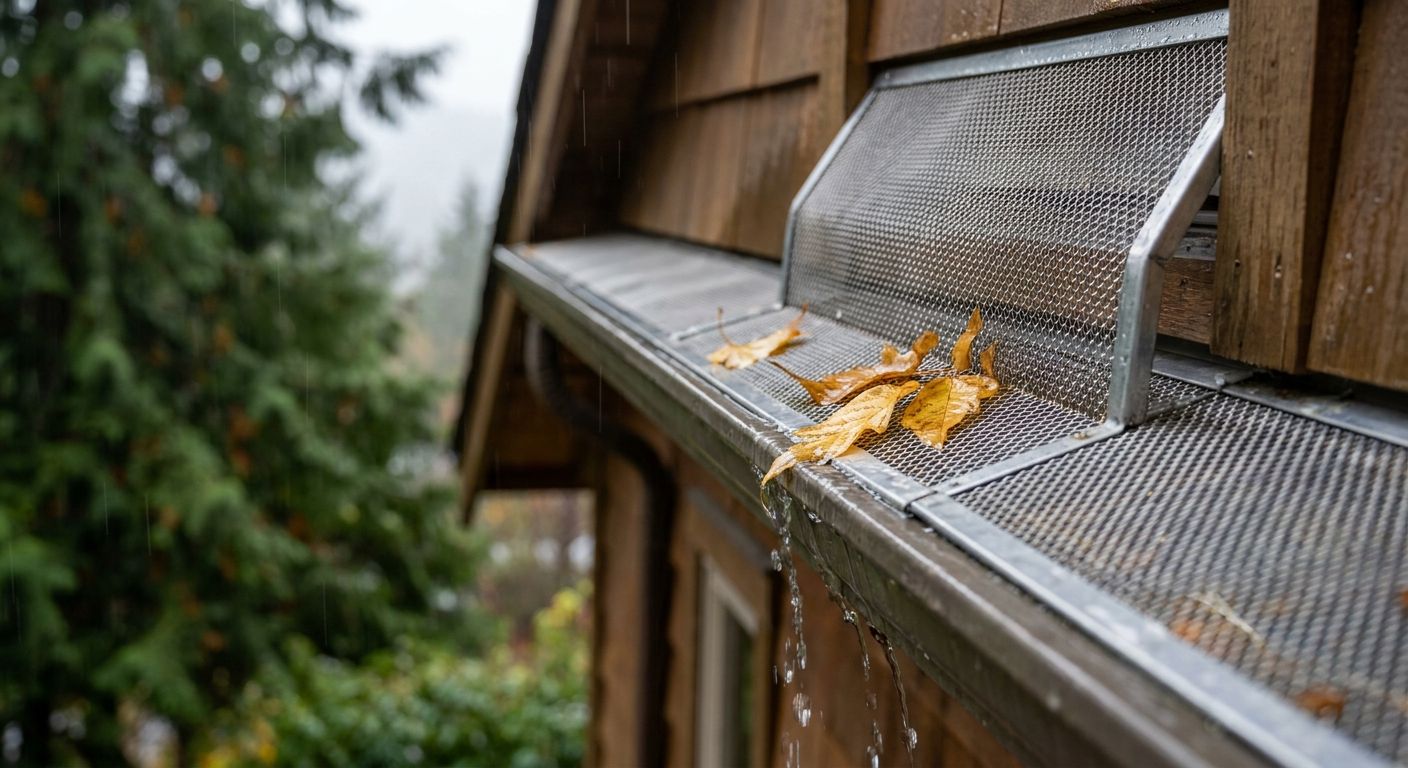
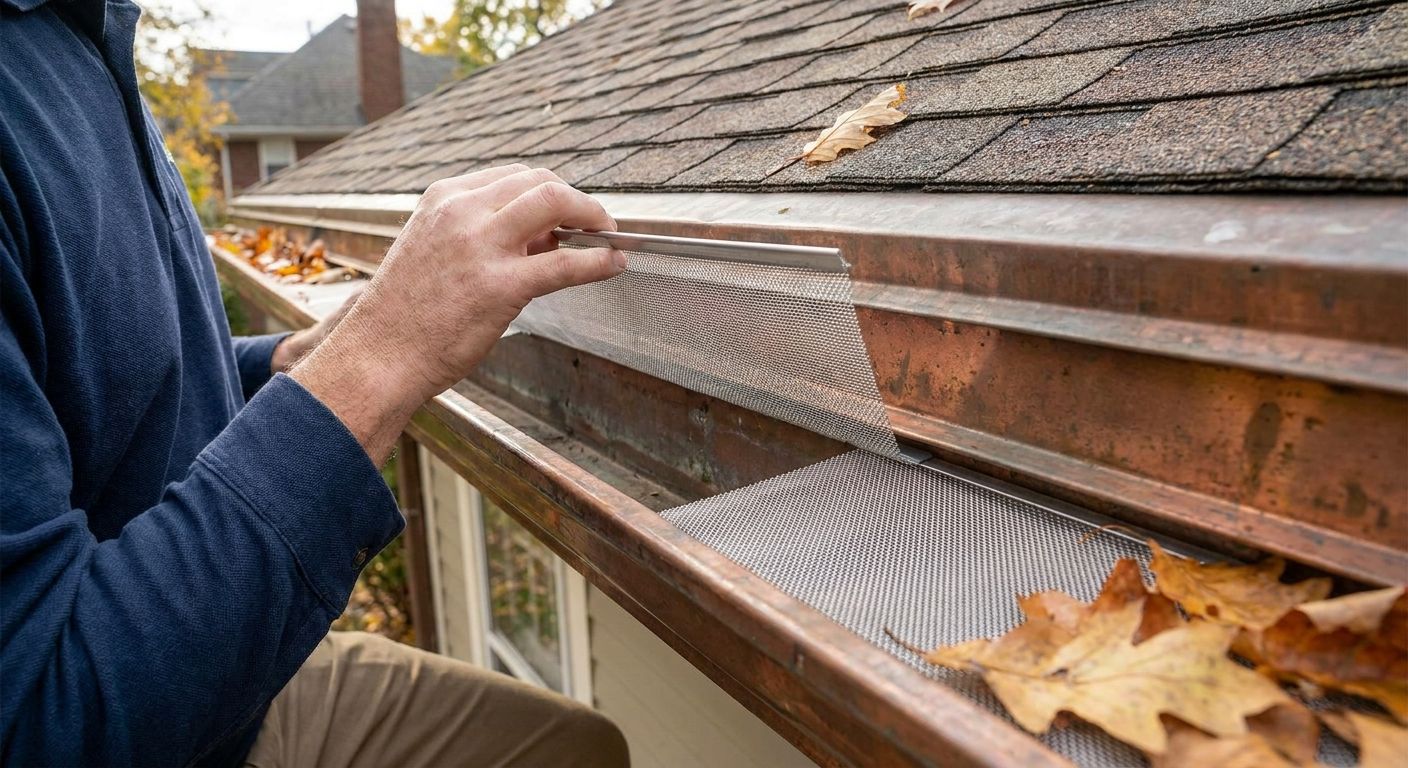
- Leaf guard compatibility for large roofs where debris volume is higher and access for cleaning is harder
Commercial gutter sizes at a glance
| Size | Best for | Standout feature | Key limitation |
|---|---|---|---|
| 5-inch K-Style | Small outbuildings and light commercial structures | Lowest material weight per foot | Undersized once roof area gets past a modest footprint |
| 6-inch K-Style | Standard mid-size commercial and retail buildings | Handles most BC commercial roof runs without oversizing | Still limited on large, steep industrial roofs |
| 8-inch / box-style | Large warehouse and industrial roofs | Highest water volume capacity per run | Heavier system, needs stronger fascia and hanger spacing |
1. 5-inch K-Style: best commercial gutter size for small outbuildings
Five-inch K-style is the smallest size still reasonably used on commercial structures, and it belongs on accessory buildings, small strip retail units, and light industrial sheds where the roof plane is short. It's the same profile used on most residential jobs, just applied to a commercial footprint that doesn't demand more.
5-inch pros:
- Lightest system to install and support
- Works fine on short roof runs with limited catchment area
- Matches standard residential hanger spacing, so labor is straightforward
5-inch cons:
- Overwhelmed fast once roof area climbs past what it's rated for
- Fewer downspout size options that actually pair well with it
- Not a fit for anything with a large uninterrupted roof plane
5-inch verdict: Buy for small outbuildings and light commercial structures. Skip it on anything with real roof area — it's the wrong tool for a warehouse or big-box retail building.
2. 6-inch K-Style: best overall commercial gutter size for standard buildings
Six-inch K-style is where most standard commercial buildings land — office parks, mid-size retail, and multi-tenant strip malls across BC use this size because it moves noticeably more water than the 5-inch profile without the extra weight and support requirements of an 8-inch system. It's also the size most commonly paired with heavier-gauge aluminum for buildings that need to hold up against coastal wind exposure, a point covered in more detail in Gutters Canada's breakdown of aluminum seamless gutters ranked by gauge.
6-inch pros:
- Handles most standard commercial roof areas without oversizing the system
- Wide range of downspout pairings, so capacity actually scales with the trough
- Common enough that replacement parts and matching outlets are easy to source
6-inch cons:
- Still gets pushed past capacity on large industrial roofs with high runoff volume
- Requires more robust hanger spacing than a 5-inch run on long spans
- Not the right pick if the building has a genuinely oversized roof plane
6-inch verdict: Buy for standard commercial and retail buildings across BC — this is the default that fits the widest range of jobs in 2026.
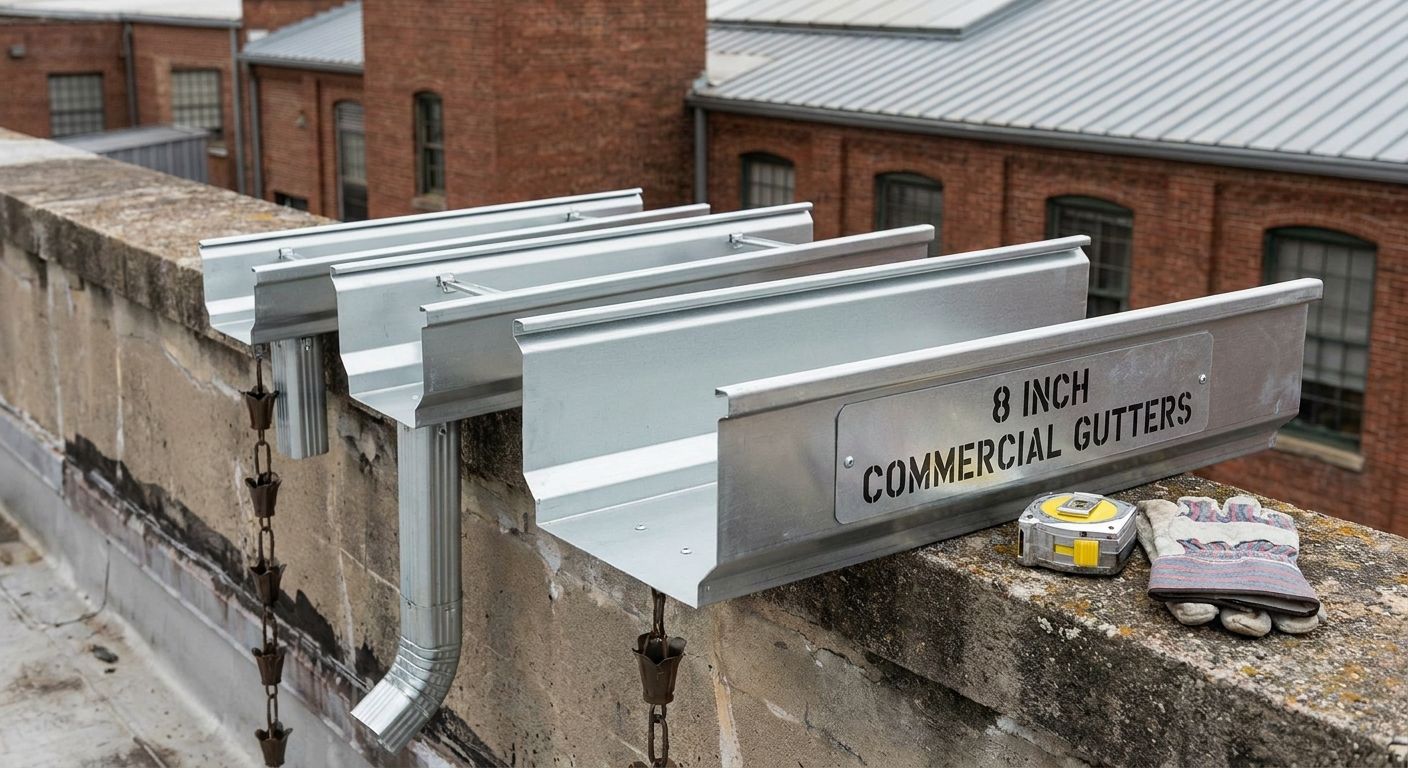
3. 8-inch commercial gutters: best for large warehouse and industrial roofs
Eight-inch commercial gutters, often specified as a box-style profile rather than a standard K-style, are built for roof planes that move serious water volume — warehouses, distribution centers, and industrial buildings with long, uninterrupted roof runs. The larger cross-section means fewer outlets are needed across the same length of building, which cuts down on the number of penetration points in the fascia. Buildings with older or heritage-style box gutter systems already installed sometimes stick with that format instead of switching to a standard 8-inch profile — worth comparing against Gutters Canada's ranking of box gutters by durability before deciding which route fits the building.
8-inch commercial gutters pros:
- Highest water volume capacity of the three sizes, built for high-runoff roofs
- Fewer downspouts needed per building length, meaning fewer penetration points
- Matches the scale of large industrial and warehouse roof structures
8-inch commercial gutters cons:
- Heavier system that demands stronger fascia condition and tighter hanger spacing
- Overkill on anything smaller than a large commercial or industrial footprint
- Installation takes more planning around structural support than 5 or 6-inch runs
8-inch verdict: Buy for warehouse and industrial roofs with real runoff volume. Wait on this size for anything under a large commercial footprint — it's not cost-effective to oversize a small building.
How we ranked
Each size was ranked against the same six criteria: water volume capacity, downspout pairing, material gauge fit, snow and ice load handling, hanger spacing requirements, and leaf guard compatibility. The 8-inch profile wins on raw capacity and fits large roofs specifically because it was built for that job, not because bigger automatically means better — a 5-inch system on a small outbuilding checks every one of those same boxes for its scale.
Which commercial gutter size should you choose?
Match the gutter size to the roof, not the building's overall footprint. A small commercial structure with a modest roof plane does fine on 5-inch, most standard commercial buildings across BC land on 6-inch, and large warehouse or industrial roofs with real runoff volume need 8-inch commercial gutters paired with downspouts sized to actually move that water. Skip the guesswork on this one — an undersized system on a large roof turns into a repeat service call within a season or two.
Get the right gutter size for your building
Gutters Canada sizes commercial systems to actual roof area and runoff, not guesswork.
FAQ
What size gutter do I need for a commercial building?
Most standard commercial buildings in BC use 6-inch K-style gutters, while large warehouse and industrial roofs with high runoff volume need 8-inch commercial gutters. Small outbuildings with limited roof area can still work fine on 5-inch.
Are 8-inch commercial gutters better than 6-inch?
8-inch commercial gutters aren't universally better, they carry more water volume and suit large industrial roofs, but they're oversized and heavier than necessary on a standard mid-size commercial building. Match the size to the actual roof area, not the biggest available option.
How much rain can a 6-inch commercial gutter handle?
6-inch K-style gutters handle the runoff from most standard commercial and retail roof areas across BC without oversizing the system. Roofs with large, uninterrupted planes or heavy industrial runoff volume typically need to step up to 8-inch.
Do I need bigger downspouts with an 8-inch gutter?
Yes, downspout size has to scale with the gutter or the larger trough does nothing for actual water capacity. An 8-inch gutter feeding an undersized downspout still bottlenecks during heavy rain.
What's the difference between K-style and box-style commercial gutters?
K-style gutters have a decorative front face and are common in 5, 6, and some 8-inch profiles, while box-style gutters are a flatter, higher-capacity profile often used on older buildings or where roof volume is highest. Box-style is common on warehouses and heritage-style commercial roofs.
Is 5-inch gutter too small for a commercial building?
5-inch is too small for any commercial building with real roof area, but it's a reasonable fit for small outbuildings and light structures with a short roof run. Anything with a large roof plane needs to move up to 6 or 8-inch.
How does snow load affect commercial gutter size in BC?
Interior BC buildings dealing with heavier snow load need gutters and hanger spacing rated for that weight, which changes the sizing math compared to coastal buildings that deal mostly with rain volume. The gutter profile itself matters less than the support system behind it in snow-heavy areas.
One last thing
The gutter trough gets all the attention, but the downspout is the actual bottleneck on most oversized commercial systems — a building upgraded to 8-inch commercial gutters with the old downspout count and size left in place will overflow at the same spots it did before, just with a bigger trough sitting there doing nothing extra. Size the whole system, not just the visible part.