Snow load is the number one reason rain gutter systems fail in interior and northern British Columbia winters, and the material gauge, hanger spacing, and profile depth of the system decide which ones survive a heavy dump and which ones peel off the fascia by February 2026.
- 6-inch seamless aluminum K-style wins overall for BC snow load capacity in 2026 — buy it for most homes.
- 26-gauge steel K-style wins for heavy interior snowfall zones like the Kootenays and Okanagan highlands.
- 5-inch aluminum K-style is fine for coastal, low-snow areas like Vancouver and Victoria.
- Box gutters suit large commercial roofs; vinyl gutters rank last and should be skipped in any BC snow zone.
Why snow load matters for rain gutter systems in BC
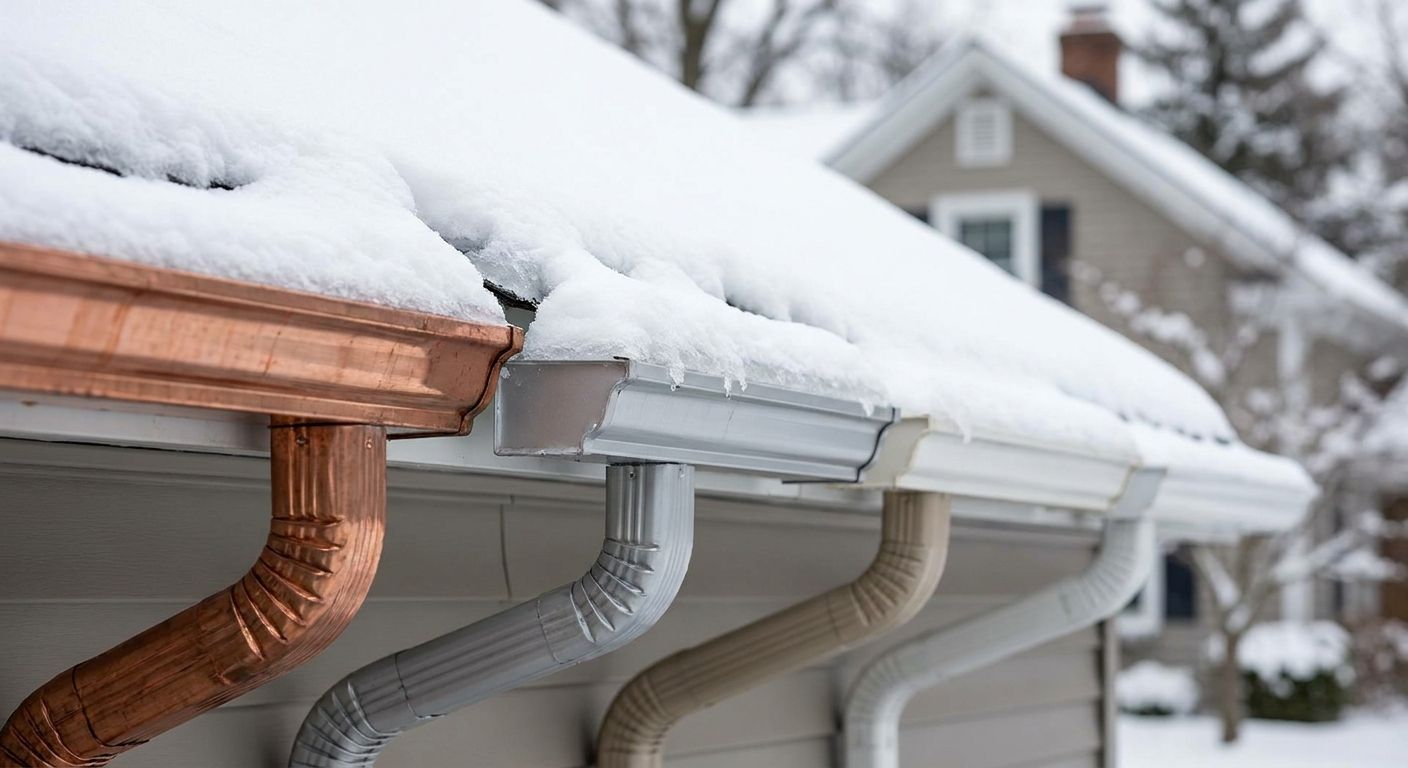
A cubic foot of fresh powder weighs roughly 7 pounds. Let that same snow sit, melt partway, and refreeze overnight, and it can pack to 20 pounds or more per cubic foot hanging off your fascia board. That's the mechanic that snaps hangers and pulls sectional gutters apart in a single cold snap.
Coastal BC — Vancouver, Victoria, the Lower Mainland — rarely sees sustained snow load on a rain gutter system; the bigger threat there is rainfall volume. Interior BC is a different problem entirely. The Kootenays, the Okanagan highlands, and much of northern BC get repeated freeze-thaw cycles that turn a gutter full of slush into a solid ice shelf. Gutters Canada sees the difference in service calls every winter: coastal jobs are clogs and overflow, interior jobs are torn-down runs and bent hangers.
The right rain gutter systems choice depends on where the property sits, not just what looks good on the house.
What makes the best rain gutter system for snow load
- Material gauge or thickness — thicker aluminum (0.032 in) or steel (26-gauge) resists denting and holding permanent sag under ice weight.
- Hanger type and spacing — hidden hangers spaced every 16 inches distribute load far better than spikes and ferrules every 30+ inches.
- Profile depth and width — a 6-inch trough carries more water and ice mass than a 5-inch trough before it overflows or deflects.
- Seamless vs sectional construction — fewer joints mean fewer points where ice expansion pulls a run apart.
- Downspout and outlet sizing — undersized outlets back up meltwater, adding standing weight the trough wasn't built to hold.
Rain gutter systems ranked by snow load capacity: at a glance
| System | Best for | Standout feature | Key limitation |
|---|---|---|---|
| 6-inch seamless aluminum K-style | Most BC homes, overall snow load | Deep trough, hidden hangers every 16 in | Costs more per foot than vinyl or 5-inch |
| 26-gauge steel K-style | Heavy interior BC snowfall | Highest crush resistance under ice weight | Heavier — needs stronger fascia and hangers |
| 5-inch seamless aluminum K-style | Coastal, low-snow BC | Lower material cost, adequate for rain volume | Undersized trough in a heavy snow year |
| Box gutters | Large commercial/industrial roofs | High-volume built-in channel | Seams age and leak, hard to inspect |
| Half-round aluminum | Heritage and character homes | Smooth interior sheds debris well | Lower total volume than K-style at same width |
| Vinyl/PVC gutters | Tight budgets, mild climates only | Lowest cost, won't rust | Brittle and low weight tolerance in freezing temps |
1. 6-inch seamless aluminum K-style: best rain gutter system for overall BC snow load
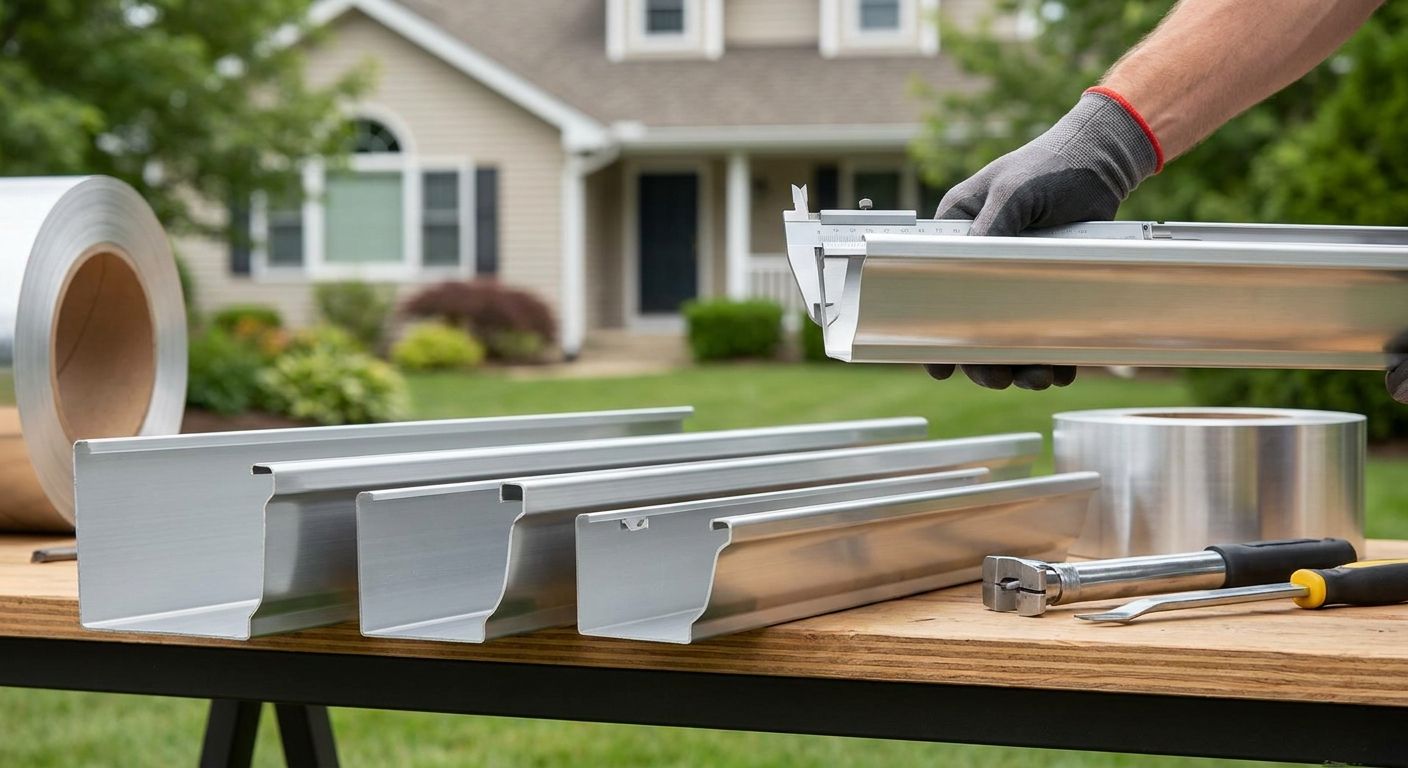
This is a single continuous run cut on-site with no factory seams, hung with hidden brackets instead of exposed spikes. The 6-inch trough holds significantly more standing water and ice mass than the 5-inch profile before it overflows.
6-inch seamless aluminum pros:
- Fewer joints means fewer failure points when ice expands and contracts
- 6-inch trough handles higher volume than 5-inch without deflecting
- Hidden hangers every 16 inches in snow zones spread the load evenly
- Low maintenance once installed correctly
6-inch seamless aluminum cons:
- Costs more per linear foot than vinyl or 5-inch aluminum
- Snow load performance depends entirely on correct hanger spacing at install — a rushed job undoes the material advantage
See how it stacks up on cost and durability for seamless aluminum gutters before deciding.
Best for: homeowners across most of BC who want one system that handles both heavy rain and moderate-to-heavy snow. Verdict: Buy.
2. 26-gauge steel K-style: best rain gutter system for heavy interior snowfall
Steel gutters trade some weight and installation cost for raw stiffness. In the Kootenays, Okanagan highlands, and northern BC, where accumulated ice sits on a run for weeks, that stiffness is the difference between a gutter that holds its shape and one that bows permanently.
Steel K-style pros:
- Highest crush and dent resistance of any common gutter material
- Holds its shape through repeated freeze-thaw cycles
- Long service life in sustained cold climates
Steel K-style cons:
- Heavier system requires stronger fascia backing and closer hanger spacing
- Cut edges can rust if the protective coating is scratched during install
- Fewer factory color options than aluminum
Best for: interior BC properties with heavy, sustained annual snowpack. Verdict: Buy for high-snow zones.
3. 5-inch seamless aluminum K-style: best rain gutter system for coastal, low-snow BC
The standard residential profile. It's built for rainfall volume, not sustained ice load, and that's exactly the trade-off coastal BC properties are making when they choose it.
5-inch aluminum pros:
- Lower material cost than the 6-inch profile
- Easy to source and install quickly
- Adequate capacity for Lower Mainland and Vancouver Island rainfall
5-inch aluminum cons:
- Undersized trough if a heavy snow year hits an area that doesn't usually get one
- Standard hanger spacing (24 in) sags faster under unexpected ice load than the tighter 16-inch spacing used on 6-inch systems
Best for: coastal and Lower Mainland properties where rain, not snow, is the design load. Verdict: Buy for coastal, Hold for interior.
4. Box gutters: best rain gutter system for large commercial roofs
Built directly into the roofline rather than hung off the fascia, box gutters carry the volume of runoff and snowmelt that large, low-slope commercial and industrial roofs generate. Older BC commercial buildings often already have this system, and it's a standard spec for new large-format construction.
Box gutter pros:
- Highest volume capacity of any system on this list
- Integrates directly with membrane roofing systems
- Common on older BC commercial and warehouse buildings
Box gutter cons:
- Seams age and can leak as sealant breaks down — check the full breakdown of box gutters ranked by durability before assuming they're maintenance-free
- Harder to inspect and repair than a hung gutter run
- Requires a specialist install, not a standard residential job
Best for: large commercial, industrial, or warehouse roofs. Verdict: Buy for commercial roofs, Skip for typical houses.
5. Half-round aluminum gutters: best rain gutter system for heritage homes
The rounded trough gives older, character-style BC homes the traditional look their architecture calls for, and the smooth interior sheds leaf debris better than a K-style profile.
Half-round pros:
- Matches heritage and character home exteriors
- Smooth interior reduces debris buildup between cleanings
Half-round cons:
- Lower total water and ice volume than a K-style gutter at the same width
- Older installs often use spike-and-ferrule hangers, which sag under snow load far sooner than hidden hangers
Best for: heritage and character homes in light-to-moderate snow areas. Verdict: Hold — upgrade the hangers before a snow zone install.
6. Vinyl/PVC gutters: best budget rain gutter system, weakest under snow load
Sectional plastic gutter joined with snap-fit connectors. It costs the least up front and won't rust, but it's the weakest performer on this entire list once ice enters the picture.
Vinyl gutter pros:
- Lowest material cost of any system here
- Resists corrosion entirely
- Sections are easy to swap for minor repairs
Vinyl gutter cons:
- Becomes brittle and cracks in sustained freezing temperatures
- Low weight tolerance before the trough deflects or the seams pull apart
- Not rated for the ice loads common in interior BC winters
Best for: mild coastal climates on a tight budget, nowhere else. Verdict: Skip for any property with sustained BC snowfall.
How we ranked these rain gutter systems
Each system was weighed against the same five criteria: material gauge, hanger spacing and type, profile depth, number of seams, and outlet sizing. Systems that combine heavy gauge, tight hanger spacing, and a seamless run rank highest because those three factors directly resist the weight and expansion forces that heavy snow and ice put on a gutter run.
Which rain gutter system should you choose in 2026?
For most BC homeowners outside the heaviest interior snow zones, 6-inch seamless aluminum K-style with 16-inch hanger spacing is the default choice for 2026 — it handles both rain volume and moderate snow load without the weight penalty of steel. If the property sits in the Kootenays, Okanagan highlands, or another zone with sustained heavy snowpack, step up to 26-gauge steel. Coastal properties with genuinely light snow can stay with 5-inch aluminum and put the savings elsewhere. Skip vinyl entirely if the roof sees ice in a normal winter.
Get your gutter system sized correctly
A professional assessment matches gauge and hanger spacing to your actual snow load.
FAQ
What's the best rain gutter system for heavy snow in BC?
26-gauge steel K-style is the strongest option for heavy, sustained interior BC snowfall in 2026. It resists denting and permanent sag better than any aluminum profile under repeated freeze-thaw cycles.
Is 6-inch or 5-inch K-style better for snow load?
6-inch K-style holds more water and ice mass before overflowing or deflecting. 5-inch is adequate for coastal, low-snow BC properties but undersized for a heavy interior winter.
Do steel gutters handle snow better than aluminum?
Yes, 26-gauge steel has higher crush resistance than standard aluminum, which is why it's the better pick for sustained interior BC snowpack. Aluminum is lighter and easier to install for moderate climates.
Are vinyl gutters bad in snow and ice?
Vinyl gutters become brittle in freezing temperatures and have the lowest weight tolerance on this list. They're a reasonable budget option in mild coastal climates but a poor fit anywhere BC sees sustained snow.
How much snow weight can a gutter hold before it sags?
It depends on gauge and hanger spacing rather than a single number. Wet, compacted snow can weigh around 20 pounds per cubic foot versus roughly 7 pounds for dry powder, and that difference is what overwhelms undersized systems.
What hanger spacing is best for BC snow zones?
16-inch hidden hanger spacing is standard for snow-load areas, versus 24-inch spacing for standard rain-only installs. Tightening spacing from 24 to 16 inches adds roughly 50% more support points across the same run.
Do box gutters work on residential homes?
Box gutters are built for large, low-slope commercial and industrial roofs, not typical residential homes. They handle high runoff volume but are harder to inspect and repair than a hung gutter system.
Is seamless aluminum worth it for BC winters?
Seamless aluminum removes the joints where ice expansion typically pulls sectional gutters apart, which makes it worth the added cost for most BC properties. Pair it with 16-inch hanger spacing in snow-prone areas for the best result in 2026.
One last thing
Tightening hidden hanger spacing from 24 inches to 16 inches adds roughly 50% more support points across the same run — that single change often matters more for snow load survival than upgrading from aluminum to steel. Get the spacing right before spending more on gauge.