If moss and algae keep clogging your gutters every wet BC season, the guard you pick determines whether you're cleaning gutters twice a year or twice a decade. Micro-mesh guards win overall for moss-prone BC roofs, a professionally installed leaf guard system wins for full-season protection with no DIY maintenance, and perforated aluminum guards win on budget — the type you skip entirely is brush guards, which trap moss debris instead of shedding it.
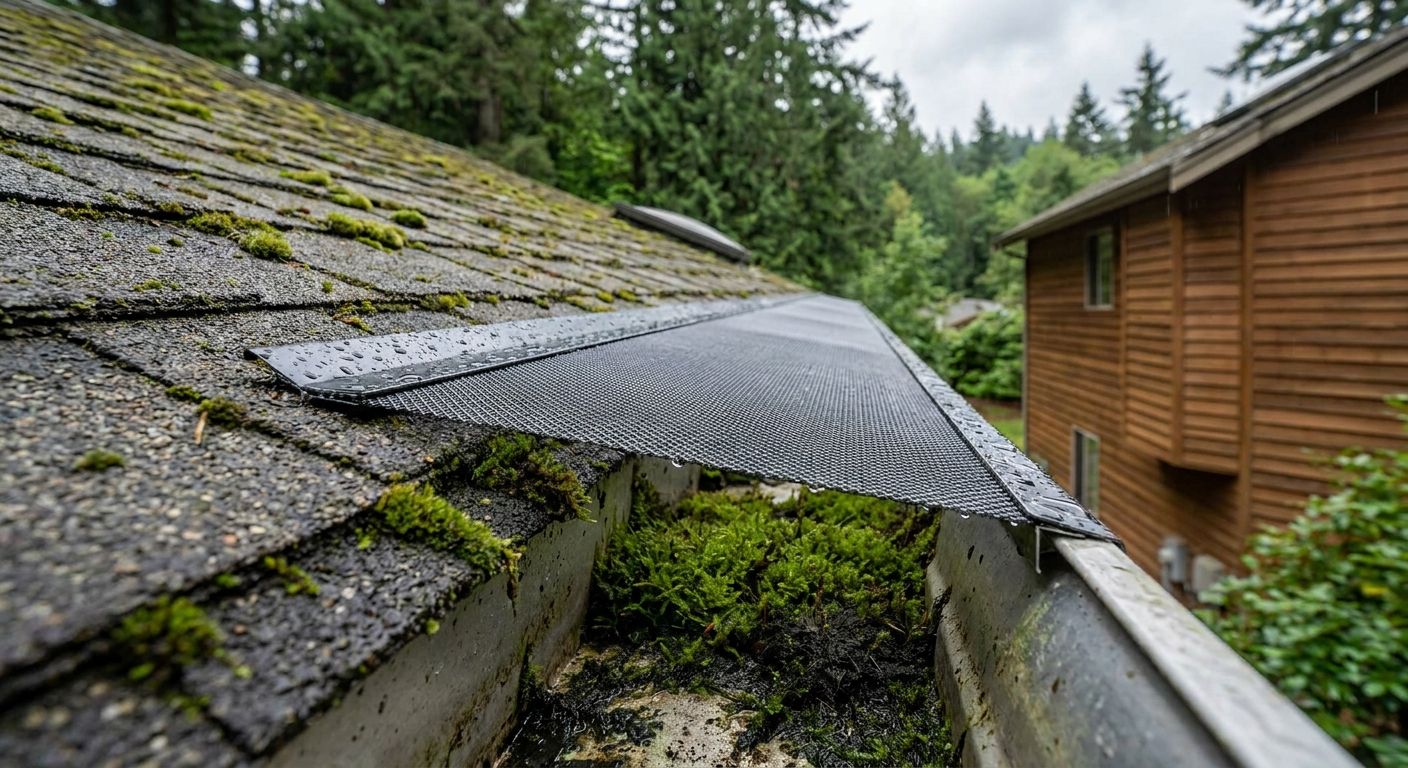
- Micro-mesh guards are the best gutter guards for moss and algae-prone BC roofs because their fine screen keeps roof grit and moss granules from packing into the gutter trough.
- A professionally installed leaf guard system from Gutters Canada pairs guard hardware with correct pitch and fascia attachment, which matters more on coastal roofs with heavy moss shed.
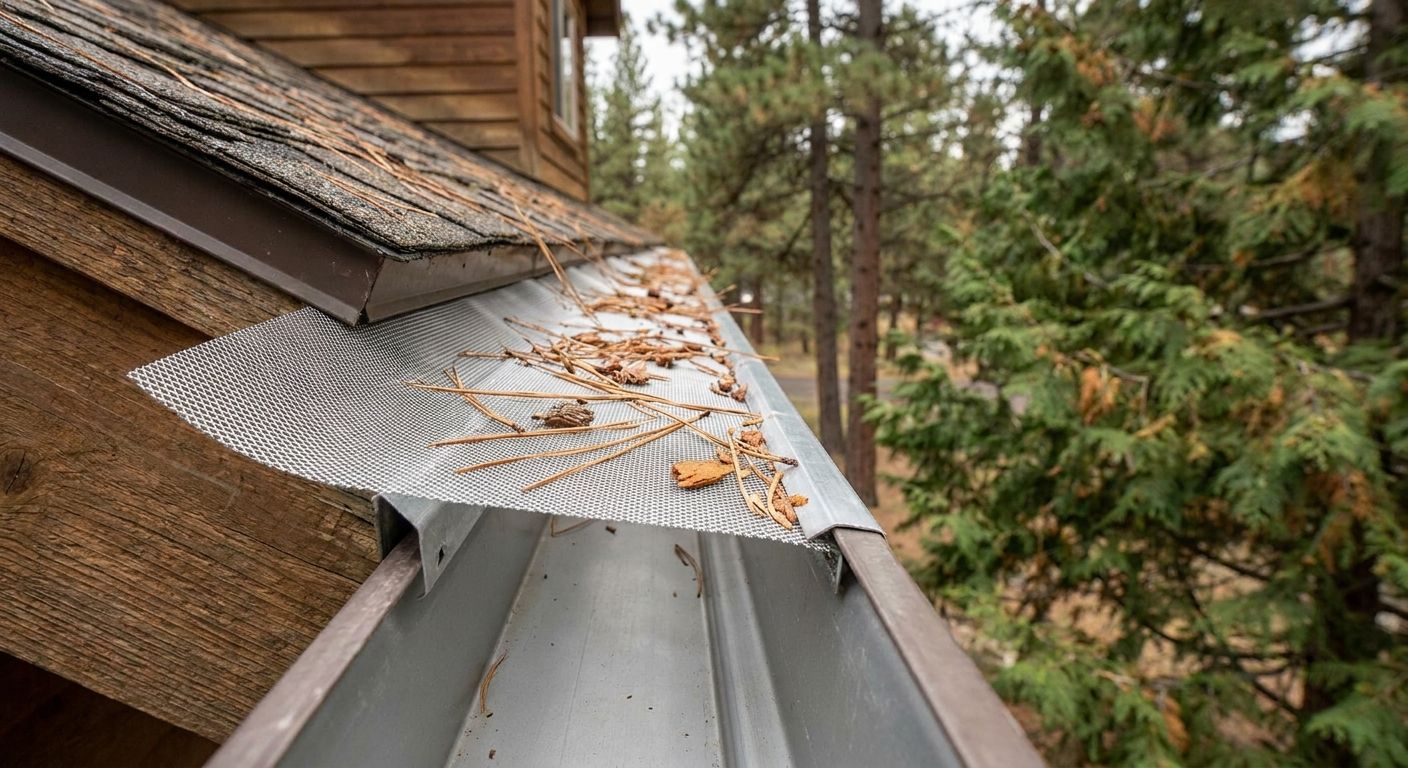
- Perforated aluminum guards cost the least to install but need clearing 2-3 times a year on moss-heavy roofs.
- Brush guards and foam inserts trap moss spores inside the material instead of shedding them and are not a fit for BC's coastal climate.
Why this matters
Moss on a cedar shake or asphalt shingle roof sheds fine granules and organic grit every time it rains hard, and BC coastal roofs see that kind of rain for most of the year. That grit doesn't just sit on the roof — it washes straight into the gutter, and a guard with the wrong mesh size either lets it all through or traps it on the surface until the guard itself is buried under a moss mat.
The wrong guard choice on a moss-prone roof means water backs up under the roofline, soaks the fascia board, and eventually reaches the soffit. That's a fascia repair job, not a gutter cleaning job, and it costs a lot more to fix. If you're still deciding whether guards make sense for your property at all, the gutter guard worth-it guide for BC homeowners walks through when guards pay off and when they don't.
What makes the best gutter guards for moss
- Mesh or opening size — fine enough to stop moss granules and grit, not so fine it blocks water flow during heavy rain
- Debris shedding — the surface has to shed wet moss and needles instead of holding onto them
- Maintenance frequency — how often the guard needs manual clearing once moss builds up on top of it
- Compatibility with fascia and gutter pitch — a guard installed at the wrong angle undercuts every other feature it has
- Snow and ice tolerance — BC's interior and higher elevations get freeze-thaw cycles that some guard styles handle poorly
- Install quality — a guard is only as good as the fastening and gutter alignment underneath it
At a glance
| Guard type | Best for | Standout feature | Key limitation |
|---|---|---|---|
| Micro-mesh guards | Moss and roof grit filtration | Fine screen blocks granules under roughly 0.02 inch | Needs a surface wipe-down when moss mats on top |
| Professionally installed leaf guard system | Full-season coastal protection | Correct pitch and fascia attachment done at install | Higher upfront labor than a DIY guard |
| Reverse-curve (surface tension) guards | Heavy tree canopy and continuous rain | Sheds leaves and moss clumps by design | Struggles in very light or misting rain |
| Perforated aluminum guards | Budget-conscious installs | Lowest-cost option that still blocks large debris | Needs clearing 2-3 times a year on moss-heavy roofs |
| Brush guards | Narrow retrofit gutters only | Fast to drop into an existing gutter | Traps moss and organic debris instead of shedding it |
1. Micro-mesh guards: best gutter guard for moss on BC roofs
Micro-mesh guards use a stainless or aluminum screen with openings small enough to stop moss granules, roof grit, and shingle debris while still letting water through. On a coastal BC roof shedding moss all winter, this is the mesh size that keeps material out of the gutter trough instead of just off the top.
Micro-mesh guards pros:
- Blocks the fine granular debris moss sheds, not just leaves
- Compatible with most existing gutter profiles
- Handles heavy rain volumes typical of BC's wet season without overflow
Micro-mesh guards cons:
- Moss can still mat on the mesh surface and needs an occasional brush-off
- Mesh quality varies a lot between manufacturers, so install quality matters
Micro-mesh guards pricing: varies by gutter length and mesh grade; get a site-specific quote before comparing.
Best for: homeowners with moss-heavy cedar or asphalt roofs who want the closest thing to a set-and-forget solution.
Verdict: Buy.
2. Professionally installed leaf guard system: best for full coastal protection
A professionally installed leaf guard system means the guard is matched to your gutter size, fascia condition, and roof pitch at install time, rather than clipped onto whatever's already up there. Gutters Canada installs leaf guard systems across BC as part of full gutter service, which means the guard, the gutter slope, and the outlet placement all get checked at the same time.
Leaf guard system pros:
- Install accounts for roof pitch and existing fascia condition, not a generic fit
- Pairs naturally with fascia or soffit repair if moisture damage is already present
- Reduces the guesswork of matching a retail guard to a non-standard gutter profile
Leaf guard system cons:
- Costs more upfront than a DIY clip-on guard
- Scheduling an install takes longer than buying a box off a shelf
Leaf guard system pricing: depends on linear footage and roof access; request a quote for your property.
Best for: BC homeowners who want the gutter, the guard, and the fascia checked together instead of solving one problem at a time — see the full leaf guard systems compared for BC rainfall breakdown for how these systems handle heavy coastal rain.
Verdict: Buy.
3. Reverse-curve (surface tension) guards: best for heavy tree canopy
Reverse-curve guards use the shape of the guard itself, not a mesh screen, to make water curl into the gutter while leaves and moss clumps slide off the front edge. They're built for properties under heavy tree cover where debris volume is constant.
Reverse-curve guard pros:
- Sheds large moss and leaf clumps without manual clearing
- Handles heavy debris load better than most mesh options
- Durable in high-volume runoff situations
Reverse-curve guard cons:
- Underperforms in light rain or misting conditions common in BC shoulder seasons
- Installation is less forgiving of an out-of-level gutter run
Best for: properties with mature tree canopy where moss and needle drop happen year-round.
Verdict: Buy for canopy-heavy lots, Hold if your roof has moss but minimal tree cover — a micro-mesh guard does that job with less install complexity.
4. Perforated aluminum guards: best budget option
Perforated aluminum guards are flat aluminum sheets punched with holes, sitting on top of the gutter to block larger debris while letting water through the perforations. They're the entry-level option for moss-prone roofs on a tighter budget.
Perforated aluminum guard pros:
- Lower material and labor cost than micro-mesh or reverse-curve guards
- Blocks large moss clumps and leaves effectively
- Simple, low-profile install on standard K-Style gutters
Perforated aluminum guard cons:
- Perforations are large enough that fine moss grit still gets through
- Needs manual clearing 2-3 times a year on a moss-heavy roof
- Less durable than mesh under heavy snow load in interior BC climates
Best for: homeowners who want basic debris control on a budget and are fine cleaning gutters a couple times a year.
Verdict: Hold — workable as a stopgap, but plan to upgrade if moss buildup gets worse each season.
5. Brush guards: skip for moss-heavy roofs
Brush guards are cylindrical bristle inserts dropped directly into the gutter channel. They're fast to install and cheap, but on a moss-prone roof they do the opposite of what you need — moss granules and wet debris settle into the bristles and stay there.
Brush guard pros:
- Cheapest guard option to buy and install
- No tools required for a narrow gutter retrofit
Brush guard cons:
- Traps moss and organic debris inside the bristle material instead of shedding it
- Needs full removal and cleaning, not just a surface wipe
- Poor fit for BC's continuous wet-season rainfall
Best for: short-term coverage on a narrow gutter section with minimal moss exposure — not a fit for a full moss-prone roof.
Verdict: Skip for moss and algae-prone BC roofs.
How we ranked
The ranking above weighs mesh/opening size against moss and grit filtration first, since that's the failure point specific to BC's moss and algae exposure. Maintenance frequency and fascia compatibility came next, because a guard that traps debris against the fascia board causes more damage than no guard at all. Snow and ice tolerance and install quality rounded out the criteria for properties in BC's higher-elevation and interior microclimates.
Get your gutters assessed for moss
A site visit tells you which guard type fits your roof pitch and fascia condition.
Which gutter guard should you choose?
If your roof sheds moss regularly and you want the least maintenance, micro-mesh guards are the default pick for 2026 — they filter the fine grit that other guard types let through. If you're already dealing with fascia wear or an aging gutter run alongside the moss problem, a professionally installed leaf guard system solves both in one visit instead of two separate jobs. Budget-conscious homeowners can start with perforated aluminum guards, but expect to clear them a few times a year until moss buildup forces an upgrade. Skip brush guards on any roof with real moss exposure — they trap the exact debris you're trying to stop.
FAQ
What are the best gutter guards for moss on a BC roof?
Micro-mesh guards are the best gutter guards for moss because their fine screen blocks roof grit and moss granules while still passing heavy rain volumes. A professionally installed leaf guard system is the stronger pick when fascia or gutter condition also needs attention.
Do gutter guards stop moss from growing on the roof itself?
No, gutter guards only manage what washes off the roof into the gutter, not moss growth on the shingles or shakes themselves. Roof moss treatment is a separate service from gutter guard installation.
How often do gutter guards need cleaning on a moss-heavy BC roof?
Micro-mesh and leaf guard systems typically need a surface wipe-down once or twice a year on moss-heavy roofs. Perforated aluminum guards need clearing 2-3 times a year because the openings are larger.
Are brush guards good for moss-prone roofs?
No, brush guards trap moss granules and wet debris inside the bristles instead of shedding them, which makes them a poor fit for BC's coastal climate. They're better suited to short retrofit sections with minimal moss exposure.
Is a professionally installed leaf guard system worth it over a DIY guard?
It's worth it when your gutters, fascia, or gutter pitch also need attention, since the install addresses all three at once. A DIY clip-on guard only solves the debris problem, not underlying gutter or fascia condition.
Do gutter guards work in heavy BC rainfall?
Micro-mesh and reverse-curve guards are built to handle high rain volumes without overflow, provided the mesh size and gutter pitch are matched correctly at install. A guard installed at the wrong angle causes overflow regardless of guard type.
What gutter guard works best under heavy tree canopy in BC?
Reverse-curve surface tension guards handle constant leaf and moss clump drop better than mesh guards because their shape sheds large debris automatically. They underperform in light misting rain, so they're best matched to properties with heavy canopy specifically.
Can gutter guards prevent fascia damage from moss buildup?
A properly fitted guard reduces the water backup that soaks fascia boards, but an already-damaged fascia board needs repair or replacement first. Pairing guard installation with a fascia check catches this before it becomes a bigger repair.
One last thing
The guard type matters less than most homeowners think — the install angle and gutter pitch underneath it matter more. A top-tier micro-mesh guard hung on a gutter with the wrong slope still backs up water in a moss-heavy BC winter, and that's a fascia problem in the making, not a guard problem. Check the pitch and fascia condition before you commit to a guard type for 2026.