Built-in and box gutters sit flush against the roofline instead of hanging off the fascia, which means a clogged one backs water up under the roof edge, not just onto the ground. The best gutter guard for built-in gutters has to match that channel's exact width and slope, not just clip onto a standard hung gutter profile. Five gutter guard types are ranked below by how they actually perform on box and built-in systems in British Columbia in 2026.
- Gutters Canada's professional leaf guard system is the best gutter guard for built in gutters on irregular or hard-to-reach box profiles.
- Micro-mesh guards outperform screen mesh against fir and cedar needles common on BC roofs.
- Foam insert guards are the weakest long-term pick for built-in gutters in 2026 — skip them.
- Reverse-curve guards handle heavy rain and snow load but need a professional fit on box gutter channels.
Why this matters
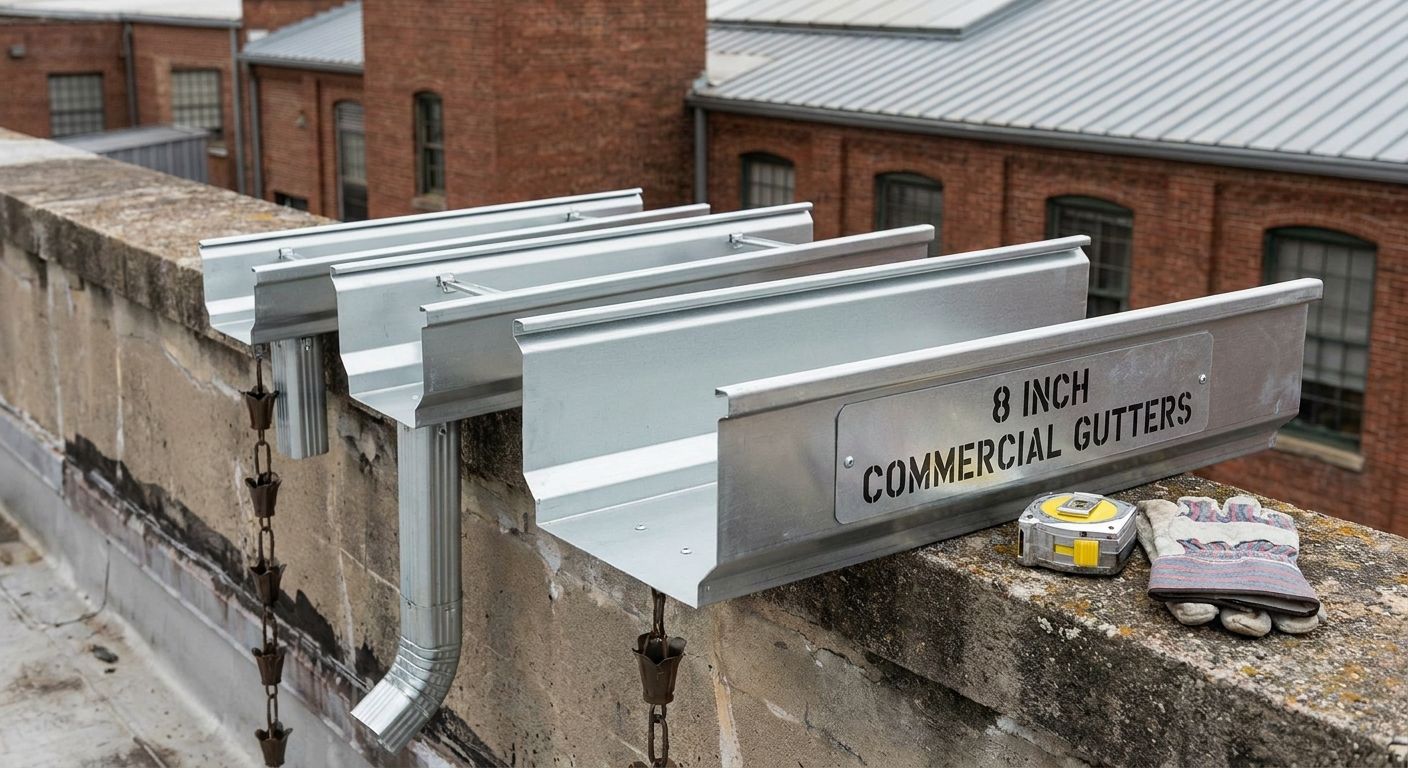
A built-in gutter is cut into the roof structure itself, often behind the fascia board, so you can't just glance up and see whether it's clogged. Box gutters on older BC homes tend to be narrower and shallower than modern seamless aluminum runs, and once debris packs into that channel, water finds the path of least resistance — usually into the fascia and soffit behind it.
BC's coastal climate adds two problems most gutter guard reviews don't account for: fir and cedar needles that slip through coarse mesh, and moss growth fed by year-round humidity. A guard sized for a suburban Ontario roof with mostly maple leaves doesn't behave the same way on a cedar-shaded roof in Victoria or on Vancouver's North Shore. Are gutter guards worth it in BC covers the broader cost-benefit case; this list focuses specifically on built-in and box profiles.
If you can't see the bottom of the channel without a ladder, the guard has to match the gutter's exact profile, not just its width.
What makes the best gutter guard for built-in gutters
- Mesh or gap size relative to local debris — fir needles, cedar fronds, and moss fragments are smaller than the maple and oak leaves most guards are designed around.
- Fit against the existing channel — box and built-in gutters often run narrower than standard 5-inch or 6-inch K-style profiles, so a one-size snap-in guard rarely seats flush.
- Access for inspection — a guard that requires removal to check the channel underneath defeats the point on a gutter you already can't see into easily.
- Material behavior in coastal humidity — some materials hold moisture and feed moss growth instead of preventing it.
- Rain volume and snow load handling — BC's south coast sees heavier sustained rainfall than most of the country, and interior and mountain valley properties add snow load to the equation.
- Installation method — fastened, snap-in, and adhesive systems each interact differently with an aging built-in gutter's existing hardware.
Gutter guards for box and built-in systems at a glance
| Guard type | Best for | Standout feature | Key limitation |
|---|---|---|---|
| Gutters Canada Leaf Guard System | Full box/built-in gutter retrofits | Custom-fitted to the existing channel by a technician | Requires professional installation, not a DIY option |
| Micro-mesh guards | Fine debris control (fir, cedar needles) | Stainless mesh blocks small particulate, not just leaves | Needs periodic cleaning as fine silt and moss debris still accumulates on top |
| Reverse-curve (surface tension) guards | Heavy rain volume and snow load | Sheds bulk water and snow off the gutter face | Doesn't stop fine debris, and fitting the curve to a built-in profile is not straightforward |
| Screen mesh guards | Budget-friendly straight runs | Simple, low-cost snap-in installation | Coarse openings let seeds and needles through; can sag under snow weight |
| Foam insert guards | Quick retrofit on narrow channels | Wedges into the channel without brackets or fasteners | Holds moisture, breaks down, and can promote plant growth inside the gutter |
1. Gutters Canada Leaf Guard System: best gutter guard for full box gutter retrofits
This is a professionally installed leaf guard fitted directly to the property's existing gutter system rather than a shelf product sized for a generic profile. On built-in and box gutters, that distinction matters more than on standard hung gutters, because the channel width, slope, and outlet placement on an older BC home rarely match a mass-produced snap-in guard.
Gutters Canada Leaf Guard System pros:
- Fitted to the actual channel dimensions during installation, not a generic width
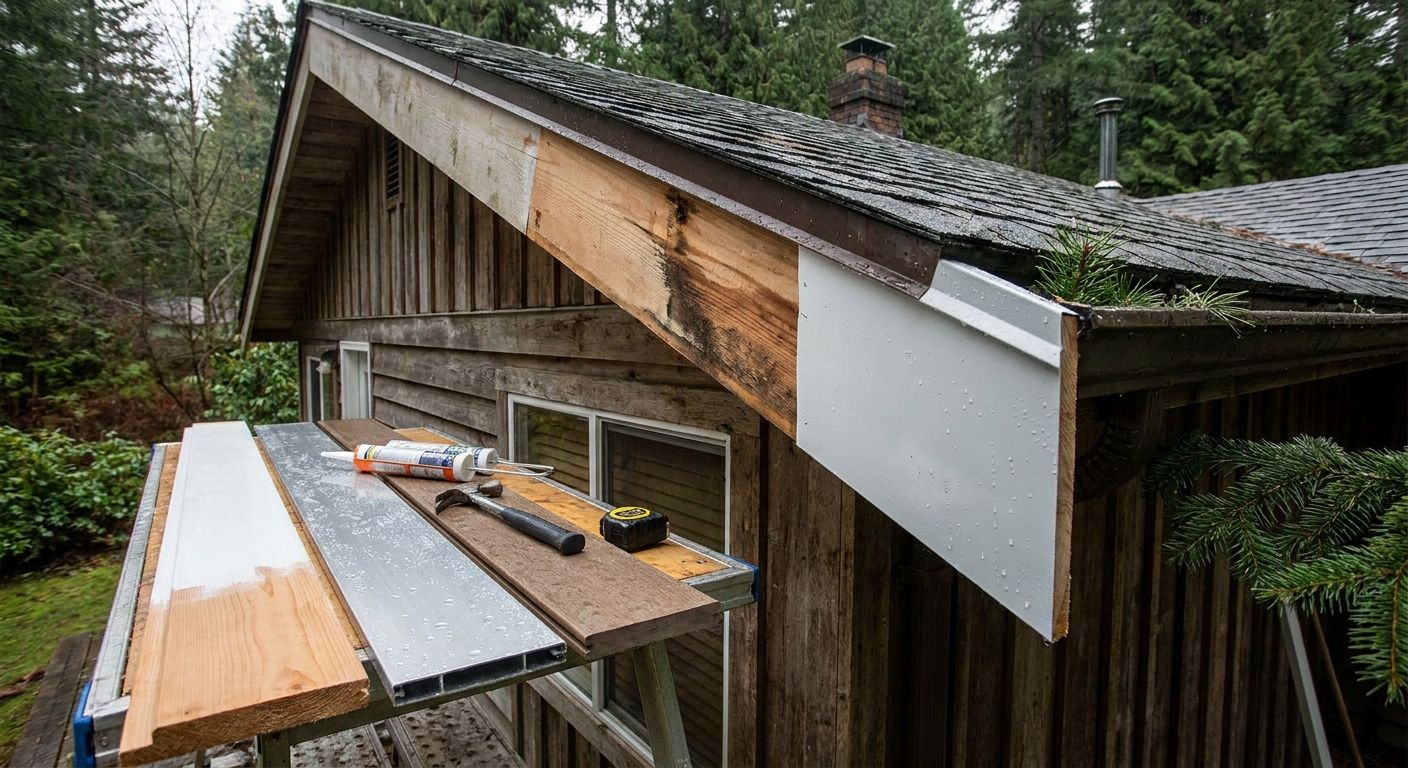
- Installed by a technician who can flag existing fascia or soffit damage before it's covered up
- Works across K-style, half-round, and box gutter profiles rather than one shape
Gutters Canada Leaf Guard System cons:
- Not a DIY purchase — it's a service, so there's no shelf price to compare against box-store guards
- Scheduling an installer takes longer than ordering a mesh roll online
Best for: homeowners and property managers with irregular, older, or hard-to-access box and built-in gutters who want the guard matched to the actual channel rather than forced onto it. If your gutters are due for inspection anyway, pair this with a look at gutterscanada.ca for a full picture of what the fascia and soffit behind the channel need.
Verdict: Buy if the built-in gutter is irregular, aging, or you've had water intrusion behind the fascia before.
2. Micro-mesh guards: best for fine debris control on built-in gutters
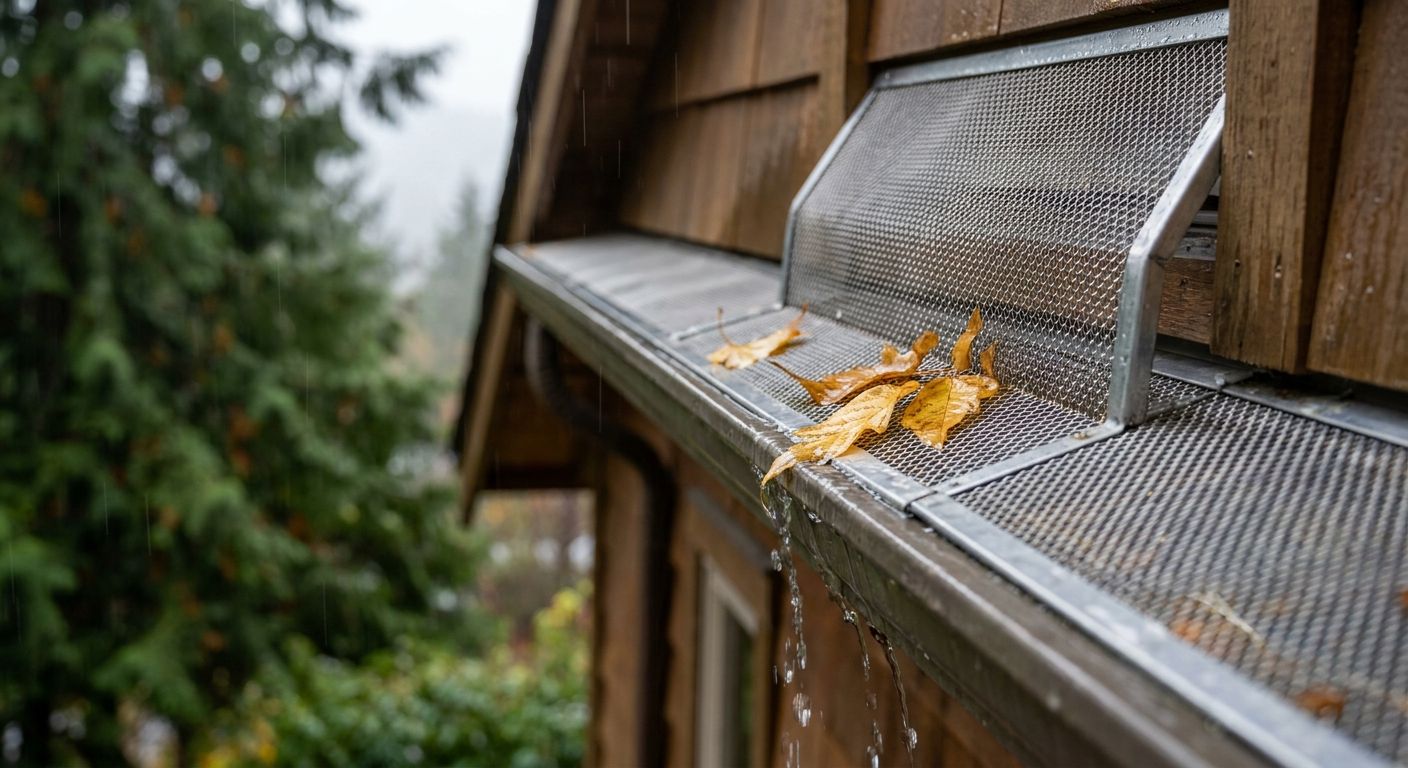
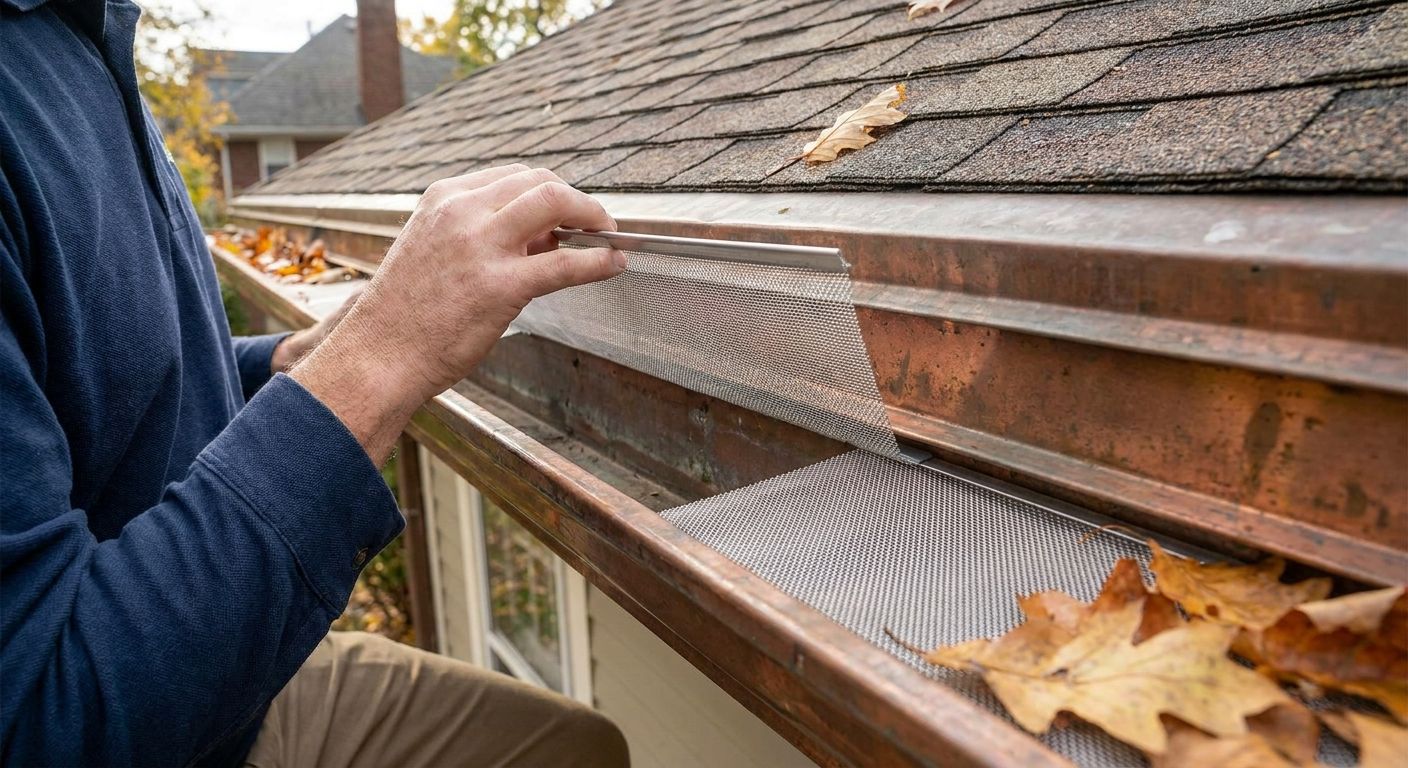
Micro-mesh guards use a stainless steel screen with openings fine enough to stop most needle and seed debris that passes straight through standard screen mesh. On a cedar- or fir-shaded roof, this is the difference between a guard that actually reduces cleaning frequency and one that just filters out large leaves.
Micro-mesh pros:
- Blocks fine debris standard mesh misses, which matters on conifer-heavy BC lots
- Stainless construction resists rust in a coastal humidity environment
- Compatible with most K-style built-in profiles when sized correctly
Micro-mesh cons:
- Fine silt, pollen, and moss spores still settle on top of the mesh over a season and need occasional rinsing
- Retrofitting an irregular box gutter channel with a standard-width micro-mesh panel can leave gaps at the edges
Best for: properties surrounded by conifers where needle buildup is the main clog source, not leaf litter.
Verdict: Buy for conifer-heavy sites, with an annual rinse-off built into your maintenance routine.
3. Reverse-curve (surface tension) guards: best for heavy rain and snow load
Reverse-curve guards use a curved surface that relies on water clinging to the curve and dropping into the gutter while debris slides off the front edge. They're built for volume — heavy, sustained rain and snow sliding off a roof edge — more than for filtering fine particles.
Reverse-curve pros:
- Handles high water volume during BC's wet season without overflowing at the gutter mouth
- Sheds snow and ice buildup off the guard surface rather than trapping it
- No mesh to clog with silt or fine debris
Reverse-curve cons:
- Doesn't stop needles, seeds, or grit — some of it still rides the water curve into the channel
- The curve has to be custom-matched to a box or built-in profile; an off-the-shelf reverse-curve panel rarely seats correctly on an older narrow channel
Best for: properties in higher-rainfall or snow-load areas where overflow during storms is the bigger risk than needle buildup.
Verdict: Hold unless your built-in gutter already handles heavy storm volume poorly — otherwise the fit issue on box profiles outweighs the benefit.
4. Screen mesh guards: best budget option for straight-run built-in gutters
Standard screen mesh guards are the entry-level option: a perforated metal or plastic screen that snaps or clips over the gutter opening. They're inexpensive to source and simple to install on straight, accessible gutter runs.
Screen mesh pros:
- Lowest-effort installation of any guard on this list
- Widely available and easy to replace panel by panel
Screen mesh cons:
- Openings are large enough to let fir and cedar needles through, which defeats the point on most BC roofs
- Can sag or deform under snow load over a winter or two
- Doesn't conform well to the narrower channel width common on box gutters
Best for: low-conifer properties with straight, easily accessible gutter runs and a tight budget.
Verdict: Hold — fine for a simple hung gutter, but it's the wrong tool for a built-in channel surrounded by conifers.
5. Foam insert guards: best avoided for narrow box gutter channels
Foam insert guards are wedges of porous foam that sit inside the gutter channel, letting water pass through while blocking debris on top. They install without brackets or fasteners, which makes them tempting for a narrow box gutter where hardware options are limited.
Foam insert pros:
- No fasteners or brackets needed, so installation is fast
- Fits into narrow channels where bracket-mounted guards struggle
Foam insert cons:
- Foam holds moisture against the channel, which speeds up corrosion in metal box gutters
- Organic debris that lands on the foam can take root, and plant growth inside a gutter is a maintenance problem, not a solution
- Foam breaks down over a few seasons of BC's wet weather and needs replacing more often than mesh or reverse-curve systems
Best for: short-term or temporary coverage on a gutter that's already scheduled for replacement.
Verdict: Skip for anything you intend to leave in place for more than a season or two.
How this ranking was built
Each guard type was weighed against the six criteria above, with fit against irregular box and built-in channel widths and behavior in BC's wet, conifer-heavy climate carrying the most weight. A guard that performs well on a standard hung K-style gutter in a drier climate can still rank lower here if it doesn't seat correctly on a narrower or recessed built-in channel.
Which gutter guard should you choose for built-in gutters?
For most older BC homes with box or built-in gutters, the Gutters Canada Leaf Guard System is the safer call in 2026 because it's fitted to the actual channel instead of forced onto it. If the property is surrounded by conifers and the gutter itself is in good shape, micro-mesh is a reasonable middle ground. Reverse-curve guards earn their place only where storm volume, not debris, is the recurring problem. Screen mesh is fine as a stopgap on a straight, low-conifer run, and foam inserts belong on a gutter you're planning to replace soon anyway, not one you want to leave alone for years.
Get your box gutters checked before winter
A technician can match a guard to your exact channel width and slope.
FAQ
What's the best gutter guard for built-in gutters?
A guard fitted to the specific channel width and slope of the built-in system performs best in 2026, which is why a professionally installed leaf guard system typically outperforms a generic snap-in panel on box and built-in profiles.
Can you install standard gutter guards on box gutters?
Standard mesh or screen guards can be trimmed to fit, but box gutters often run narrower than the 5-inch or 6-inch K-style width most guards are designed for, so gaps and poor seating are common.
Is micro-mesh better than screen mesh for BC roofs?
Yes, for conifer-heavy properties. Micro-mesh blocks fir and cedar needles that pass straight through standard screen mesh openings.
Do foam gutter guards work on built-in gutters?
Foam inserts fit into narrow built-in channels without brackets, but they hold moisture against the gutter and break down within a few wet BC seasons, making them a short-term option at best.
How often do gutter guards on built-in systems need cleaning?
Even fine mesh guards need an annual check, since silt, pollen, and moss debris settle on top of the screen rather than passing through it.
Do reverse-curve guards stop needles and seeds?
No. Reverse-curve guards are built to shed water volume and snow, not fine debris, so needles and seeds can still ride the water curve into the channel.
Are gutter guards worth it for older BC homes with box gutters?
Generally yes, especially when the gutter is hard to inspect visually, since a clog in a built-in channel drives water into the fascia and soffit before it's ever visible from the ground.
One last thing
The detail most homeowners miss on built-in gutters: the guard doesn't just filter debris, it also hides the channel from casual inspection. A guard installed over a gutter that already has a slow leak or a failing outlet can mask the problem for another year while the fascia behind it keeps absorbing water. Check the channel condition before the guard goes on, not after.