Gutter guards are worth it in 2026 for most BC homeowners with mature trees near the roofline, but only when the guard type matches the debris you actually get — fir needles, cedar fronds, maple seeds, or moss. The catch nobody mentions upfront: guards don't eliminate maintenance, they change it, and a poorly matched guard on a coastal roof can trap moisture and cause more damage than an open gutter.
Before you decide, it helps to see how Gutters Canada sizes and matches guard systems to BC's wet-coast conditions, since the wrong screen on a cedar-heavy lot is a common and expensive mistake.
- Micro-mesh guards are worth it for fir/cedar-heavy BC properties in 2026 — buy with professional install.
- Foam inserts degrade under UV within a few seasons on sun-exposed south-facing roofs — treat as a short-term fix.
- Reverse-curve guards perform best on steep-slope roofs common in BC's coastal and mountain communities.
- Standard 5-6 inch K-style gutters still need an annual inspection even with guards installed.
Why this matters
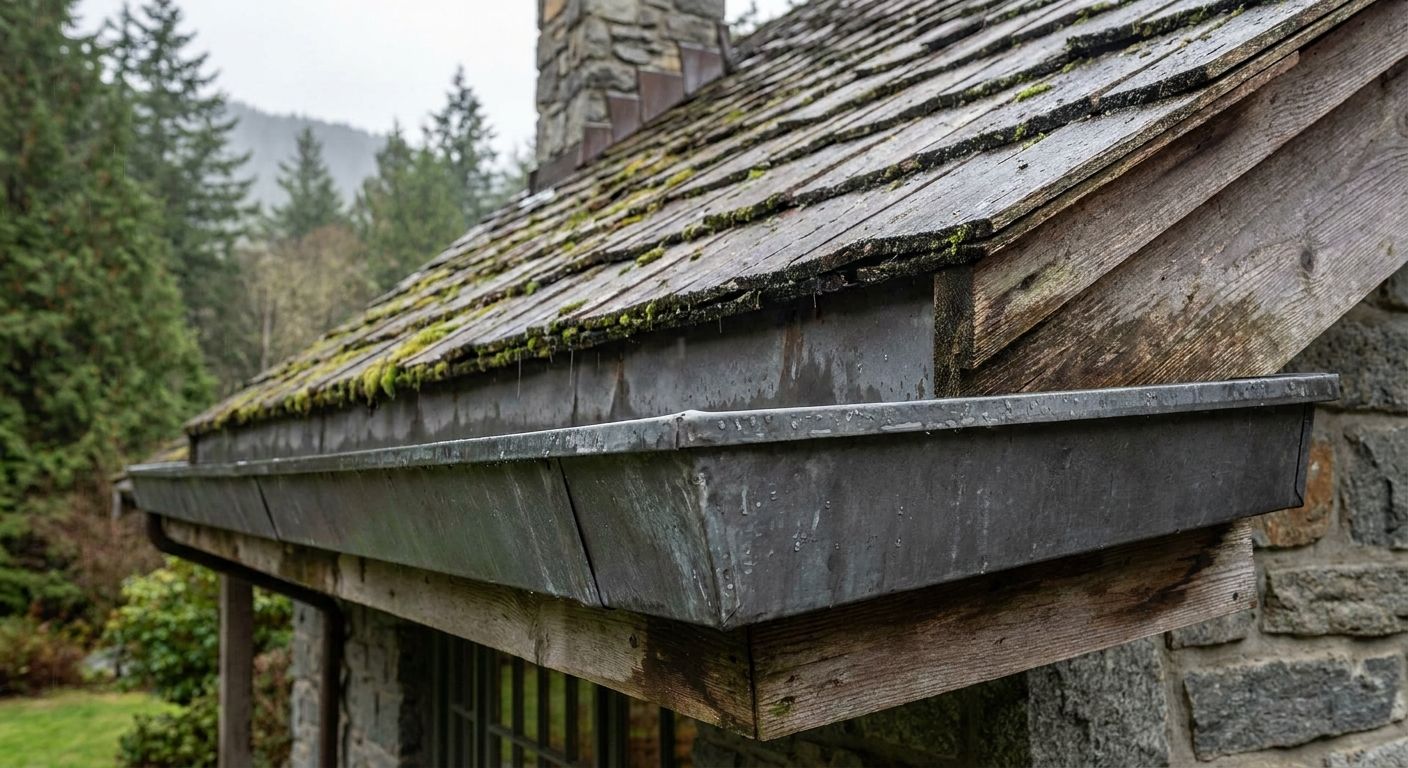
A clogged gutter doesn't just overflow — it pushes water behind fascia boards, under roof edges, and down foundation walls. On the coast, where rain falls for months at a stretch, a blocked downspout can sit full of standing water long enough to rot fascia and soffit before anyone notices.
Gutter guards are a maintenance decision, not a magic fix. The question in 2026 isn't whether guards exist that block debris — they all do to some degree — it's whether the guard you pick matches your roof's actual debris load and pitch.
Are gutter guards worth it?
The honest answer depends on what's falling on your roof. A property surrounded by deciduous maples sheds big flat leaves that most guards handle easily. A property under Douglas fir or cedar sheds fine needles and scale that clog anything but tight micro-mesh. Here's how the main guard types compare.
| Guard type | Best for | Handles fine needles? | Verdict |
|---|---|---|---|
| Micro-mesh screen | Fir/cedar needle-heavy lots | Yes | Buy with professional install |
| Reverse-curve (surface tension) | Steep-slope roofs, heavy leaf load | Partial | Buy for steep pitches |
| Foam insert | Budget single-story DIY jobs | No | Hold — short lifespan in sun |
| Brush guard | Temporary fix, rental properties | No | Skip for long-term coastal use |
Micro-mesh screens are the strongest all-around pick for BC in 2026 because they're the only style fine enough to stop needle debris while still passing high rainfall volumes without overflow.
Micro-mesh screens: worth it for fir and cedar debris
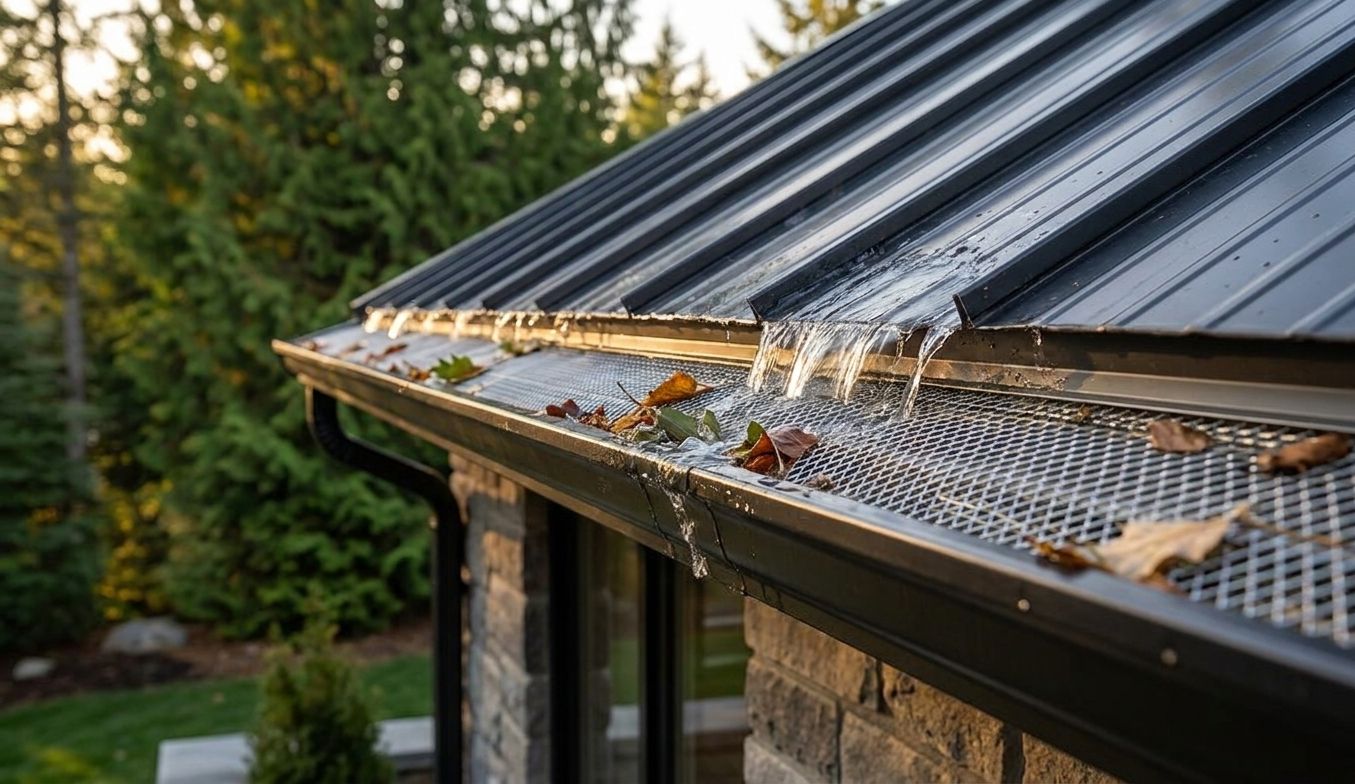
Micro-mesh uses a stainless or aluminum screen with openings small enough to block needles and seeds while letting water through. It costs more upfront than foam or brush guards and needs professional fitting to seat flush against the gutter lip — a gap of even a few millimetres lets debris slide underneath and defeats the purpose.
Verdict: Buy, especially on lots with mature conifers, but only with a proper install — a DIY mesh job that isn't sealed tight will still clog behind the screen.
Reverse-curve guards: worth it on steep rooflines
Reverse-curve (surface-tension) guards use the roof's water flow to curl rainwater down into the gutter while leaves and larger debris slide off the edge. They work best on roofs with enough pitch to generate that flow, which describes a lot of BC's mountain and North Shore housing stock.
Verdict: Buy for steep-slope homes; skip on low-slope roofs where the water doesn't build enough momentum to curve into the trough.
Foam inserts: not worth it long-term
Foam inserts sit inside the gutter channel and block debris with porous foam. They're the cheapest option and the easiest DIY install, but foam degrades under UV exposure and gets brittle, and moss and fine grit eventually clog the pores from the top down.
Verdict: Hold — fine as a stopgap for a season, not a 2026-and-beyond solution on a sun-exposed roof.
Brush guards: skip for BC's wet coast
Brush-style guards use bristles to block leaves while letting water pass between them. In drier climates they buy time between cleanings. In BC's coastal moisture, the bristles trap organic matter that stays wet for weeks, which is exactly the condition that grows moss and speeds up gutter corrosion.
Verdict: Skip for anything other than a short rental turnover fix.
“A guard that isn't sealed flush to the gutter lip will still clog behind the screen — fit matters more than mesh size.”
Why gutter guard performance varies so much
The same guard model performs differently house to house. These are the factors that actually move the needle:
- Tree species nearby — fine conifer needles (fir, cedar, hemlock) clog anything but micro-mesh; broadleaf debris is easier to shed
- Roof pitch — steep roofs generate more water momentum, which favors reverse-curve designs
- Gutter size — standard 5-inch K-style gutters have less overflow buffer than 6-inch systems on larger roof planes
- Install quality — a gap between guard and gutter lip lets debris in regardless of mesh size
- Sun exposure — south and west-facing runs degrade foam and plastic guards faster than shaded north-facing runs
- Local moisture load — coastal BC's near-constant winter rain keeps organic debris wet longer, accelerating moss growth on any guard that traps material
Get a leaf guard assessment
Find out which guard type actually fits your roof and tree cover.
Do gutter guards stop ice dams in BC winters?
Gutter guards do not stop ice dams on their own — ice dams form from heat escaping through the roof deck and melting snow that refreezes at the cold eaves, which is an insulation and ventilation issue, not a gutter issue. A guard can reduce the debris that makes ice dams worse by keeping the channel clear, but it won't fix poor attic insulation.
Can you install gutter guards yourself?
You can install gutter guards yourself, and foam inserts and some brush styles are built for DIY installation on single-story homes with straightforward gutter runs. Micro-mesh and reverse-curve systems are harder to get right because a loose fit undermines the whole system, so most homeowners with steep roofs or multi-story homes hire it out.
Do gutter guards work with cedar and fir needles?
Only micro-mesh guards reliably block cedar and fir needles — foam, brush, and wide-opening reverse-curve guards let fine needle debris through or trap it on the surface. If your property backs onto conifer trees, mesh with openings fine enough for needles is the only guard type worth installing.
FAQ
Are gutter guards worth it in 2026?
Gutter guards are worth it in 2026 for properties near mature trees, provided the guard type matches the debris — micro-mesh for conifer needles, reverse-curve for steep leafy roofs. On a low-debris lot with few nearby trees, the maintenance savings may not justify the upfront cost.
Do gutter guards eliminate the need for cleaning?
No gutter guard eliminates cleaning entirely — they reduce frequency, not the need. Even a well-fitted micro-mesh system should get an annual inspection to clear surface debris and check the seal at the gutter lip.
What's the best gutter guard for BC homes with fir trees?
Micro-mesh screens are the best gutter guard for BC homes near fir or cedar trees because the tight mesh openings block fine needle debris that foam and brush guards let through.
How much do gutter guards reduce maintenance?
Gutter guards can stretch cleaning intervals from the standard two to four times a year down to roughly once a year on well-matched systems, though heavy conifer debris still needs an annual check regardless of guard type.
Do foam gutter guards last as long as mesh guards?
Foam gutter guards generally do not last as long as mesh guards because UV exposure makes the foam brittle and porous over a few seasons, especially on south or west-facing roof runs.
Can gutter guards cause ice dams?
Gutter guards themselves don't cause ice dams, since ice dams form from heat loss through the roof deck rather than gutter blockage. A poorly fitted guard that traps ice at the edge can make an existing ice dam worse, but it isn't the root cause.
Do gutter guards work on flat or low-slope roofs?
Reverse-curve guards work poorly on flat or low-slope roofs because they rely on water momentum to curl into the gutter. Micro-mesh or foam inserts are better suited to low-pitch roof runs.
Should I install gutter guards myself or hire a professional?
Hire a professional for micro-mesh or reverse-curve guards on multi-story or steep roofs, since a loose fit at the gutter lip defeats the guard entirely. Foam inserts on single-story homes are reasonable DIY jobs.
One last thing
The guard that gets skipped in most comparisons is the one already on the roof: the gutter itself. A worn or undersized 5-inch K-style gutter with sagging brackets will overflow with or without a guard on top of it — inspecting the gutter system's condition before buying any guard saves you from paying to protect infrastructure that needs replacing anyway. In 2026, that inspection step is the cheapest decision in the whole process and the one most homeowners skip.