British Columbia's coastal rain doesn't clog gutters the way a Midwest autumn does — it's fir needles, cedar debris, and moss spores year-round, not just a few weeks of falling leaves. That difference changes which leaf guard system actually earns its keep on a BC roof in 2026.
- Micro-mesh wins overall for rain gutters with leaf guards on BC homes surrounded by conifers.
- Reverse-curve guards handle heavy big-leaf maple debris better than mesh on steep-pitch roofs.
- Perforated aluminum screens are the budget pick but need seasonal checks for needle buildup.
- Foam and brush inserts retrofit onto existing K-Style gutters without removing the gutter run.
- None of these systems eliminate maintenance in coastal moisture — they reduce how often you're up there.
Why this matters
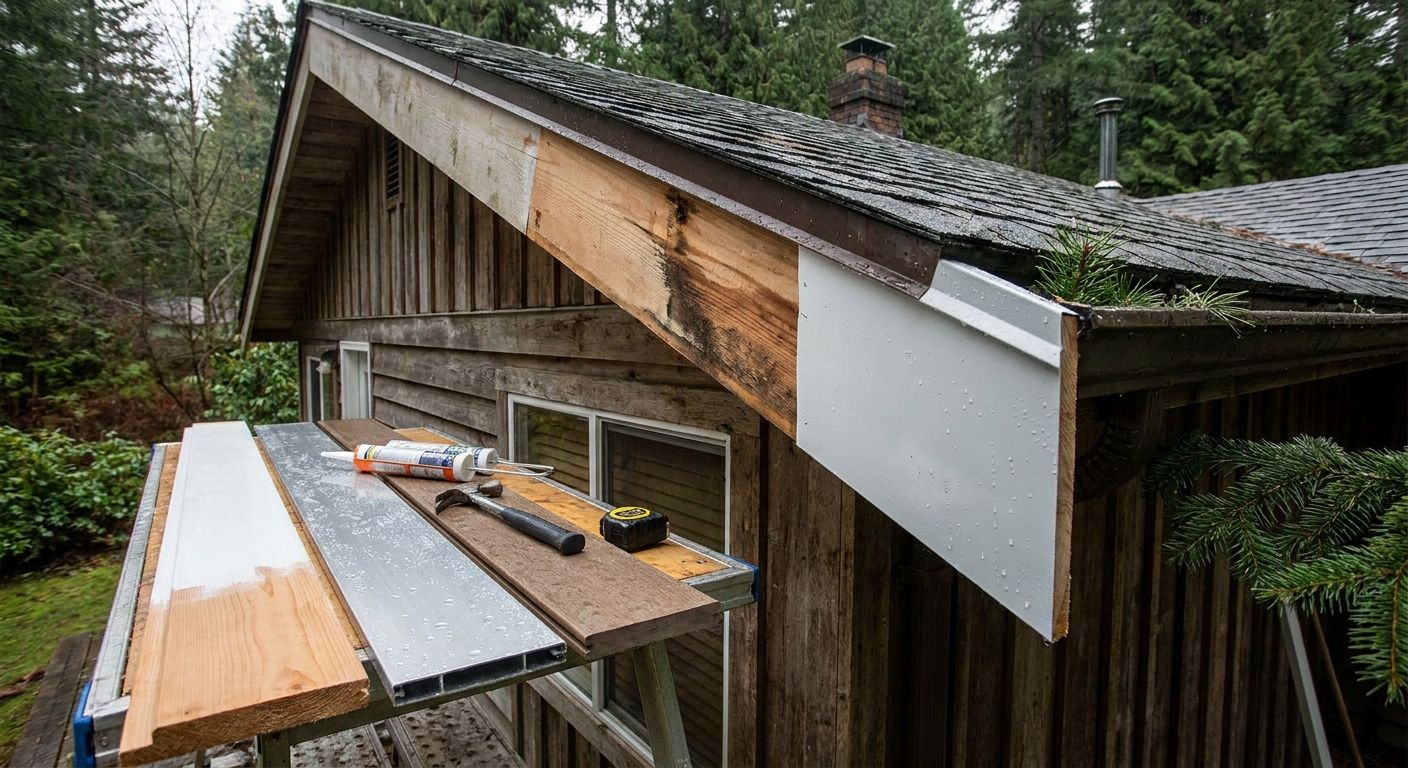
A clogged gutter in Vancouver, Victoria, or the Fraser Valley doesn't just overflow once and dry out. Coastal BC gets sustained wet-season rainfall from October through March, and a blocked K-Style run backs water up under the fascia board within a single storm cycle. That's rot, that's soffit staining, and eventually that's a fascia replacement bill instead of a gutter cleaning.
Leaf guards don't make gutters maintenance-free — anyone who tells you that hasn't cleaned a mesh guard caked in fir needle silt. What a good guard system does is stretch cleaning intervals from twice a year to once, and it keeps debris out of the downspout where clogs actually cause the worst backups. Whether gutter guards are worth it in BC depends heavily on tree cover and roof pitch, which is exactly what the ranking below accounts for.
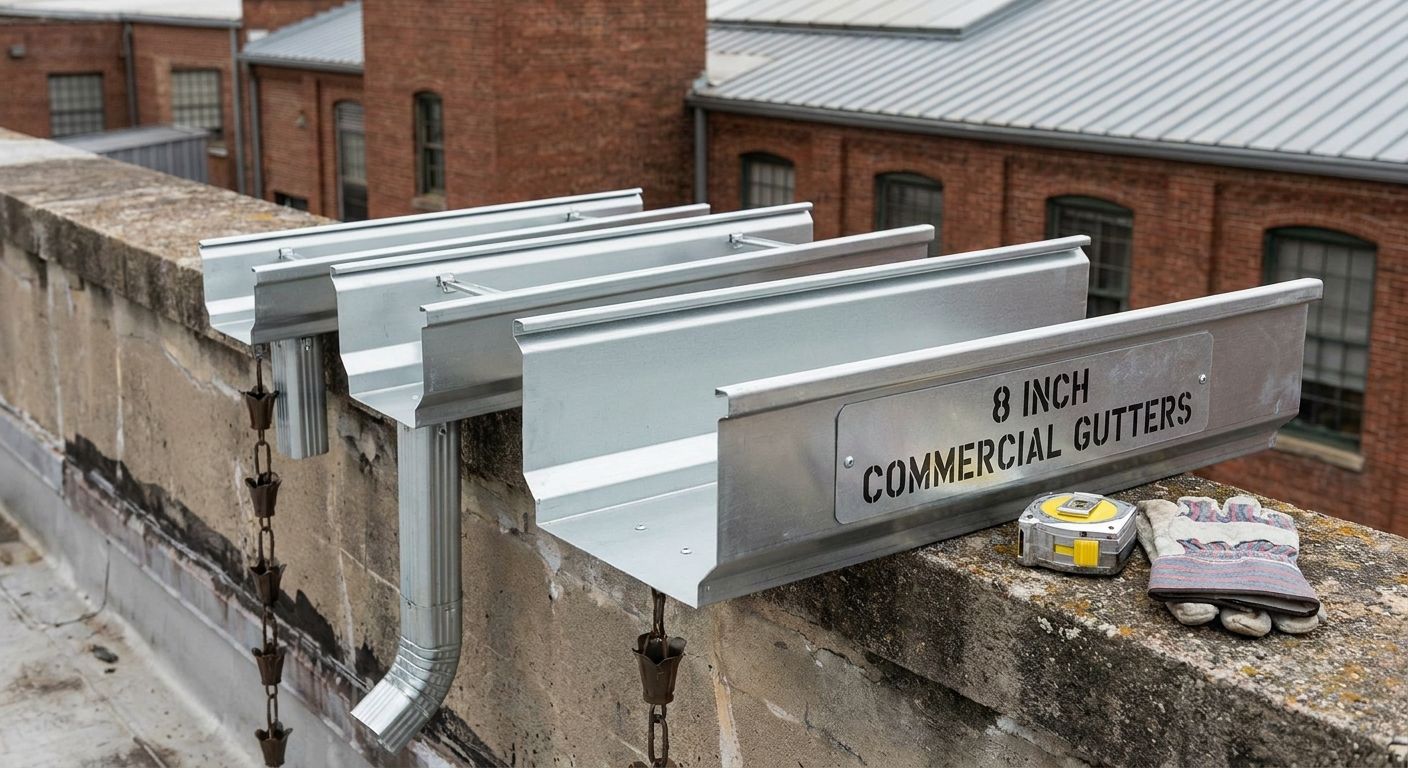
Gutters Canada installs and services all five system types covered here across residential and commercial properties in BC, and the honest answer is that no single guard is right for every roofline.
What makes the best leaf guard system for BC rainfall
- Mesh or opening size relative to conifer debris — fir and cedar needles are narrow enough to slip through openings that would stop maple leaves
- Rainfall throughput per linear foot — a guard that sheds water in a light drizzle can still overflow during a heavy coastal downpour
- Material durability under UV and moisture cycling — aluminum and stainless steel outlast most plastics and foams in a wet-dry cycle
- Compatibility with existing gutter profile and roof pitch — some guards only work with 5-inch or 6-inch K-Style; steep metal roofs need different fastening
- Maintenance frequency in moss-prone coastal conditions — every guard on this list needs occasional attention, but the interval varies a lot
- Installation method — full gutter replacement versus a retrofit onto gutters you already have
Leaf guard systems at a glance
| System | Best for | Standout feature | Key limitation |
|---|---|---|---|
| Micro-mesh | Fir and cedar needle debris | Openings fine enough to block needles, not just leaves | Needs occasional brushing when fine silt cakes on top |
| Reverse-curve (surface tension) | Heavy big-leaf maple leaf load | Sheds leaves off the nose without a mesh surface to clog | Underperforms in light drizzle and low-slope roofs |
| Perforated aluminum screens | Budget-conscious installs | Simple, low-cost retrofit onto most existing gutters | Openings large enough for needles to pass through |
| Foam insert | Retrofitting older K-Style runs | Drops into the gutter with no fasteners or brackets | Traps moisture and grows moss faster in coastal humidity |
| Brush insert | Quick DIY-style installation | Fastest install of any option on this list | Debris nests in the bristles instead of shedding off |
1. Micro-mesh leaf guards: best rain gutters with leaf guards for fir and cedar needle debris
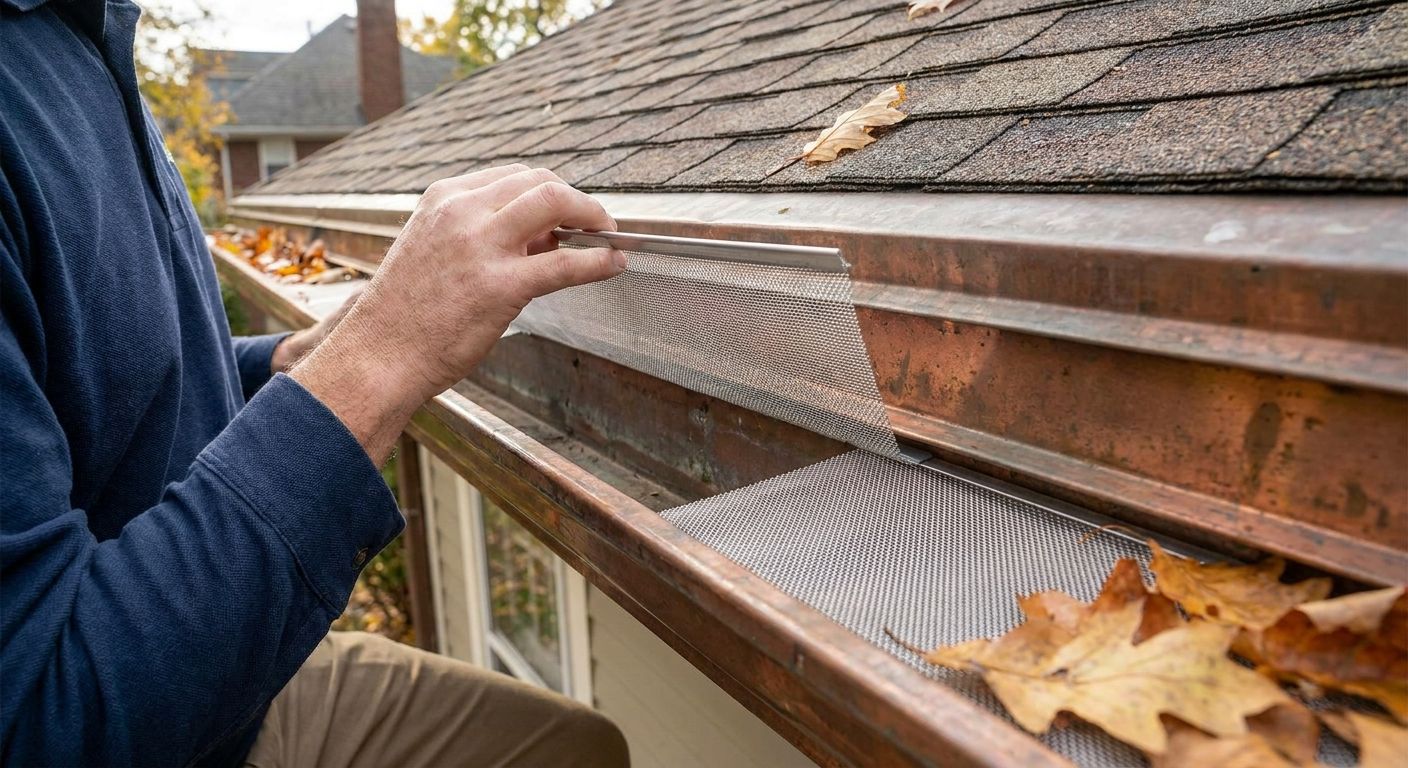
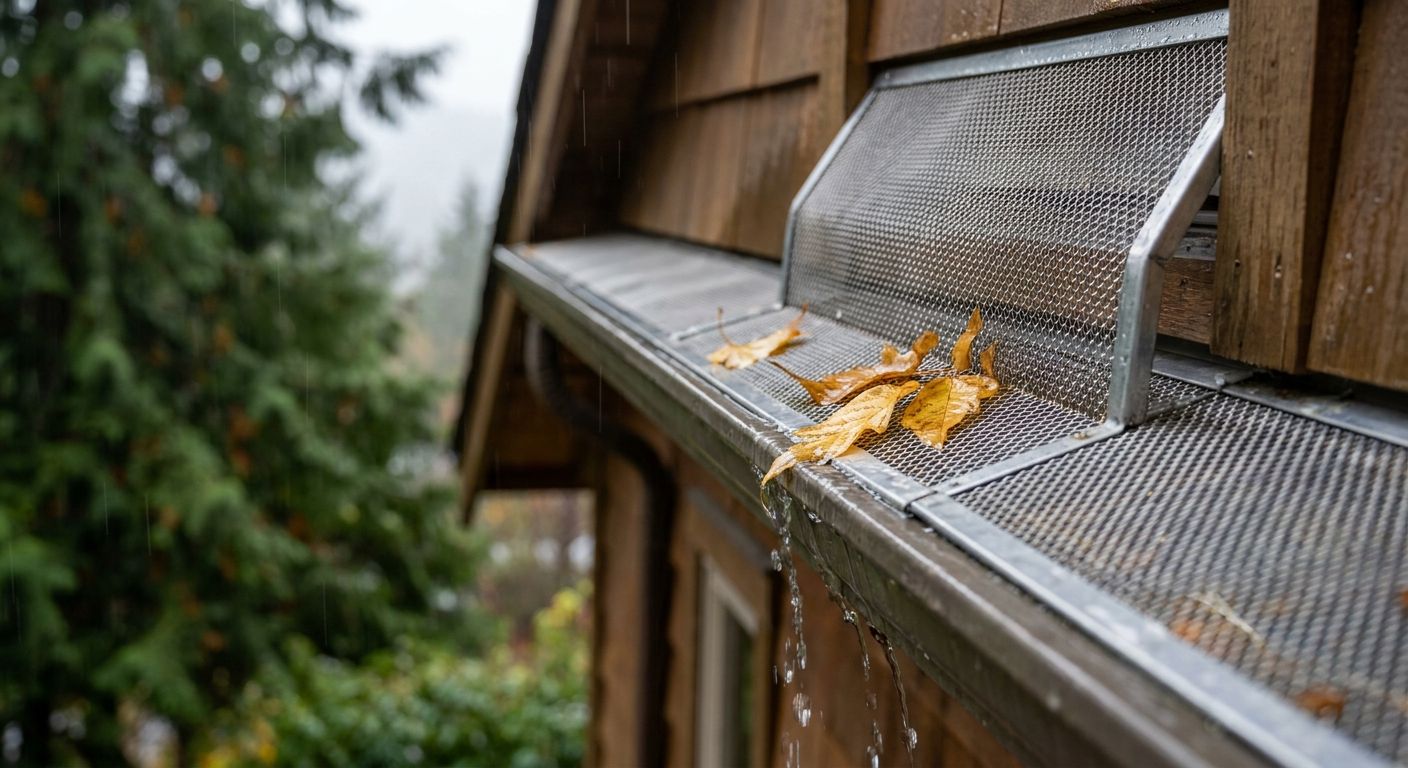
Micro-mesh guards use a stainless steel or aluminum mesh with openings small enough to stop fir and cedar needles — the debris that actually clogs most BC gutters, not the broad leaves guard marketing usually pictures. The mesh sits over the gutter channel on a rigid frame, letting water through while needles and grit blow or wash off the surface.
Micro-mesh pros:
- Stops the fine needle debris that slips past larger-opening guards
- Handles heavy coastal rainfall without overflowing when installed at the correct pitch
- Pairs well with a seamless aluminum gutter system for a long-term, low-maintenance setup
Micro-mesh cons:
- Fine mesh collects a silt layer over a few seasons and needs a brush-off, not just a rinse
- Costs more to install than screen or foam options
Micro-mesh best for: properties surrounded by conifers where needle clogging is the main problem.
Verdict: Buy. For most BC homes near fir, cedar, or hemlock trees, this is the system that actually solves the problem instead of shifting it downstream.
2. Reverse-curve guards: best for heavy deciduous leaf load
Reverse-curve, or surface-tension, guards use the physics of water clinging to a curved nose to pull rain into the gutter while leaves and larger debris slide off the front edge. There's no mesh surface to clog, which makes them a strong fit for properties with big-leaf maple, oak, or other high-volume deciduous trees rather than needle-drop conifers.
Reverse-curve pros:
- Sheds heavy leaf volume without a mesh screen that can eventually clog
- Holds up well on steep roof pitches where water hits the gutter with force
- Low profile keeps the roofline looking clean from the ground
Reverse-curve cons:
- Underperforms in light rain or drizzle, letting some water miss the channel entirely
- Needs precise installation angle to work — a poor install defeats the surface-tension effect
Reverse-curve best for: properties with heavy deciduous leaf drop and steep roof pitches.
Verdict: Buy for the right tree cover, Hold if your property is mostly conifer needle debris — mesh handles that better.
3. Perforated aluminum screens: best budget leaf guard option
Perforated aluminum screens are flat sheets with punched holes that snap or screw onto the top of an existing gutter. They're the simplest, lowest-cost way to add some debris protection to a gutter system that's already in decent shape, and installation doesn't require replacing the gutter run.
Perforated screen pros:
- Cheapest guard option to retrofit onto an existing K-Style or box gutter
- Simple flat design installs fast with minimal labor
- Works on most standard 5-inch and 6-inch gutter profiles
Perforated screen cons:
- Hole size is usually too large to stop fir or cedar needles
- Flat screens sag or buckle under heavy snow load in interior BC climates
Perforated screen best for: budget-conscious homeowners with mostly leaf debris and light tree cover.
Verdict: Hold. It's a reasonable stopgap, not a long-term fix if conifer needles are the actual problem on your roof.
4. Foam insert guards: best for retrofitting older K-Style gutters
Foam inserts are triangular wedges of porous foam that drop directly into an existing gutter channel — no brackets, no screws, no fasteners. Water filters down through the foam while leaves and needles sit on top and eventually blow off or degrade in place.
Foam insert pros:
- Fastest, lowest-cost way to add debris protection to gutters you already have
- No tools or fasteners required for installation
Foam insert cons:
- Traps moisture inside the foam, which accelerates moss and algae growth in BC's wet climate
- Foam degrades under UV exposure and needs periodic replacement, not just cleaning
- Fine needle debris still works its way into the foam pores over time
Foam insert best for: a short-term retrofit on gutters that are otherwise in good shape.
Verdict: Wait. Coastal humidity is exactly the condition foam performs worst in — it's a stopgap, not a system you install and forget.
5. Brush insert guards: best for quick DIY-style installation
Brush inserts are cylindrical bristle brushes laid into the gutter channel, letting water flow underneath while catching leaves and larger debris on top of the bristles. They're the fastest of any option here to install, since they just lay into the channel with no fasteners.
Brush insert pros:
- Installs in minutes per gutter section with zero tools
- Inexpensive way to add basic debris control to an existing system
Brush insert cons:
- Debris nests in the bristles instead of shedding, which means manual removal, not just a rinse
- Bristles compress and lose effectiveness after a season or two of coastal rain
Brush insert best for: a temporary fix on a gutter run that's due for a full upgrade soon anyway.
Verdict: Skip for anything beyond a short-term patch — this is the weakest long-term performer on the list for BC's rainfall volume.
How this list was ranked
Each system was weighed against the six criteria above: mesh/opening size against conifer debris, rainfall throughput, material durability, gutter compatibility, coastal maintenance frequency, and installation method. Micro-mesh and reverse-curve guards score highest because they're built to handle the two dominant debris types in BC — needles and heavy leaf drop — without shifting the clog downstream to the downspout or a gutter and drainage combo that then has to compensate.
Which leaf guard system should you choose?
If you're surrounded by fir, cedar, or hemlock and want the lowest-maintenance option for 2026 and beyond, micro-mesh is the default pick. If big-leaf maple or oak drop is the bigger issue and your roof pitch is steep, reverse-curve guards outperform mesh in that specific scenario. Perforated screens and foam or brush inserts are fine as budget or short-term measures, but none of the three solve BC's actual debris problem — fine needle infiltration — as well as mesh does.
Get a leaf guard recommendation for your roof
A quick property look tells you which guard system fits your tree cover and roof pitch.
FAQ
What's the best leaf guard system for BC rainfall in 2026?
Micro-mesh is the best overall choice for most BC properties in 2026 because it stops fir and cedar needles, which cause more clogging than broad leaves on the coast. Reverse-curve guards perform better specifically on steep roofs with heavy deciduous leaf drop.
Are gutter guards worth it in BC?
Yes, for most properties with tree cover nearby, because coastal rainfall backs up a clogged gutter fast enough to damage fascia within a single storm cycle. The exact payoff depends on tree type and roof pitch, covered in more detail on the gutter guards worth it guide.
Do leaf guards stop cedar and fir needles?
Only micro-mesh guards reliably stop fir and cedar needles; perforated screens and brush inserts have openings large enough for needles to pass through. This matters more in BC than in regions dominated by broad-leaf trees.
Can leaf guards be installed on gutters I already have?
Foam inserts, brush inserts, and perforated screens all retrofit onto an existing K-Style gutter without removing the run. Micro-mesh and reverse-curve guards usually perform best when installed alongside a new seamless gutter system.
Do leaf guards stop moss and algae buildup?
No guard eliminates moss growth in coastal BC's humidity, and foam inserts actually accelerate it by trapping moisture. Mesh and reverse-curve systems shed water fastest, which slows moss formation compared to foam.
Is micro-mesh better than reverse-curve guards?
Micro-mesh is better for needle-heavy properties surrounded by conifers, while reverse-curve guards outperform mesh on steep roofs with heavy maple or oak leaf drop. Neither is universally better — it depends on what's actually falling on the roof.
How often do gutters with leaf guards need cleaning?
Micro-mesh and reverse-curve guards typically stretch cleaning to once a year instead of twice, while foam and brush inserts often need more frequent attention in a wet BC climate. No guard system removes cleaning entirely.
Do leaf guards work with box gutters on older homes?
Some guard types fit poorly on older box gutter profiles compared to standard K-Style runs, so compatibility should be checked before installation. Older homes with box gutters often need a different guard mounting approach than a standard residential retrofit.
One last thing
The guard type matters less than the pitch and slope it's installed at — a micro-mesh guard mounted flat instead of angled toward the roofline will still let fine grit wash straight into the channel. If a contractor quotes leaf guards without mentioning gutter slope, ask about it before you sign off on the install.